
Choose the Right Island Escape for the Time and Transportation You Have
Bainbridge is simplest from downtown; Vashon needs transport, Whidbey and Camano favor drivers, and one San Juan island suits an overnight.
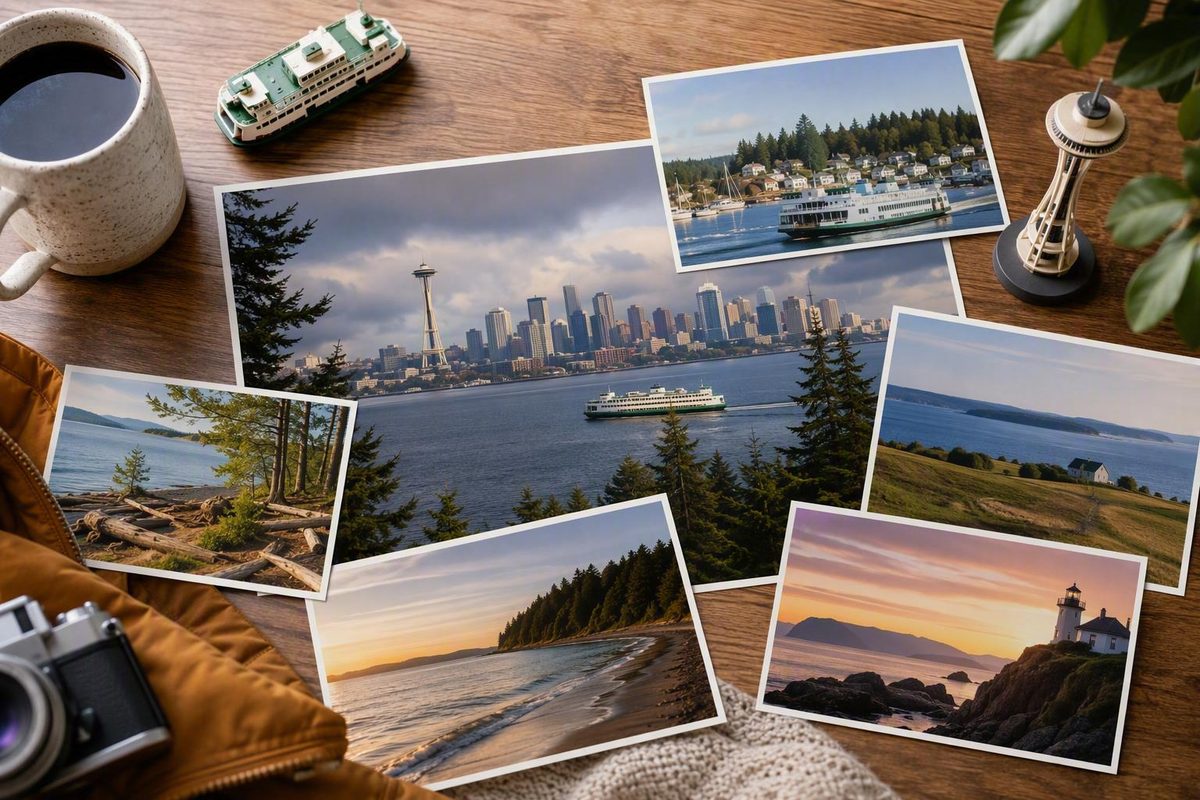
The islands around Seattle are easy to romanticize—and surprisingly easy to misplan. A short ferry crossing may hide a long trip to the terminal, a vehicle queue, or limited transportation after arrival. Conversely, an island that looks distant on a map may work well if you have a car and choose a focused route.
For most visitors, the choice is practical rather than competitive:
- Bainbridge Island is the lowest-complexity walk-on trip from downtown Seattle.
- Vashon Island offers a more rural outing, but you need a plan for getting beyond the ferry landing.
- Whidbey Island rewards drivers who want towns, parks, beaches, and a scenic route.
- Camano Island provides an island experience without a ferry.
- San Juan, Orcas, and Lopez involve enough travel that an overnight stay usually makes more sense.
Choose according to your departure point, total travel effort, mobility after arrival, interests, and available time—not according to a universal scenery ranking.
What Travelers Mean by “Seattle Islands”
Visitor guides commonly use it for destinations in Puget Sound and the San Juan archipelago that can be reached from the Seattle area. Some connect directly to downtown by ferry; others require a drive to West Seattle, Mukilteo, Camano, or Anacortes.
This guide covers:
- Bainbridge Island
- Vashon Island
- Whidbey Island
- Camano Island
- San Juan Island
- Orcas Island
- Lopez Island
Blake Island belongs on a wider list, but not in a dependable itinerary without further research. Current park access, landing rules, and transportation arrangements must all be confirmed through official park and transportation sources before you plan a day around it.
You may also encounter discussions of former or altered islands within Seattle. Filling, canals, shoreline changes, and changes to Lake Washington complicated the status of several landforms. Because some classifications depend on debatable definitions, these places are better treated as a separate historical-geography subject than as modern visitor destinations. An overview of Seattle’s altered and former islands illustrates both the history and the uncertainty around the labels.
For practical trip planning, ask five questions:
- Where are you starting? Downtown Seattle, West Seattle, north Seattle, and an airport-area hotel produce different trip shapes.
- What is the door-to-door effort? Include travel to the terminal, parking, waiting, boarding, sailing, onward transportation, and the return connection.
- How will you move after landing? A convenient ferry does not necessarily create a convenient island itinerary.
- What do you want to do? A walkable food-and-art day requires different logistics from hiking, cycling, beachcombing, or scenic driving.
- How much time do you have? A half day favors a compact arrival area. A full day allows one farther stop. An overnight makes larger islands and the San Juan archipelago more practical.
This framework prevents the most common planning mistake: treating the ferry crossing as the entire transportation calculation.
Seattle-Area Islands at a Glance
The table compares typical trip shapes, not current schedules or guaranteed journey times. “Travel effort” includes reaching the mainland departure point and moving around after arrival.
| Island | Usual mainland departure area | Access mode | Approximate travel effort from Seattle | Usefulness of a car | Realistic trip length | Walkability near arrival | Durable activity anchors |
|---|---|---|---|---|---|---|---|
| Bainbridge | Downtown Seattle | Ferry; usually practical as a walk-on | Low by island-trip standards; the crossing is commonly estimated at about 30–40 minutes, excluding terminal and waiting time (Wheatless Wanderlust) | Optional for Winslow; useful beyond town | Half day or full day | Good around Winslow | Winslow Way, waterfront, food, wine tasting, Bainbridge Island Museum of Art; farther out, forests and gardens |
| Vashon | Fauntleroy in West Seattle | Ferry, followed by arranged on-island transportation | Moderate; the mainland transfer and dispersed destinations add effort | Very useful; a bicycle or verified transit may work for a focused plan | Full day or overnight | Limited as a complete visit from the landing | Farms, beaches, cycling, arts, parks, Point Robinson |
| Whidbey | Mukilteo or the Deception Pass road approach; Port Townsend may be another option | Ferry or bridge; primarily a driving trip | Moderate to high, depending on the region visited | Strongly useful | Long day or overnight | Some towns are walkable once reached; the island is not terminal-centered | Langley, Coupeville, Deception Pass, Ebey’s Landing, Fort Casey, beaches |
| Camano | Stanwood area | Road and bridge; no ferry required | Moderate drive with fewer ferry-related dependencies | Effectively necessary for most visitor itineraries | Full day or overnight | Not organized around a passenger-arrival hub | Camano Island State Park, Cama Beach State Park, galleries, studios |
| San Juan Island | Anacortes | Ferry after a substantial mainland drive; other commercial services may exist | High from Seattle | Optional for a Friday Harbor-centered stay; useful beyond town | Overnight or longer | Good in Friday Harbor | Town services, museums, marina, tours, parks |
| Orcas | Anacortes | Ferry after a substantial mainland drive; other commercial services may exist | High | Very useful for reaching dispersed destinations | Overnight or longer | Limited as an island-wide strategy | Moran State Park, Mount Constitution, forests, hiking, Eastsound |
| Lopez | Anacortes | Ferry after a substantial mainland drive | High | Useful, although cycling can be central to the trip | Overnight or longer | Limited near the ferry as a complete visit | Cycling, rural roads, Lopez Village, parks, quiet scenery |
Bainbridge is the easiest choice for many downtown-based visitors without a car, but that does not make it the right island for every interest. Its advantage is the clean connection between the downtown ferry and Winslow. Its limitation is that a purely walk-on visit reaches only part of the island.
Vashon is geographically close but operationally different. The trip begins at Fauntleroy rather than the downtown ferry terminal, and its attractions are spread across a rural landscape. It suits visitors seeking farms, beaches, arts, parks, and quiet roads—provided they solve the transportation question before leaving.
Whidbey and Camano make more sense when a car is part of the plan. Whidbey offers a broader range of towns, historic places, trails, beaches, and scenic-road combinations. Camano has the simpler access model: drive onto the island without organizing the day around a ferry.
The San Juan Islands occupy a different tier of effort. The usual ferry departure is in Anacortes, so the mainland drive, terminal process, crossing, return sailing, and drive back must all be included. For most Seattle-based visitors, at least one night produces a more satisfying trip.
Quick interest matches:
- Food, art, and a walkable town: Bainbridge
- Farms, beaches, arts, and rural scenery: Vashon
- Scenic driving, hiking, history, and beaches: Whidbey
- Parks and road access without a ferry: Camano
- A walkable town base and organized tours: San Juan Island
- Forests, hiking, and rugged scenery: Orcas
- Cycling and a quieter rural atmosphere: Lopez
These are matches, not rankings. The island with the easiest arrival may provide a narrower car-free visit, while the island with the widest range of landscapes may consume much more of the day in transportation.
Bainbridge Island: The Simplest Car-Free Day from Downtown
Bainbridge is the clearest first choice when you are staying downtown, do not have a car, and want the ferry itself to be part of the experience. The ferry departs from Seattle’s downtown waterfront, and published guides commonly estimate the crossing at approximately 30 to 40 minutes. That estimate covers time on the water—not getting to the terminal, waiting, loading, disembarking, or making the return sailing.
The practical advantage becomes clear after arrival. Winslow’s downtown area is approximately a quarter-mile from the ferry terminal, creating a compact walking itinerary around shops, cafes, restaurants, tasting rooms, cultural stops, and the waterfront. The crossing estimate and the terminal-to-Winslow distance are documented in this Seattle day-trip guide.
The Bainbridge Island Museum of Art and Winslow Way are useful anchors because they belong to the ferry-adjacent town experience. You can alternate indoor stops with short walks, have a meal, and retain flexibility for weather or a changed return plan.
A simple half-day Bainbridge plan
A half day works best when you resist the urge to cover the entire island:
- Walk onto the ferry in downtown Seattle.
- Follow the pedestrian route toward Winslow after arrival.
- Visit the Bainbridge Island Museum of Art, or keep it as a wet-weather alternative.
- Walk Winslow Way without building the day around a rigid list of businesses.
- Add a short waterfront segment.
- Stop for one meal, coffee, or tasting experience after confirming current hours.
- Return to the terminal with a meaningful schedule buffer.
This compact plan does not depend on a seasonal business or onward ride. It also leaves room to enjoy the crossing rather than treating every minute as transit overhead.
A full-day Bainbridge plan
A full day can include one attraction beyond Winslow, but arrange the transportation before leaving Seattle. Bloedel Reserve and Grand Forest are frequently included in Bainbridge itineraries, yet neither belongs to a simple terminal-area walking loop. One published guide places Bloedel Reserve approximately 7.5 miles from the ferry terminal, which demonstrates why “Bainbridge without a car” and “all of Bainbridge without a car” are different promises.
For an extension beyond Winslow, choose one transportation plan:
- Bring a suitable bicycle or confirm current rental availability.
- Verify a local bus connection and its return timing.
- Prearrange a taxi.
- Confirm rideshare coverage shortly before the trip.
- Bring a car if broader island exploration is the priority.
Do not make an unverified bus, bicycle rental, taxi, or rideshare essential to the day. A resilient full-day itinerary should still have a viable Winslow-centered version if the extension falls through.
Bainbridge therefore has a clear mobility boundary: Winslow is the easy car-free outing; the broader island requires another transportation layer.
Vashon Island: A Rural Escape That Needs an On-Island Plan
Vashon differs from Bainbridge before you board. The usual visitor approach is from Fauntleroy in West Seattle, not Seattle’s downtown ferry terminal. A downtown-based traveler must first reach West Seattle, take the ferry, and then solve transportation on Vashon.
The island’s appeal is also less concentrated. Vashon is associated with farms, beaches, cycling, arts, outdoor recreation, preserves, and a rural road network. Point Robinson is a durable destination anchor, while other possible stops include parks, forested areas, shoreline locations, and arts venues. Washington’s tourism guide characterizes Vashon through farm stands, beaches, biking, recreation, and arts.
Those attractions are not clustered at the ferry landing. Walking off the boat without a next-step plan can produce a pleasant crossing but a limited island experience.
Can you visit without a car?
Yes, but only if “without a car” comes with a specific, verified mobility plan. Before departure, confirm one workable option:
- Current local transit aligned with the sailings you intend to use
- A bicycle and a route suited to your fitness and road comfort
- A prearranged taxi
- Confirmed rideshare availability
- Transportation supplied by a host or tour operator
- A tightly limited itinerary built around confirmed connections
Do not assume you can walk from the terminal to farms, beaches, arts venues, parks, and town services.
Cycling can be part of the experience, but it is not a universal substitute for a car. Consider hills, distance, traffic exposure, weather, daylight, and the abilities of everyone in the group. Confirm current ferry bicycle rules and any rental arrangements directly before departure.
What a good Vashon day looks like
Vashon generally deserves a full day. A sensible plan might include:
- One outdoor anchor, such as a park, beach, preserve, or Point Robinson
- One arts or town stop
- One meal or farm-related stop, subject to current hours
- One optional scenic stop
- A firm transportation and return plan
Avoid using a chain of small businesses as the itinerary’s backbone. Some tasting venues and other island businesses may operate only on certain days, reduce hours outside peak periods, or close seasonally. Verify each place directly and retain a park-, beach-, or town-centered alternative.
Choose Vashon over Bainbridge when rural atmosphere is the purpose of the outing and you are willing to manage the additional logistics. Choose Bainbridge when you want to step off a downtown ferry into a compact town without arranging another ride.
Whidbey and Camano: Better Choices for Drivers
Whidbey and Camano reward a different planning style. Instead of asking, “What can I reach from the ferry on foot?” ask, “What route can I drive without turning the entire day into windshield time?”
Whidbey: choose one region or commit to a long loop
Whidbey is a long island with multiple towns, parks, shorelines, and landscapes. It is not a compact ferry-terminal outing. A published driving itinerary describes the end-to-end drive as taking more than an hour before sightseeing stops, which is why a comprehensive visit quickly becomes a long day or overnight trip (Greenlake Guest House).
The principal approaches are:
- The Mukilteo–Clinton ferry connection for South Whidbey
- The road approach over Deception Pass Bridge for North Whidbey
- The Port Townsend connection as a possible west-side approach or onward route
Treat those as route shapes, not current operating guarantees. Reservation policies, service status, recommended arrival times, and vehicle capacity must be checked for the date and direction of travel. The Port Townsend connection should be treated as an option to verify, not an assumed link in a tightly timed itinerary.
A focused South Whidbey plan
For a shorter Whidbey outing, use the Mukilteo–Clinton approach and limit the day to South Whidbey:
- Cross to Clinton.
- Continue to Langley.
- Walk through town, have a meal, and browse shops or galleries that are open.
- Add one nearby park, beach, garden, or trail.
- Return to Clinton rather than pushing north merely to accumulate stops.
This can work as a half day for travelers already near Mukilteo. It is less convincing as a casual half day from downtown Seattle because the mainland drive, terminal process, crossing, and return all add time.
A long Whidbey driving loop
For a fuller experience, approach from the north and travel south:
- Drive toward Deception Pass.
- Stop for the bridge, park scenery, or one deliberately selected hike.
- Continue to Coupeville.
- Choose Ebey’s Landing, Fort Casey, or both if daylight and pace allow.
- Continue south toward Langley.
- Use the Clinton–Mukilteo connection for the return after verifying current operations.
This route can combine scenic driving, a historic town, coastal landscapes, hiking, beaches, and military-history sites. It also creates multiple points of delay: traffic north of Seattle, time spent at parks, meal stops, changing weather, and a vehicle ferry near the end of the day.
Do not treat every named place as mandatory. If you complete a substantial hike at Deception Pass or Ebey’s Landing, remove something else. If you spend time in Coupeville, protect that time rather than rushing through several later sites. An overnight is the better choice when you want both North and South Whidbey at a relaxed pace.
Check current conditions rather than relying on an old itinerary to predict the day.
Camano: the ferry-free driving option
Camano’s defining practical advantage is mainland road access. You can reach the island without depending on ferry capacity or a return sailing. Visit Seattle’s island overview identifies Camano as a road-accessible island option and highlights its parks and cycling possibilities.
A practical Camano day can focus on:
- Camano Island State Park
- Cama Beach State Park
- A gallery or studio stop
- A meal or town stop verified for the day of travel
- A scenic drive with time left for an unhurried return
Camano is not car-free simply because it is ferry-free. It works best for travelers who already have a vehicle and want a park-centered day with fewer ferry-related dependencies.
Choose Whidbey for a varied scenic route with towns, beaches, history, and hiking. Choose Camano when straightforward road access matters more than covering numerous distinct regions.
San Juan, Orcas, and Lopez: Plan a Stay, Not Just a Crossing
The San Juan Islands may appear in lists of Seattle day trips, but their logistics differ substantially from Bainbridge or Vashon. The usual ferry journey begins in Anacortes, not downtown Seattle. The drive from Seattle to Anacortes is commonly estimated at approximately 1.5 to 2 hours before terminal and sailing time (Book It Vacation Rentals).
That does not make a same-day visit impossible. It makes it a high-effort option. The round trip can involve:
- Driving from Seattle to Anacortes
- Parking or joining a vehicle queue
- Terminal arrival and boarding
- The outbound sailing
- Transportation after arrival
- A return sailing with a practical buffer
- The drive back to Seattle
Some tourism sources describe the San Juans as day-trip destinations because a same-day visit can be assembled. For most short-stay visitors, however, an overnight or multi-day trip is more practical and leaves room for more than transportation.
San Juan Island: the most convenient town-centered option
San Juan Island is the clearest fit when you want a walkable arrival town and organized visitor infrastructure. Friday Harbor offers restaurants, shops, a marina, museums, and departure points for tours. It can support a car-free overnight centered primarily on town, although broader island exploration requires another mobility plan.
Choose San Juan Island for:
- A town-centered stay
- Museums and cultural stops
- Organized wildlife or kayaking tours
- Dining and visitor services
- A combination of town time and one or two prearranged excursions
Wildlife viewing must always be framed as a possibility, not an outcome. Before joining a boat trip or observing wildlife from shore, consult current wildlife-agency rules and the operator’s responsible-viewing practices.
Orcas: forests, elevation, and a more rugged itinerary
Orcas is the better match when hiking and landscape are the primary purposes of the trip. Moran State Park and Mount Constitution are durable anchors, with forests and rugged terrain shaping the visit. A regional guide to the principal visitor islands distinguishes Orcas through Moran State Park and Mount Constitution while associating San Juan Island with Friday Harbor and tour services.
Orcas requires realistic transportation planning. Depending on the itinerary, you may need a vehicle, confirmed shuttle, taxi, bicycle plan, or organized tour.
Choose Orcas for:
- Hiking
- Forests and park landscapes
- An outdoors-centered overnight
- A trip for which transportation beyond the ferry has been arranged
Lopez: cycling and a quieter pace
Lopez is associated with rural scenery, quieter roads, and comparatively cycling-oriented itineraries. It suits travelers who want to slow down rather than assemble a dense attraction list.
A good Lopez trip might combine:
- A cycling route suited to the group’s abilities
- Lopez Village
- A park or shoreline stop
- Time for rural scenery
- An overnight that removes pressure from the return schedule
“Cycling-friendly” does not mean effortless or risk-free. Confirm bicycle access, rentals, route distances, road conditions, and ferry rules directly. Carry clothing and equipment suitable for changing weather.
Keep a short San Juan trip to one island
For a first overnight, choose one principal island. Do not assume you can move casually among San Juan, Orcas, and Lopez while preserving a relaxed itinerary.
Commercial air or passenger-boat services from Seattle may exist, but routes and operators can change. Check directly with the operator rather than treating an older tourism listing as current. These services may reduce mainland driving while adding weather, luggage, schedule, and transfer constraints.
The official San Juan Islands tourism site provides planning information for ferry travel, car-free visits, lodging, activities, and accessibility. It is useful for choosing a trip shape, but the presence of car-free information does not mean every attraction is easily reached without a vehicle.
Choose by Trip Length and Interest
The right island becomes clearer when you begin with the time available rather than a destination wish list.
If you have half a day
Choose Bainbridge, walk on from downtown, and stay focused on Winslow. This is the cleanest combination of a scenic crossing, a walkable arrival area, food, art, and waterfront time.
A South Whidbey half day can work if you already have a car, are positioned near Mukilteo, and plan to visit only Langley and perhaps one nearby stop. It is not equivalent to touring Whidbey and becomes less attractive when the trip starts in downtown Seattle.
Avoid Vashon as an improvised walk-off-the-ferry half day. Avoid the San Juans unless you are already in Anacortes or on one of the islands.
If you have a full day
Four options become realistic:
- Bainbridge: Add one prearranged attraction beyond Winslow.
- Vashon: Arrange transportation, then combine one outdoor anchor with an arts, farm, or town stop.
- Camano: Drive to one or both major parks, with a gallery or studio as a secondary stop.
- Whidbey: Choose South Whidbey or another deliberately limited itinerary.
A full day does not automatically justify an end-to-end Whidbey checklist. The more time you devote to hiking, beaches, museums, or town exploration, the less distance you should attempt to cover.
If you have one night
Choose Whidbey when you want several towns and parks. An overnight allows you to divide the island into regions instead of racing from Deception Pass to Langley.
Choose one San Juan island when you want a deeper getaway. San Juan Island suits a town-and-tour trip, Orcas suits a hiking-centered trip, and Lopez suits a quieter cycling or rural itinerary.
Vashon can also work as a low-key overnight, especially when the goal is atmosphere rather than a long attraction list.
If you have multiple days
San Juan, Orcas, or Lopez becomes a natural choice. You can stay on one island and explore it more deeply or investigate island-hopping after checking current inter-island operations.
Do not make island-hopping the default. Transfers consume time, and every arrival creates a new transportation question. Several nights on one island may provide more variety than expected once you include a town, park, trail, shoreline, meal, and weather-dependent activity.
Choose by interest
| Interest | Strong match | Why |
|---|---|---|
| Simplest downtown ferry outing | Bainbridge | Direct downtown departure and a compact town near arrival |
| Food and art without a car | Bainbridge | Winslow supports a concentrated walking itinerary |
| Rural atmosphere | Vashon | Farms, beaches, arts, and dispersed scenery |
| Scenic driving | Whidbey | Multiple towns, coastlines, parks, and route options |
| Historic places | Whidbey | Coupeville, Ebey’s Landing, and Fort Casey can form a coherent route |
| Road-accessible parks | Camano | No ferry is required to reach the island |
| Town services and tours | San Juan Island | Friday Harbor provides a practical visitor base |
| Hiking and forests | Orcas | Moran State Park and Mount Constitution anchor the trip |
| Cycling and quiet | Lopez | Rural character and comparatively cycling-oriented itineraries |
The central tradeoff is convenience versus range. Bainbridge offers the easiest arrival but a narrower visit if you stay on foot. Vashon provides rural character but requires transportation planning. Whidbey offers variety but demands driving and time. Camano removes the ferry from the equation but still favors a car. The San Juans provide a deeper getaway at the price of greater travel effort.
A Ferry-Day Checklist That Prevents Common Planning Failures
Island plans fail when travelers verify an attraction but not the transportation system around it. Check the complete chain before departure.
Verify these details on the day of travel
Use current official ferry, transit, park, tour, and wildlife sources—not an older travel article—to verify:
- Live ferry or passenger-service schedule
- Service alerts
- Current fare
- Vehicle reservation policy, if relevant
- Recommended terminal arrival guidance
- Parking location, hours, and capacity information
- Bicycle rules
- Weather and wind
- Daylight for the return and outdoor activities
- Park, museum, restaurant, rental, and tour hours
- The final practical return sailing, not merely the last scheduled one
- Transit, taxi, shuttle, or rental availability after arrival
- Accessibility information relevant to your party
- Current wildlife-viewing requirements
This guide intentionally avoids presenting volatile schedules, fares, reservation rules, accessibility procedures, or service availability as current facts. Confirm them directly with the responsible operator or agency for your travel date.
Calculate door-to-door time
For a ferry trip, total transportation time may include:
- Travel from your lodging to the terminal
- Parking or a transit connection
- Ticketing and terminal navigation
- A vehicle queue or walk-on waiting period
- Loading
- The crossing
- Unloading
- Travel from the island terminal to the first activity
- The entire process in reverse
A relatively short crossing can therefore occupy a much larger part of the day. The same principle applies to Anacortes: the sailing is only one component of a trip that starts with a substantial mainland drive.
Separate walk-on and vehicle risks
Walk-on travelers avoid vehicle queues, but they still need schedule buffers, reliable mainland connections, and a realistic way to travel after arriving.
Drivers gain mobility on the island but add other uncertainties:
- Vehicle staging and capacity constraints
- Reservation requirements where applicable
- Traffic approaching the terminal
- Longer unloading and onward-driving time
- Parking availability at towns, parks, and trailheads
Do not bring a car merely because an island is large; bring it when the itinerary needs it. Conversely, do not walk on merely because pedestrian boarding appears simpler. First confirm that the arrival area supports the day you want.
Use the one-anchor rule
A resilient island day contains:
- One island
- One anchor activity
- One flexible secondary stop
- One meaningful return buffer
The anchor might be Winslow, Point Robinson, a Whidbey hike, a Camano park, Friday Harbor, or Moran State Park. The secondary stop should be expendable. If a ferry, meal, hike, or weather delay consumes time, remove the secondary stop rather than compressing the return.
Seattle Know’s description of its practical trip-planning method similarly emphasizes a clear route, a sensible backup, and enough context to avoid a scattered day.
Prepare for weather and reduced hours
Carry a warm or rain-ready layer even when conditions in the city look mild. Shorelines and ferry decks can feel different from protected downtown streets. During seasons with shorter daylight, schedule the outdoor anchor earlier and preserve a town, museum, or covered alternative.
Verify off-season hours directly. Do not rely on a tasting room, rental business, restaurant, or seasonal tour as the day’s only purpose. Parks, town centers, waterfront walks, and museums can be more durable anchors, although their current access and hours still require confirmation.
Treat Blake Island as access-limited until verified
Do not build a Blake Island itinerary until you have confirmed through current official sources:
- Park access
- Landing rules
- Whether any public, tour, charter, or commercial transportation operates on your date
- Return arrangements
- Weather and marine conditions relevant to the chosen access method
Do not infer current access from an older travel article. Blake Island is a special-purpose outing only after the logistics have been established.
Frequently Asked Questions
Which Seattle island is easiest to visit without a car?
Bainbridge is generally the easiest for a downtown-based visitor. The ferry leaves from downtown Seattle, and Winslow is close enough to support a walking itinerary built around shops, food, tasting rooms, waterfront access, and the Bainbridge Island Museum of Art.
That answer applies to a Winslow-centered visit, not the entire island. Bloedel Reserve, Grand Forest, and other farther attractions require another transportation plan.
Can you take a ferry directly from downtown Seattle to the San Juan Islands?
Not on the usual Washington State Ferries journey. The standard ferry trip to Lopez, Orcas, or San Juan Island begins in Anacortes, so travelers starting in Seattle must first make the mainland trip north.
Commercial air or passenger-boat options from Seattle may be available, but they are operator-, date-, and weather-dependent. Confirm them directly rather than assuming that a service listed in an older guide still operates.
Can Vashon Island be explored on foot from the ferry terminal?
Not as a broad island visit. Vashon’s farms, beaches, parks, arts venues, and town services are dispersed beyond the landing. Walking can form part of a focused itinerary, but it is not a substitute for an on-island transportation plan.
Before leaving, arrange verified transit, a suitable bicycle, taxi, rideshare, host or tour transportation, or a car. If none is available, Bainbridge provides the easier terminal-to-town walking experience.
Is Whidbey Island a day trip or an overnight trip?
It can be either. A focused South Whidbey outing centered on Langley and one nearby stop can fit into a day. A route involving Deception Pass, Coupeville, Ebey’s Landing, Fort Casey, and South Whidbey is a substantial driving day.
Choose an overnight if you want multiple towns, parks, hikes, or unhurried meals. A comprehensive half-day visit is not realistic.
Can you visit a Seattle-area island without taking a ferry?
Yes. Camano Island is connected to the mainland by road, making it the clearest ferry-free option in this guide. It works particularly well for drivers interested in Camano Island State Park, Cama Beach State Park, galleries, studios, and a flexible scenic outing.
Whidbey can also be reached by road from the north over Deception Pass Bridge. You can return the same way or use a ferry connection after checking current operations.
The Final Choice Rule
Choose Bainbridge for the simplest downtown walk-on escape. Choose Vashon for a full rural day after arranging transportation. Choose Whidbey or Camano when a car expands the plan: Whidbey for variety and a scenic route, Camano for road access without ferry dependence. Choose one San Juan island when your schedule allows at least an overnight.
One well-chosen island with a verified return plan will usually produce a better trip than ambitious island-hopping.