
Walk-On or Drive-On: Simplify Your Washington State Ferries Choice
Board on foot for a walkable terminal town; drive for road-dependent plans. A vehicle reservation requires check-in at least 30 minutes ahead or you risk losing it.
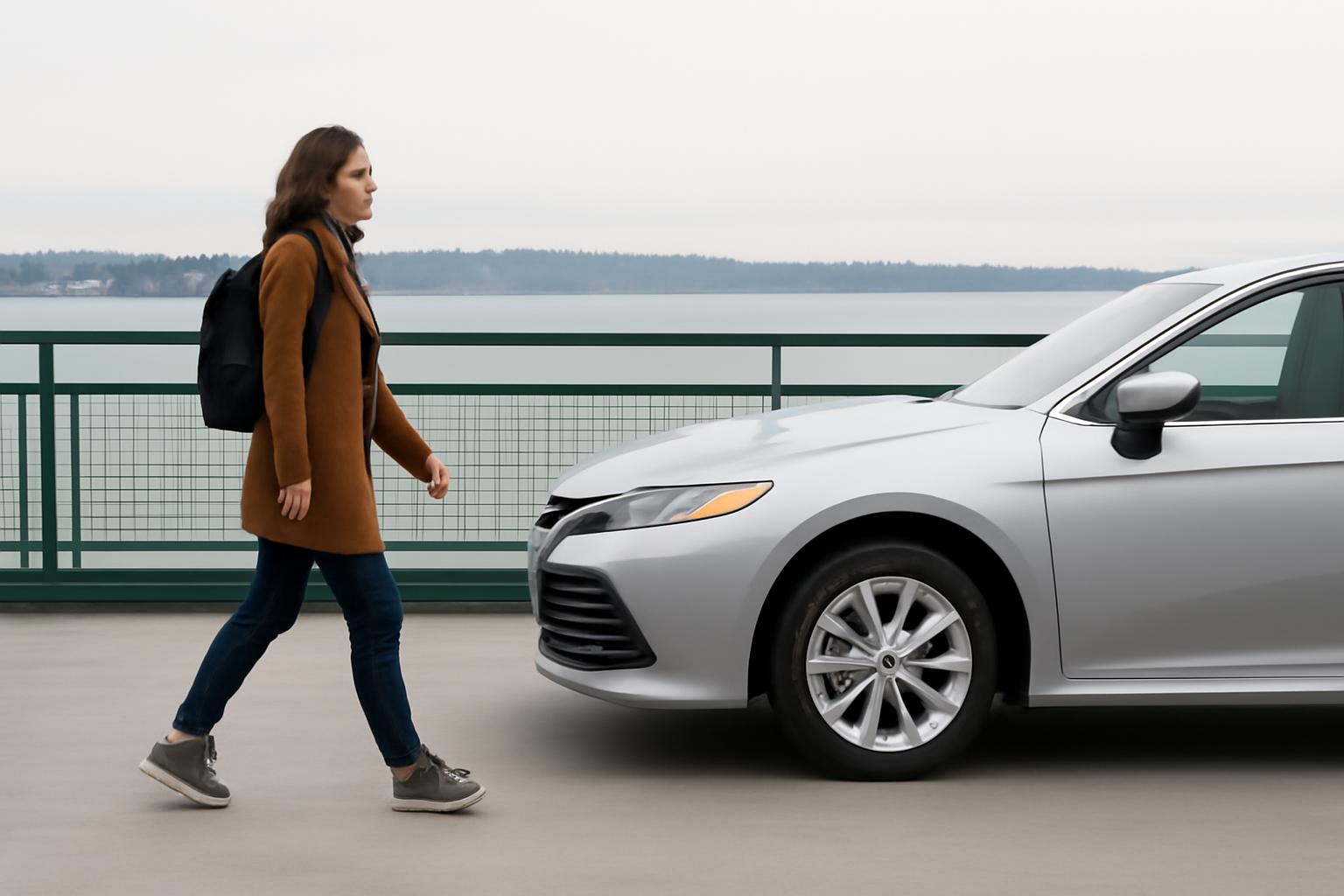
If you’re visiting Seattle for a short trip and trying to decide between taking Washington State Ferries as a walk-on passenger or bringing a car, the simplest answer is this: for most first-time downtown Seattle ferry outings, walk-on is the easier choice.
That does not mean cars are a bad idea. They make real sense on some routes, especially when your destination is spread out, when you want to explore well beyond the ferry terminal, or when you’re using one of the routes where vehicle reservations are a normal part of planning. But for a short, scenic day from downtown Seattle, the usual visitor problem is not the ferry crossing itself. It is everything the car adds before and after it.
Walk-on keeps the day compact. You skip the vehicle holding lanes, avoid most reservation questions, and can treat the ferry as part of the experience rather than a logistics project. That lines up well with the general short-trip Seattle approach we use across Seattle Know: one round trip, one walkable destination, one easy return.
A fast way to decide:
- Choose walk-on if your plan is mainly the crossing plus a walkable terminal town.
- Choose drive-on if your real itinerary begins after the terminal and depends on road access.
- Pay special attention to cars on the Port Townsend/Coupeville and Anacortes/San Juan Islands routes, where Washington State Ferries says vehicle reservations are available and recommended on the official WSF Web Store.
If you’re still unsure, ask one question: What happens after I get off the boat? That usually gives you the right answer faster than comparing ferry modes in the abstract.
Understanding Walk-On vs Drive-On Basics
The basic distinction is simple. A walk-on rider boards as a foot passenger. A drive-on rider brings a vehicle aboard, parks it on the vehicle deck, and then spends the crossing in the same public passenger areas everyone else uses.
Where the experience changes is everything around boarding.
A walk-on trip is mostly about matching yourself to the sailing time, using or buying a ticket, and moving through the passenger flow. A drive-on trip adds vehicle space, holding lanes, loading order, and, on some routes, reservation planning. Officially, most ferries load first-come, first-served, and Washington State Ferries says vehicle reservations are available and recommended only for the Port Townsend/Coupeville and Anacortes/San Juan Islands routes (WSF Web Store).
For a visitor staying downtown without a car, that difference matters a lot. A short Seattle ferry day is often better when the ferry is the centerpiece rather than a transport puzzle. If your destination is compact and pleasant near the terminal, a car can add more friction than freedom.
A useful way to think about it is this:
- Walk-on works best when the place you are visiting is easy on foot, by bus, bike, or a short taxi ride.
- Drive-on works best when the important part of the trip starts farther from the ferry dock.
For a first Seattle visit, that usually pushes the default toward walk-on.
Reservation Rules: When You Need Them
Reservations are the point that confuses most newcomers.
Many visitors assume ferries work like flights and that everyone should reserve ahead. Washington State Ferries usually does not work that way. The official rule is simpler: most ferries load first-come, first-served, and the main vehicle-reservation exceptions are Port Townsend/Coupeville and Anacortes/San Juan Islands, according to the WSF Web Store.
For walk-on passengers, that makes planning much easier. That is one of the biggest reasons walk-on fits short Seattle day trips so well: it behaves more like transit than like a road trip.
Vehicle travelers to the San Juans need more route-specific planning. The San Juan Islands ferry guide says westbound vehicle reservations are required for Orcas Island and San Juan Island as round-trip bookings, while Lopez and Shaw require reservations westbound only. The same guide says vehicle travelers should check in at least 30 minutes before sailing or risk losing the reservation, while walk-ons do not need reservations and can buy tickets at the terminal on arrival in the San Juan Islands ferry planning guide.
That is why ferry advice often sounds contradictory online. Someone talking about Seattle to Bainbridge is describing a very different planning reality than someone talking about Anacortes to Friday Harbor with a car in summer.
One more distinction is worth making clearly: buying a ticket is not the same as reserving space. Washington State Ferries says advance ticket purchase can save time at the tollbooth, but the ticket itself does not guarantee space on a specific sailing (WSF Web Store). For walk-ons, that difference is usually minor. For cars, it can shape the entire day.
Costs: Fares for Walk-Ons vs Cars
As a broad pattern, walk-on is usually the cheaper option and drive-on is the more expensive one.
That means you are not just comparing “me on the ferry” with “me in a car.” You are comparing a passenger fare with a vehicle-plus-driver charge.
If you want a rough consumer-level comparison rather than a live fare lookup, a Seattle family travel blog describes many adult walk-on fares as landing around $10 to $20 depending on route, and bringing a car as materially more expensive because the vehicle and driver are part of the charge in its Washington State ferries basics article. That should be treated as directional, not as a current fare table.
That directional comparison is still useful. If you do not really need a car after landing, walk-on usually saves noticeable money. And if you would be renting or ridesharing to get a car just for the ferry day, the total cost rises fast.
A few official fare policies matter for both options. Washington State Ferries says children 18 and under travel free, seniors and riders with disabilities can receive reduced fares if they buy in person and show proof of eligibility, and a 3% payment card fee applies to card transactions beginning March 1, 2026 under RCW 47.60.860, per the WSF Web Store fare and ticket information.
For actual trip planning, the most helpful comparison is not ferry fare alone. It is total day cost:
- ferry fare
- terminal parking, if any
- car rental or rideshare costs, if any
- on-island transport
- the value of your time
- whether the car meaningfully improves the day
That is why walk-on often wins for classic Seattle outings. The ferry part stays simple and the spending usually stays lower.
Boarding Process and Arrival Times
This is where the difference between walk-on and drive-on becomes the most visible.
For walk-ons, the process is usually straightforward. Experienced riders often suggest arriving about 10 minutes early for a simple walk-on trip, buying a ticket in the terminal if needed, and boarding through the passenger ramp after the relevant announcements, according to the rider overview in A Happy Passport’s Washington State ferries guide. That is best understood as a practical rule of thumb for an ordinary sailing, not an official guarantee for every terminal or peak period.
Drive-on has more moving parts. The same rider guidance suggests around 20 minutes early for a standard drive-on arrival on an easier sailing, but other experienced family-trip guidance advises allowing 1 to 2 hours early on busy summer weekends, especially when demand is high (A Happy Passport; Tips for Family Trips). And on reservation routes, the firmer rule is the official one summarized by the San Juan Islands guide: check in at least 30 minutes before sailing or you can lose the reservation (San Juan Islands ferry planning guide).
The process itself is also more layered for vehicles. Instead of heading straight into the terminal, you move through the vehicle flow, use the tollbooth or advance-purchase process, wait in the assigned lane, and load when directed. Once aboard, the car is parked and the crossing happens in the passenger spaces, just as it does for walk-ons (A Happy Passport).
The safest planning takeaway is not a universal minute count. It is this:
- Walk-on: usually simpler, with a smaller timing buffer.
- Drive-on: usually needs more buffer, and much more on busy weekends, holidays, and reservation routes.
- Reservation routes: treat the 30-minute vehicle check-in rule as hard planning, not optional padding (San Juan Islands ferry planning guide).
That is also why vehicle travel can feel disproportionately stressful to first-timers. Missing a walk-on sailing is frustrating. Missing a vehicle check-in window, or arriving to a busy standby line with a full car queue, can rewrite the whole day.
So if you want the crossing without much uncertainty, walk-on is usually the cleaner first experience.
Best for Seattle Day Trips: Walk-On Recommendations
For most first-time visitors staying downtown, walk-on is usually the better choice for a short Seattle ferry outing.
That is an editorial recommendation, not a Washington State Ferries policy. The reason is practical: a short city trip usually works better when the ferry delivers you into a place that is enjoyable right away, without needing another layer of transport planning.
In a Seattle forum discussion about island day trips without a car, travelers repeatedly pointed first-timers to Bainbridge for its walkable town near the terminal, Bremerton for a longer scenic ride, and Vashon if you are comfortable doing a little more local transport planning in the Tripadvisor thread on Seattle ferry day trips without a car.
That basic logic holds up well for short visits:
- Bainbridge is the cleanest first choice because the outing starts quickly after you land.
- Bremerton works well when the boat ride itself is part of the appeal.
- Vashon can work, but it is less automatic for a first-timer than Bainbridge.
The places where walk-on becomes less perfect are the places where the island experience spreads out. The San Juans are the clearest example. Tips for Family Trips argues against automatically bringing a car because many Friday Harbor restaurants, lodging options, and attractions are walkable from the terminal, and bike rentals can extend your range if needed, in its Washington ferry tips for San Juan trips. That same source also makes the other half of the case: once your plans move beyond the terminal town, a car can become worth the extra cost and complexity.
So for Seattle day trips, a practical judgment looks like this:
- Bainbridge: excellent walk-on choice
- Bremerton: strong walk-on choice if you want more boat time
- Vashon: possible walk-on choice if you’re fine with some extra planning
- Friday Harbor/San Juans: walk-on is possible for a focused town day or overnight, but less ideal for trying to cover a lot in one long day
- Whidbey: usually better as a broader driving outing than as a simple downtown walk-on day
If your whole Seattle trip is only a few days, there is real value in keeping the ferry outing narrow. One round trip. One place to walk. One easy return. That is usually where the ferry feels like part of Seattle’s pleasure, not an organizational burden.
Parking and Terminal Logistics for Walk-Ons
Walk-on does not always mean you literally arrive at the ferry terminal on foot.
Sometimes it means you take transit, a taxi, or rideshare to the dock. Sometimes it means you park at the terminal, then board without bringing the car onto the ferry. That is especially relevant for Anacortes, where the San Juan sailings begin.
The Anacortes Ferry Terminal is at 2100 Ferry Terminal Rd, Anacortes, WA 98221, and parking is available for walk-on travelers there. WSDOT publishes parking details and rates on its Anacortes terminal detail page.
For Seattle visitors, the downtown waterfront changes the math. If you are staying downtown or in a base that makes the waterfront an easy first move, the ferry day gets much simpler because the trip to the terminal is often just a walk, short transit ride, or quick car service. If you are still choosing a base, our guide on how to choose where to stay in Seattle explains why waterfront access can make a ferry day feel much lighter.
Bikes sit in a useful middle ground that many first-timers overlook. Rider guidance describes bikes as accommodated on a first-come, first-served basis, and San Juan-focused advice notes that rentals in Friday Harbor can help you cover more ground without bringing a car (A Happy Passport; Tips for Family Trips). If you want more range after landing without dealing with vehicle lanes, bike-on can be a very smart compromise.
The practical walk-on checklist is short:
- Know your sailing time.
- Check same-day service alerts before leaving.
- Decide how you are getting to the terminal.
- If using Anacortes, allow time for terminal parking.
- Know whether you are walking, busing, biking, or staying close to the dock after landing.
For current service changes, WSDOT’s official route alerts page is the useful pre-departure check.
Peak Times, Waits, and Tips
Even a simple ferry day gets harder if you assume demand will sort itself out for you.
Cars are limited by visible deck capacity and queue length.
A few habits improve the odds of a smooth day:
- Check same-day schedules and alerts before you head out.
- If you are driving, build in more buffer than the bare minimum.
- If you are walking on, still arrive early enough that the terminal does not feel rushed.
- Keep the rest of the day light enough that one delay does not break the itinerary.
- Treat the crossing as part of the outing, not as dead time before the outing begins.
That last point matters for Seattle visitors in particular. The ferry is often the scenery, the photos, the water time, and the mental reset from downtown. If you try to combine a ferry crossing, a rushed island loop, and a tightly timed return dinner in the city, the logistics can swallow the pleasure.
But the tradeoff is real: if your day involves strollers, coolers, beach gear, or stops far from the terminal, a car may still be the better tool.
So the best anti-wait strategy is not just “arrive earlier.” It is “choose the version of the trip that matches the place you’re actually visiting.”
Route-Specific Advice from Seattle
If you are starting in Seattle and want the easiest ferry day, think first about route shape rather than route popularity.
Seattle to Bainbridge and Seattle to Bremerton are the cleanest walk-on plays for first-timers. If you are staying near the waterfront or central transit core, that pushes the equation even more strongly in their favor.
Anacortes to the San Juans is where the decision becomes more situational. Walk-on works well if your destination is mainly Friday Harbor, or if you are happy using bikes, rentals, or local transport after landing. But if your plan depends on rural lodging, multiple stops, or more island coverage beyond the terminal area, bringing a car can buy real flexibility. That is the balanced case Tips for Family Trips makes: do not default to drive-on, but do not dismiss it when the island plan really depends on road access (Tips for Family Trips).
Whidbey Island is the awkward middle case for Seattle visitors. It can be a good outing, but it is less tidy as a simple ferry day because North Whidbey is also reachable by bridge, while the south-end ferry approach adds more vehicle-style planning to the day (Quora discussion of first-time car ferry travel). In practical terms, that usually makes Whidbey feel more like a broader driving excursion than a clean downtown walk-on escape.
So for short Seattle trips, a good ranking is:
- Best simple walk-on day: Bainbridge
- Best longer scenic walk-on: Bremerton
- Best if you want something less obvious: Vashon, with realistic planning
- Best if you want a bigger island trip: Friday Harbor, especially if you can focus on town or stay overnight
- Least simple for a first-timer without a car: Whidbey
That is the real answer for most readers searching washington state ferries walk-on vs car: walk on for Seattle’s short, scenic, low-friction ferry days; bring a car when the destination truly needs one or when your trip depends on driving beyond the dock.
Do children need tickets on WSF walk-on or car?
Under current Washington State Ferries policy, children 18 and under travel free as passengers (WSF Web Store).
Can I board without a reservation as a walk-on?
Usually, yes. On most Washington State Ferries routes, walk-on passengers do not need reservations and board through the passenger process on a first-come basis (WSF Web Store). The main reservation focus is on vehicles, especially on the Anacortes/San Juan Islands and Port Townsend/Coupeville routes (WSF Web Store; San Juan Islands ferry planning guide).
What’s the check-in rule for car reservations?
If you have a vehicle reservation on a route that uses them, plan to check in at least 30 minutes before sailing. The San Juan Islands ferry guide says you can lose the reservation if you miss that window (San Juan Islands ferry planning guide). In real trip planning, that means giving yourself more than 30 minutes total, because traffic into the terminal and lane assignment can eat into that buffer.
Are bikes allowed like walk-ons?
Yes. Rider guidance describes Washington State Ferries as accommodating bikes on a first-come, first-served basis, which makes them a useful middle option between walking on and bringing a car (A Happy Passport). In practice, that works best when the destination is somewhat spread out but still reasonable for biking or bike-plus-town exploring.
Best car-free day trip islands from Seattle?
For the easiest first-time, car-free ferry day, Bainbridge is usually the safest pick. Bremerton also works well if you want a longer scenic crossing, and Vashon can work if you are comfortable adding a bit more local transport planning. Those are the places travelers most consistently recommend in the Seattle forum discussion about ferry day trips without a car, while San Juan trips are more often framed as better for a focused town visit or an overnight than a rushed all-island sprint (Tripadvisor thread on Seattle ferry day trips without a car; Tips for Family Trips).