
The 35-Minute Crossing—and the Extra Time Your Ferry Day Really Needs
Allow about 35 minutes for the crossing itself, then add time to reach Colman Dock, wait, board, unload and continue to your destination.
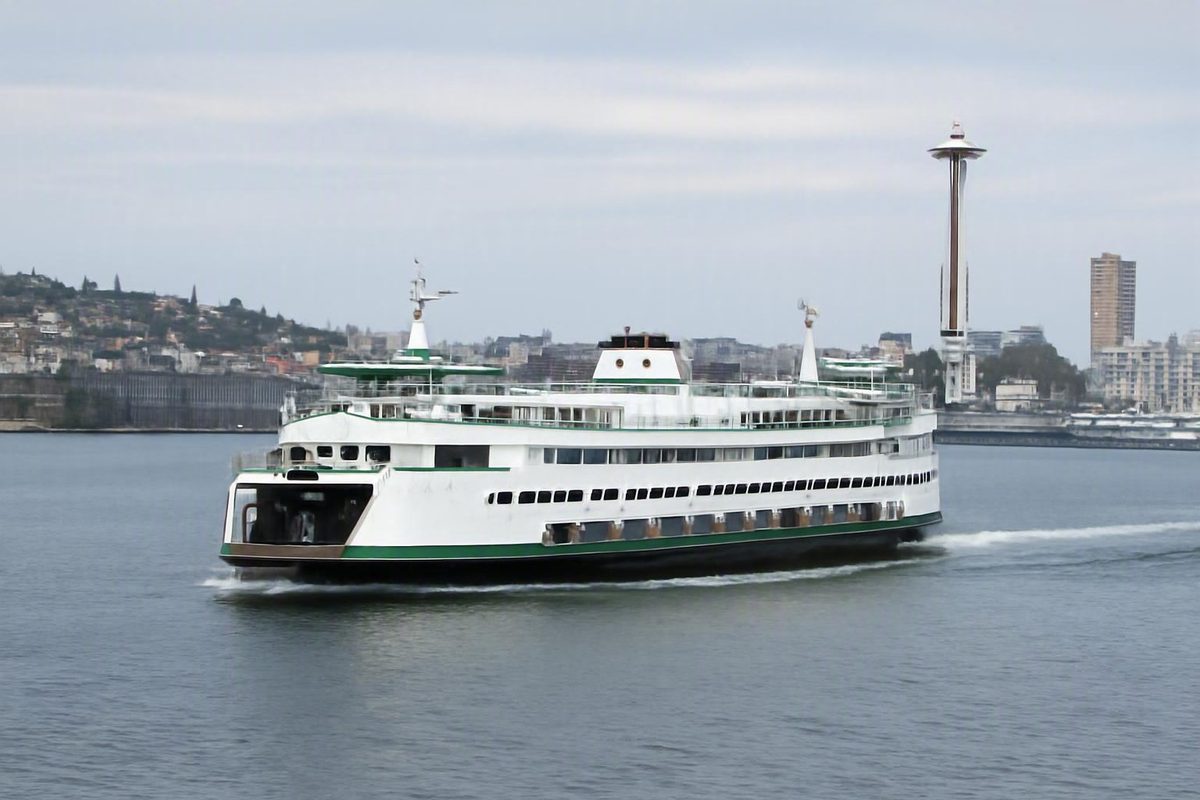
The short answer: approximately 35 minutes on the ferry
The scheduled ferry crossing from Seattle to Bainbridge Island takes approximately 35 minutes dock to dock, according to the Washington State Ferries route schedule. Treat that as an approximate onboard duration, not a guarantee that every sailing will take exactly the same amount of time.
Quick answer
- Aboard the ferry: approximately 35 minutes
- Beyond the crossing: additional terminal, boarding, and unloading time is required
- Before leaving: check the official schedule and current service conditions
The official schedule supplied for this route is specifically labeled Summer 2026, so travelers should select the schedule for their actual date rather than assuming one seasonal timetable applies year-round. A third-party compilation for the same period lists most Seattle-to-Bainbridge sailings at about 34 minutes, which supports using 35 minutes as a rounded estimate, but that unofficial table also contains inconsistent entries and should not be used to choose a sailing (Bainbridge Ferry Schedule 2026).
Most importantly, the crossing time does not include:
- Traveling from your starting point to Colman Dock
- Finding the appropriate terminal entrance
- Completing necessary ticket or terminal steps
- Waiting to board
- Boarding the vessel
- Unloading at Bainbridge Island
- Continuing from the terminal to your final destination
- Extra waiting caused by delays or vehicle-capacity limits
For itinerary purposes, use approximately 35 minutes for the time between the docks, then calculate the surrounding stages separately.
Why a 35-minute crossing is not a 35-minute journey
There is no dependable door-to-door estimate that works for every traveler. Total time depends on where you begin in Seattle, how you reach the waterfront, whether you walk or drive onto the ferry, current operating conditions, and where you are going after arriving on Bainbridge Island.
Use this planning formula:
Time to reach Colman Dock + personal arrival buffer + approximately 35 minutes aboard + unloading time + onward travel on Bainbridge Island
Each part matters.
Terminal access begins at your actual starting point. Someone staying near the downtown waterfront has a different journey from someone coming from another Seattle neighborhood or changing transportation along the way.
Your arrival buffer should account for your transportation mode, current terminal guidance, and the consequences of missing the intended departure. No supplied evidence supports one universal arrival time for every passenger and sailing.
Terminal processing and boarding occur outside the scheduled crossing. Reaching the terminal at the listed departure time leaves no room to complete the necessary steps before boarding.
Unloading and onward travel continue after the ferry reaches Bainbridge Island. Docking does not mean that you have reached a restaurant, lodging property, meeting point, or another destination on the island.
It is useful only as an example of how terminal access, waiting, boarding, crossing, and the final leg can accumulate—not as a general promise for every traveler (Seattle-to-Bainbridge commute guide).
If you have a timed meal, tour, reservation, or transportation connection on Bainbridge Island, work backward:
- Identify when you must reach the actual destination.
- Estimate travel from the Bainbridge terminal to that destination.
- Add time to unload and orient yourself.
- Choose an appropriate ferry sailing.
- Add a personal terminal buffer in Seattle.
- Calculate the trip from your starting point to Colman Dock.
- Preserve additional flexibility for changing conditions.
This is safer than treating the scheduled docking time as the moment you will be ready for your next activity. It also reflects Seattle Know’s planning principle: make the ferry part of the day rather than squeezing it between tightly timed commitments.
Where the ferry leaves and where it arrives
The route connects downtown Seattle with Bainbridge Island across Puget Sound:
- Seattle departure: Colman Dock at Pier 52 on the downtown waterfront
- Bainbridge arrival: the Bainbridge Island ferry terminal at Eagle Harbor, near Winslow
- Outbound direction: Seattle to Bainbridge Island
- Return direction: Bainbridge Island to Seattle
Regional visitor information confirms Pier 52 as the Seattle boarding location and identifies the crossing as about 35 minutes (Seattle Southside’s Bainbridge Island orientation).
Knowing the terminal names helps when reading schedules, maps, alerts, and vessel information. It also prevents a common planning error: confusing the ferry terminal with the final destination.
The route can look compact on a map because it directly links downtown Seattle and Bainbridge Island. The map does not show how long it will take you to approach the waterfront, enter the terminal process, or continue after disembarking.
Calculate terminal access separately:
- If you are already near Colman Dock, reaching the ferry may be a relatively simple first step.
- If you are coming from another Seattle neighborhood, the approach may involve a longer walk, transit connection, rideshare, or drive.
- If your Bainbridge plans extend beyond the terminal area, include that additional segment when choosing a sailing.
Lodging can simplify the day without there being one universally best neighborhood. If the ferry is a central part of your itinerary, staying somewhere that makes the waterfront an easy first move may reduce backtracking. The broader principle is to choose a base that matches how you plan to move; Seattle Know’s guide to choosing where to stay in Seattle explains that approach in more detail.
Walking on versus driving on: how the time calculation changes
The Seattle–Bainbridge ferry carries both pedestrians and vehicles. The scheduled crossing is the same regardless of how you board; the major difference is the time and uncertainty surrounding the sailing.
That does not guarantee immediate boarding, an on-time departure, or an instant exit after arrival. Walk-on passengers must still reach the correct terminal area, complete applicable steps, wait for boarding, and follow terminal and crew instructions.
Drivers may encounter a vehicle queue before loading. Because vehicle space is finite, a driver can also miss the intended sailing if available capacity fills. The eventual trip across the water may remain close to its scheduled duration, but waiting for a later departure can make the full journey substantially longer. A local commute guide supports this distinction between the comparatively simpler walk-on process and the extra queue, loading, and unloading exposure for vehicles (walk-on and drive-on comparison).
| Planning factor | Walk-on passenger | Drive-on traveler |
|---|---|---|
| Scheduled onboard time | Same route crossing | Same route crossing |
| Queue exposure | Avoids the vehicle-capacity queue but still involves terminal waiting | May involve a vehicle queue and limited space |
| Loading | Uses the pedestrian boarding process | Waits for directed vehicle loading |
| Unloading | Avoids the vehicle-deck unloading sequence | Must follow the vehicle unloading process |
| Predictability | Generally more predictable around the crossing | More exposed to queue and capacity uncertainty |
| Potential advantage | Can suit a compact plan near the arrival terminal | Can support plans requiring transportation farther away |
| Primary tradeoff | Less independent mobility after arrival | More terminal exposure before and after the crossing |
Choose based on what the rest of your day requires.
Walking on may suit a focused outing near the Bainbridge terminal. It removes the question of vehicle capacity and can make the trip easier to structure when timing matters.
Driving on may be useful when your itinerary requires independent transportation farther from the terminal. The tradeoff is a less predictable total journey because of vehicle queues, loading, available space, and unloading.
Do not compare the options only by time aboard. Instead, ask:
- How will I reach Colman Dock?
- What transportation will I need after arriving?
- How costly would missing the intended sailing be?
- Am I comfortable with possible vehicle-queue delays?
- Does having a vehicle materially improve the rest of the day?
Once you decide, check current official information rather than assuming a fixed extra allowance will always be enough.
What can make the trip take longer
Approximately 35 minutes is a scheduled crossing estimate. The complete journey can take longer because of:
- Weather
- Mechanical problems
- Staffing issues
- Other operational delays
- High vehicle demand
- Limited vehicle capacity
It helps to distinguish a delayed sailing from a longer crossing.
A delayed sailing leaves or arrives behind its published time. Much of the additional time may be spent waiting at the terminal, even if the trip across the water remains close to its usual duration.
A longer crossing means the onboard portion itself exceeds the approximate schedule. Either situation postpones the point at which you can unload and begin the next stage of your day.
Vehicle capacity creates an additional source of uncertainty. If a driver cannot load onto the intended sailing, waiting for a later departure can have a much greater effect than a small variation in the crossing itself. That is why no single extra allowance can protect every drive-on itinerary.
For example, a route report updated on August 6, 2026, said vessels were running 35–50 minutes behind schedule (archived date-stamped ferry report). This is a historical illustration of how a temporary disruption can affect plans; it is not evidence that the delay remains active or represents normal service.
Avoid assuming that a particular weekday, weekend, holiday, or event will always create a predictable delay. Conditions vary, and general rules cannot replace information for the sailing you intend to take.
The practical response is to avoid placing an inflexible commitment immediately after the scheduled arrival. If a reservation or connection cannot move, choose an earlier sailing and retain enough time to unload and reach the actual destination.
Check the official schedule, alerts, and Vessel Watch before leaving
Do not plan from the crossing estimate alone. Verify the sailing that applies to your travel date and direction through the Washington State Ferries Seattle–Bainbridge route page.
Check twice:
- While planning, to identify plausible outbound and return sailings.
- Shortly before departure, to review current operating conditions.
The supplied official schedule is labeled Summer 2026, demonstrating why the effective date matters. Do not save one seasonal timetable and assume it remains valid indefinitely.
Confirm the direction as well:
- Outbound: Seattle to Bainbridge Island
- Return: Bainbridge Island to Seattle
A schedule for the wrong direction may look plausible while being unusable for your trip.
Service notices add information that a timetable alone cannot provide. Vessel Watch can help you understand where a ferry is relative to the terminals, although vessel location does not replace the published schedule or terminal instructions. The official WSDOT Seattle terminal and Vessel Watch page is a practical starting point for current terminal information.
Use this compact verification checklist:
- [ ] Travel date: Is the schedule effective on my actual date?
- [ ] Direction: Am I viewing Seattle to Bainbridge or Bainbridge to Seattle?
- [ ] Departure: Which sailing do I intend to take?
- [ ] Current notice: Is a service issue affecting the route?
- [ ] Vessel location: Does current tracking suggest normal progress or a possible delay?
- [ ] Terminal buffer: Have I allowed enough time for my transportation mode and risk tolerance?
Be cautious with search-result snippets, screenshots, blog tables, and unofficial timetable reproductions. They may omit an effective date, remain online after schedules change, or contain transcription errors.
Likewise, do not build the day around a claimed fixed sailing frequency. Departure intervals may vary by date, direction, and operating conditions. Select actual sailings from the current dated schedule.
Build a simple Seattle-to-Bainbridge ferry-day timeline
A useful ferry-day plan is a worksheet rather than a rigid universal itinerary. Fill in each stage using your starting point, transportation mode, destination, and current service information.
| Stage | Your plan |
|---|---|
| Leave lodging or starting point | ______ |
| Travel to Colman Dock | ______ |
| Reach the appropriate terminal area | ______ |
| Personal terminal buffer | ______ |
| Planned Seattle departure | ______ |
| Scheduled crossing | About 35 minutes |
| Unload and orient on Bainbridge | ______ |
| Reach one focused destination or activity | ______ |
| Begin returning toward the terminal | ______ |
| Planned Bainbridge departure | ______ |
| Scheduled return crossing | About 35 minutes |
| Continue from Colman Dock | ______ |
A round trip contains two approximate crossings, so its scheduled onboard portion totals about 70 minutes before terminal access, waiting, boarding, unloading, island travel, and delays are added. That calculation is based on the route’s approximate 35-minute duration in each direction (Bainbridge ferry overview).
Choose a likely return sailing before filling the middle of the day. That gives the visit a practical outer boundary. Check the return again before heading to the terminal because schedules and service conditions are time-sensitive.
A manageable planning shape is:
- One round trip
- One walkable or otherwise focused destination
- One meaningful buffer
- One flexible backup
Three common scenarios show why the same crossing can produce different overall journeys.
Walk-on traveler already near Colman Dock: The terminal approach is relatively short, and the traveler avoids the vehicle-capacity queue. The trip still includes a personal buffer, boarding, the crossing, unloading, and walking to the chosen destination.
Traveler coming from another Seattle neighborhood: The scheduled crossing does not change, but reaching the waterfront may become a substantial part of the journey. The clock should begin at the actual starting point, not at the terminal entrance.
Driver exposed to a vehicle queue: Time aboard remains based on the same route schedule, but the total journey becomes less predictable. Vehicle capacity, directed loading, and unloading may affect the day, and the driver may need to accept a later sailing.
Weather should also shape the plan. Bring an appropriate layer and maintain enough flexibility to shorten, move, or replace an activity if conditions change. A useful backup should be simple enough to adopt without rebuilding the entire itinerary.
Before leaving, check that you have:
- [ ] Verified the official sailing for today’s date
- [ ] Reviewed current service information
- [ ] Confirmed the direction of travel
- [ ] Decided whether to walk on or drive on
- [ ] Calculated travel to Colman Dock
- [ ] Added a personal terminal buffer
- [ ] Accounted for the scheduled crossing
- [ ] Included unloading and onward travel
- [ ] Avoided a fixed commitment immediately after arrival
- [ ] Selected a likely return sailing
Frequently asked questions
Does the ferry from Bainbridge Island back to Seattle also take about 35 minutes?
Yes. The return crossing is also scheduled at approximately 35 minutes dock to dock (Seattle Southside ferry overview). The same caveat applies: that is an approximate crossing time, not the total time required to reach the terminal, wait, board, unload, and continue into Seattle.
For a round trip, the two scheduled crossings add up to about 70 minutes aboard before those additional stages are included.
Does the 35-minute estimate include waiting and boarding?
No. It covers the scheduled crossing between the docks. It does not include terminal access, applicable ticket or terminal steps, waiting, boarding, unloading, or travel to your final destination.
Use this formula:
Terminal access + personal buffer + scheduled crossing + unloading + onward travel
Can I walk onto the Seattle–Bainbridge ferry or take a car?
Yes. The route accommodates both walk-on passengers and vehicles.
The onboard route is the same, but the surrounding process differs. Walking on avoids vehicle-capacity queues and vehicle unloading, which can make the overall trip more predictable. Driving may be useful when you need transportation farther from the terminal, but it adds exposure to queues, loading, available vehicle space, and unloading.
Walking on does not guarantee immediate boarding or an on-time trip.
How early should I arrive for the ferry?
There is no single arrival buffer that is dependable for every traveler. The appropriate amount depends on whether you are walking or driving, how you will reach the terminal, current conditions, applicable terminal guidance, and the consequences of missing the sailing.
Check current Washington State Ferries information and arrive with enough time to complete the relevant terminal process. Drivers should account for possible queues and capacity rather than assuming a small fixed buffer will guarantee space. If you have a timed commitment after arrival, choose an earlier sailing instead of minimizing your buffer.
Where should I check for current ferry delays and vessel locations?
Use Washington State Ferries for the dated schedule and current service information, and use Vessel Watch to understand where a vessel is relative to the terminals.
Review those tools while planning and again shortly before leaving. Confirm the date, direction, intended departure, current notices, vessel location, and terminal buffer rather than relying on an old screenshot, search snippet, or unofficial timetable.
The practical answer: allow approximately 35 minutes for the Seattle-to-Bainbridge crossing itself, then add time for reaching Colman Dock, waiting, boarding, unloading, and continuing to your destination. Keep the day focused, preserve a buffer, and check the dated official schedule and current conditions before departure.