
Top Car-Free Day Trips from Seattle by Ferry, Bus, Train, and Guided Tour
Bainbridge is the clearest first ferry choice: the trip is short, the arrival is useful and a simple day still works. Big nature trips usually work best as tours.
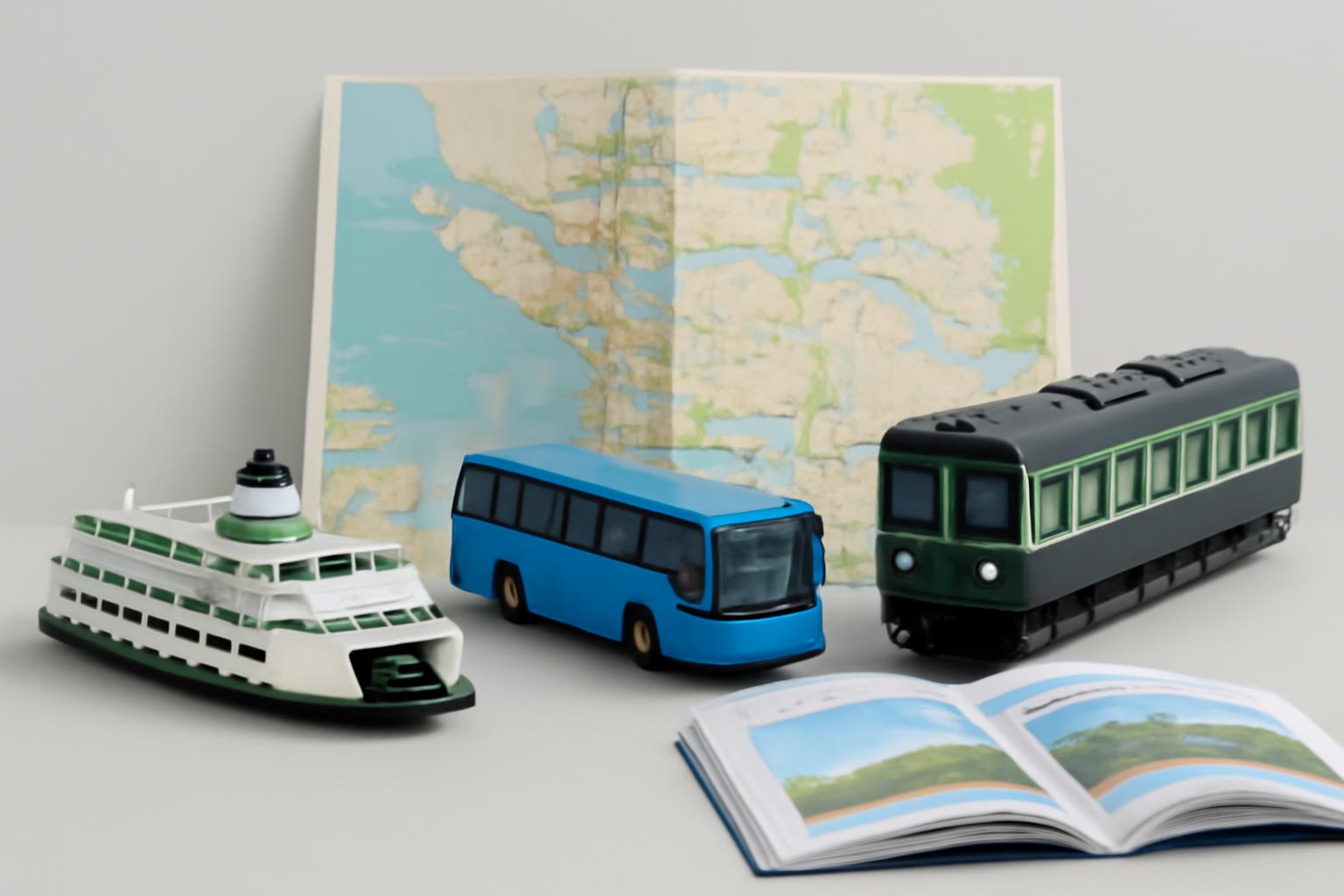
If you want Seattle day trips without a car, the good news is that Seattle is strongest where car-free travel is usually hardest elsewhere: short ferry outings, simple city-to-city transit, and a few guided nature trips that remove the hardest logistics. The bad news is that not every scenic place near Seattle is equally practical once you arrive.
The easiest way to sort the options is by trip shape. Some are independent transit days, like Tacoma. Some are ferry-first scenic outings, like Bainbridge. And some are really tour-dependent nature days, like Mount Rainier. All of those count as no-car travel, but they ask for different levels of flexibility, weather tolerance, and planning effort.
For most first-time visitors, the smartest move is to stay near the transit core or waterfront, choose one main outing, and leave room for weather or schedule changes. Treat every fare and timing here as a planning estimate rather than a promise, especially on ferry and mountain days.
Why Skip the Car for Seattle Day Trips
Visit Seattle also notes that kids 18 and under ride most local transit free, which can make city-side connections to terminals and stations much cheaper for families (Visit Seattle’s no-car guide).
What makes Seattle especially workable is not just the number of transit modes, but the quality of a few specific trip types. A walk-on ferry can be the outing, not just transportation. Tacoma gives you another city that still works on foot after arrival. And in the right season, limited hiking transit can open trailheads that would otherwise be effectively car-only.
Where you stay matters almost as much as where you go. If you are comparing Seattle bases, it helps to choose by trip shape rather than by postcard appeal: how to choose where to stay in Seattle is really a question about whether you want the easiest transit start, the simplest ferry morning, or a neighborhood you can enjoy after you get back.
That is why some nearby destinations are much better than others without a car. A strong car-free day trip is usually one where the arrival point is immediately useful on foot, or where the second leg is short and predictable.
For the biggest nature destinations, skipping the car does mean accepting a different kind of day. Mount Rainier and the Olympic Peninsula are not the same kind of no-car outing as Bainbridge or Tacoma. That tradeoff is real, but for a short Seattle stay it is often the right one.
Bainbridge Island: The Easiest Ferry Day Trip
For most first-time visitors, Bainbridge is the clearest ferry choice because the trip is short, the arrival is useful, and the day stays successful even if you keep it simple. Recent Seattle transit guidance describes the crossing as about 35 minutes, with adult walk-on fare around $11.25 round trip (Tours Northwest’s Seattle transit guide).
What makes Bainbridge work so well is the landing. You are not arriving at a terminal that forces another long transfer before the pleasant part begins. You step off and can go straight into Winslow, the downtown area most visitors actually want: coffee, lunch, shops, galleries, and a relaxed main-street feel within easy walking distance.
That last-mile simplicity matters more than people expect. It means Bainbridge is forgiving. If the weather is mixed, you can shorten the day without feeling that the trip was wasted. If the morning is clear, the skyline and Sound views become part of the outing rather than dead time between attractions.
It is also one of the few Seattle day trips where restraint genuinely improves the experience. One round trip, one walkable area, one unhurried meal, and one weather buffer is usually the best version of the day. Trying to “see the whole island” is where a smooth outing starts turning into a transport puzzle.
A straightforward Bainbridge plan looks like this:
- Get to the downtown Seattle ferry terminal on foot or by transit.
- Ride over as a walk-on passenger in the morning.
- Spend late morning and lunch in Winslow.
- Add a waterfront stroll, gallery stop, or second coffee if conditions are good.
- Return in midafternoon or early evening.
That is also why Bainbridge ranks so highly in practical terms. The parts of the island that are harder without a car are not the parts you need for a satisfying first visit. The easiest version is not a compromise. It is the point.
Vashon Island and Bremerton: Scenic Ferry Alternatives
After Bainbridge, the next ferry question is usually Vashon or Bremerton. Both can work without a car, but neither has the same instant-arrival ease.
Vashon is the quieter, more rural-feeling option. One recent Seattle-area guide puts adult walk-on fare at about $5.65 round trip, with total travel around 1.5 hours and island bus service available once you arrive (Top Left Adventures’ Seattle day trips guide).
That makes Vashon better for travelers who are comfortable with one extra planning layer. The appeal is not that everything starts at the dock. It is that the island feels slower and less polished than Bainbridge, which some visitors will like more. But the tradeoff is real: you usually need to think about the second leg instead of just starting to wander.
In practice, Vashon works best if you are happy with a looser day and do not mind building around the ferry rather than around a dense, walkable town center. It is a good option for repeat visitors, people who enjoy the ferry ride itself, or travelers who want a quieter mood and can tolerate a little more friction.
Bremerton is the better pick if the crossing is the attraction. The Seattle–Bremerton ferry takes about 60 minutes each way, and recent tourist transit guidance places adult walk-on cost around $9 to $10 round trip (Jetpac’s Seattle public transportation guide).
Because the boat ride is longer, Bremerton feels more like a full marine outing than a quick hop. You get more skyline views leaving Seattle, more open-water time, and a slower rhythm overall. After arrival, the strongest version of the day is usually modest: a waterfront walk, lunch, a little wandering, then the return boat.
So the choice is less about which place is “better” and more about what kind of day you want. Choose Vashon if you want a quieter place and are fine coordinating a second step after the ferry. Choose Bremerton if you want the longer ride with a simple, low-ambition waterfront afternoon on the far side.
Tacoma by Train or Bus: Urban Day Trip
Tacoma is one of the best non-ferry answers to the question of seattle day trips without a car because it gives you a full destination city at the far end, not just a scenic stop. A recent local guide describes the Sounder train to Tacoma as about 1 hour and about $10 round trip, with bus service often taking about 45 minutes depending on the route and timing (Top Left Adventures’ Seattle day trips guide).
The important caveat is that the train is not an all-day tourist shuttle. Visit Seattle frames Tacoma rail and bus service as useful, but also notes that the rail options are tied more closely to weekday commuter patterns, while ST Express buses offer a more flexible fallback from central Seattle (Visit Seattle’s day trips page).
That is actually what makes Tacoma such a strong car-free recommendation. You are not depending on one brittle connection.
Tacoma also fits short Seattle stays well. If you are based near downtown, Pioneer Square, or King Street Station, you can leave at a reasonable hour and still have a full day. That is a meaningful advantage over places that only work with an early start, a tour pickup, or a seasonal shuttle.
The best Tacoma days are usually area-based rather than checklist-based. Pick one zone, one rhythm, and one reason for going. That might mean museums and lunch, a downtown wander with park time, or a food-led day with a little neighborhood exploration. The point is not maximum coverage. The point is that Tacoma behaves like a city once you get there, which is exactly what makes it easy without a car.
Snoqualmie Falls and Hikes via Bus or Shuttle
Snoqualmie is where a lot of Seattle no-car advice gets fuzzy, so it helps to separate the hiking version from the sightseeing version.
For hikers, the clearest independent option is Trailhead Direct when it is operating. One Seattle day-trip guide lists the service at $2.75 and describes it as reaching select trailheads such as Little Si, Mount Si, and Mount Tenerife rather than opening up the entire Snoqualmie area (Wheatless Wanderlust’s Seattle day trips guide).
That distinction matters. Trailhead Direct does not make Snoqualmie broadly easy without a car. It makes a limited set of summer-style hiking days possible if the route is running, your trail is on it, and you are willing to organize the whole outing around that one service.
Snoqualmie Falls is a different case. It is easier to enjoy once you are there than it is to reach spontaneously. Travel coverage aimed at car-free Seattle visitors generally treats the Falls as a bus-or-tour outing rather than a simple all-day public-transit destination with lots of flexible onward options (Emma Jane Explores on Seattle day trips).
That is why Snoqualmie works best when you are honest about which version of the day you want:
- A Trailhead Direct day if you specifically want a hike and the service is running.
- A guided or shuttle-based Falls day if you mainly want scenery with less logistics.
- A skip-for-now option if your dates do not line up with limited service.
Compared with Bainbridge or Tacoma, Snoqualmie is simply less forgiving. It can absolutely be done without a car, but it is more schedule-sensitive, more seasonal, and less suitable for travelers who want a loose, weather-adaptable day.
Guided Tours for Mt Rainier, Olympic NP, and Leavenworth
For the bigger landscape destinations, tours are usually the most honest answer. Visit Seattle specifically points travelers to Evergreen Escapes for Mount Rainier day trips with downtown hotel pickup and drop-off, also notes Olympic Peninsula day trips by operator, and lists Amtrak to Leavenworth at roughly 2.5 to 3 hours from Seattle (Visit Seattle’s day trips page).
That creates two different no-car patterns.
The first is the guided park day. Mount Rainier and Olympic fit here. You are not independently piecing together local transit into a national-park visit; you are buying transportation, route design, and someone else’s timing. For many visitors, especially those with limited Seattle time, that is a smart trade.
The second is the long rail town day. Leavenworth fits this better. The train is part of the experience, but it also makes the outing longer and more commitment-heavy than Bainbridge or Tacoma. It is a real day trip, just not a casual one.
For mountain and park trips, the key planning question is not only price. It is whether the trip matches the season and current access. Independent travel coverage on Seattle day trips notes that Mount Rainier entry requirements and access conditions can change, so it is worth checking what the park is allowing before you go or book.
That is the main car-free lesson for Seattle’s big-nature trips: if you are not driving, reliability matters more than theoretical freedom. A realistic tour with confirmed pickup and a season-appropriate route is usually better than an ambitious itinerary built on wishful timing.
Transit Essentials: ORCA Card, Apps, and Tips
For the Seattle side of these outings, the key tool is ORCA. Recent tourist transit guidance describes most local rides as roughly $2.75 to $3, with transfers lasting about 2 hours, and day-pass value commonly loaded at $6 for rides up to $3 each. The same guidance also notes that Washington State Ferries are separate, so your Bainbridge, Bremerton, or Vashon fare is not covered the way a city bus or light-rail leg is (Jetpac’s Seattle public transportation guide).
That leads to a simple rule: use ORCA for the city-side connections, but expect to pay separately for the state-ferry crossing itself.
Real-time planning matters more than memorizing route maps. If you are using buses to reach a terminal or station, the practical question is rarely “what is the perfect route?” It is “what is my best backup if I miss the first one?” That is especially true on ferry mornings, when a small delay at the start can ripple through the rest of the day.
This is also where a simple planning method helps. Seattle Know’s base, ferry, and rainy-day planning approach is useful because it keeps the day anchored around one main move instead of stacking too many fragile transfers.
Base choice matters here too. A hotel that is only a little closer to the ferry terminal or a major transit hub can feel much easier at 8 a.m. than it looked on a map the night before. That is why central transit-heavy areas and waterfront-adjacent stays tend to outperform “pretty but inconvenient” locations for short trips.
Weather is the other big variable. On paper, Seattle day trips can look equally easy. In practice, the winners are the ones that still work if the forecast turns. Bainbridge and Tacoma both do that well because you can shift between short outdoor stretches and indoor stops without rebuilding the whole day.
A good no-car day trip is rarely the one with the most moving parts. It is the one where the main departure, the return window, and the bad-weather fallback are all obvious before breakfast.
Sample Car-Free Itineraries and Basing Advice
If you are trying to turn all this into an actual plan, keep the shape simple. The best Seattle day trips without a car usually have one anchor, one food stop, and one clear return idea.
1. Bainbridge for a first ferry day
- Start from a downtown or waterfront base.
- Take a morning ferry as a walk-on passenger.
- Spend late morning and lunch in Winslow.
- Add one extra stop only if the day is going smoothly.
- Return before the outing turns into a full-island transport project.
This is the best first answer for travelers who want a ferry day that feels scenic but low-stress.
2. Tacoma for a city change of pace
- Use Sounder if the schedule fits your day.
- Default to the bus if the train timing is awkward.
- Pick one Tacoma area rather than trying to cover the entire city.
- Return by whichever mode gives you the cleanest, least fussy trip home.
This works especially well for travelers who want a full day away from Seattle that still feels flexible and urban.
3. Snoqualmie as a transit-plus-nature day
- Choose it only if the exact bus, shuttle, or tour setup fits your dates.
- Treat the transit schedule as the spine of the outing.
- Decide in advance whether you are doing a hike day or a Falls day.
- Skip it if you are hoping to improvise after arrival.
This is better for people who specifically want that mountain-or-waterfall outing, not for visitors who just want “something outdoors.”
4. Guided park day for maximum scenery, minimum logistics
- Book a downtown pickup tour for Rainier or Olympic.
- Confirm pickup location and cancellation terms before the day starts.
- Expect a long outing, but a low-decision one.
- Check current park-access conditions before departure.
This is the right answer when the destination matters more than independence.
Your Seattle base can make all of these easier. If ferry days are high on your list, a waterfront-adjacent stay removes friction immediately. If you want flexible departures and easy returns, central transit access usually matters more than neighborhood image. That is the core logic behind Seattle Know’s advice on choosing a base: match the hotel to how you will move, not just to how the area looks in photos.
That keeps the trip realistic, flexible, and much less tiring than trying to force every scenic possibility into one short visit.
What’s the best first car-free day trip from Seattle?
It is the rare outing where the simplest version is also the most satisfying.
It is also forgiving. You can keep it short in mixed weather, or stretch it into a leisurely lunch-and-stroll day if conditions are good. That flexibility is what makes it such a strong first no-car trip.
How much do walk-on ferries cost for day trips?
For the most popular downtown ferry routes, recent tourist transit guidance puts Bainbridge and Bremerton in roughly the $9 to $11 round-trip range for adult walk-on passengers.
For Vashon, one recent Seattle-area guide lists adult walk-on fare at about $5.65 round trip.
Treat those as planning estimates. Ferry pricing and schedules can change, so it is worth checking current details before you go.
Are these trips family-friendly with kids-free transit?
Many of them are, especially the city-side portions of the trip. Visit Seattle notes that kids 18 and under ride most local transit free, which can make Seattle bus and rail connections much cheaper for families (Visit Seattle’s no-car guide).
Snoqualmie hike days work better for families who already know they want that specific kind of outing and are comfortable planning around a limited route or tour.
Do I need reservations for ferries or tours?
Tours and longer-distance trips are the ones to organize ahead, especially when park access or rail timing matters.
That is particularly true for Mount Rainier, where travel coverage aimed at Seattle visitors notes that entry requirements and access conditions can change, so it is smart to verify current conditions before you book or depart.
What if it rains on my day trip?
Do not cancel automatically. Rain changes the shape of the best outing more than it changes the list of possible ones.
That is exactly why Bainbridge and Tacoma are such reliable choices. Both let you break the day into shorter outdoor stretches with easy indoor stops in between. If the forecast looks rough, avoid the most schedule-sensitive hike plan and pick the trip with the clearest indoor fallback instead.