
One Smart Layer Keeps Seattle Rainy Days Moving Without Overpacking
Ferry waits, waterfront wind and longer uphill walks call for an outer layer that fits over warmth and shoes that stay comfortable on wet ground.
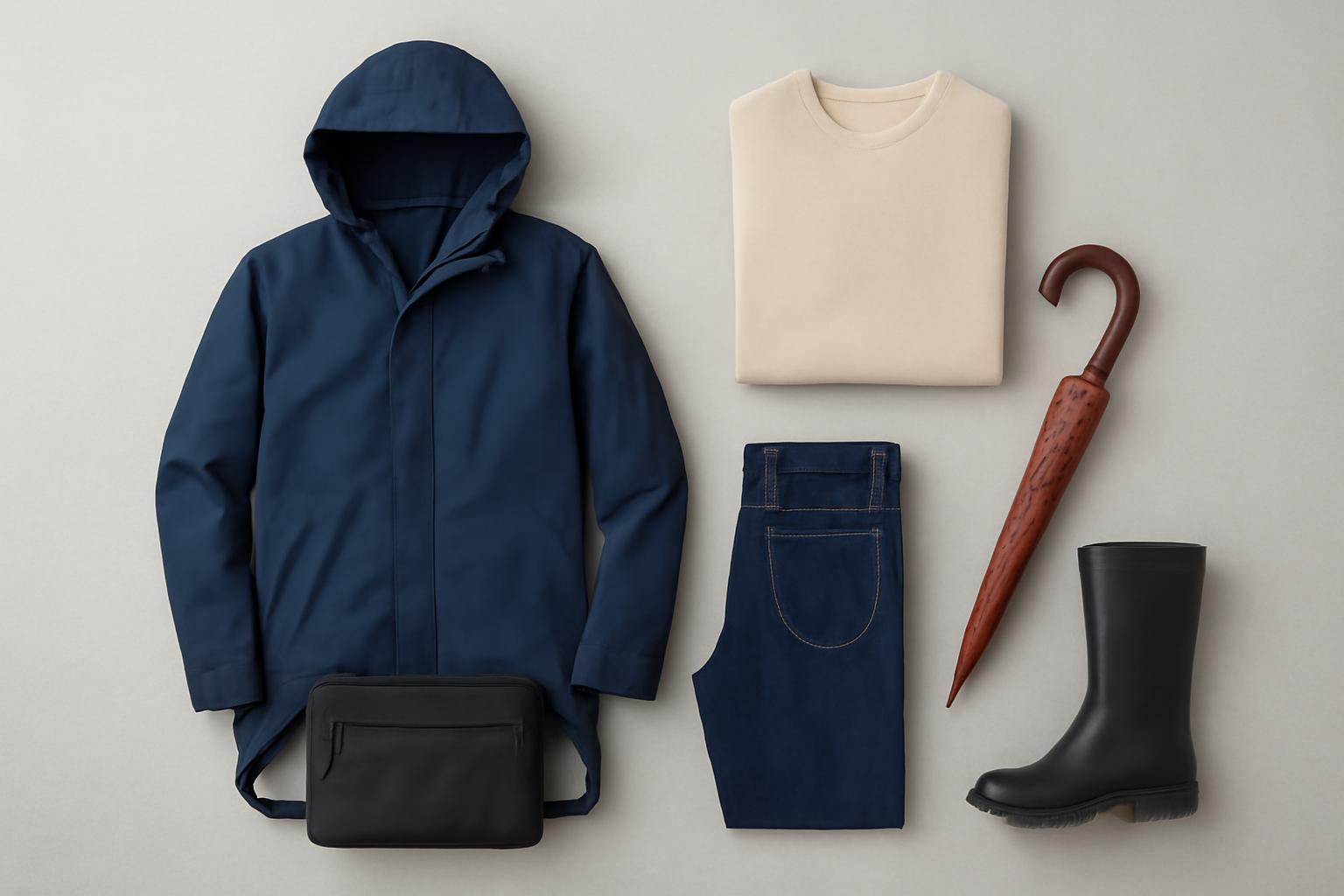
One smart layer keeps Seattle rainy days moving without overpacking.
If you are wondering what to wear in Seattle rain, the practical answer is less dramatic than the city’s reputation. They require one reliable rain-ready outer layer, one warm piece you can add underneath, shoes that can handle wet pavement, and a plan built around short outdoor stretches between dry stops.
In that kind of day, your clothes do not need to create perfect dryness for eight straight hours outside. They need to keep you comfortable enough to keep moving from one stop to the next.
It also helps to separate two kinds of advice. Seattle Know’s strongest first-party guidance is about how rainy days work in the city: cluster your day by neighborhood, keep outdoor segments short, and use indoor stops as built-in resets. The more detailed clothing recommendations in this article come from outside Seattle packing and weather sources, which broadly agree on the same city formula: simple layers, a hooded rain layer, and walkable wet-weather footwear.
Seattle Rain: Frequent Light Drizzle, Not Downpours
Seattle’s rainy reputation is real, but its rainfall pattern is often misunderstood. Remitly’s Seattle weather guide, summarizing NOAA climate data, says Seattle averages 39.3 inches of annual precipitation, compared with 49.5 inches in New York City and 67.4 inches in Miami. The same guide says Seattle’s wetter stretch is usually October through April, while June through September is much drier, with July averaging 0.67 inches of precipitation.[Remitly]
That matters because “rainy” in Seattle usually means repeated light drizzle, mist, gray skies, and damp pavement more than dramatic downpours. Remitly describes most precipitation as light mist or drizzle, and The Mandagies’ Seattle packing guide says winter commonly sits in the high 30s to high 40s and brings rain on about half the days, while spring and fall stay changeable.[The Mandagies]
For travelers, that usually changes the packing problem from “How do I survive a storm?” to “How do I stay comfortable through ten damp minutes here, fifteen there, and maybe a breezy stretch near the water?” It is to bring pieces that work across small, repeated transitions: hotel to breakfast, breakfast to market, market to museum, museum to ferry, ferry to dinner.
This is why Seattle trips improve when you stop treating a wet forecast like a cancellation notice. Seattle Know’s rainy-day planning perspective is that a rainy day still works if you shorten outdoor segments, move in clusters, and keep a dry fallback in the plan.[Seattle Know] In practice, that can mean picking one neighborhood, walking a few blocks at a time, then resetting in a cafe, bookstore, market hall, museum, or ferry terminal instead of roaming the whole city in one long exposed loop.
That logic especially helps on short visits without a car. Seattle often feels better when you choose one area at a time instead of trying to cover everything. In wet weather, compact plans feel even smarter. One anchor, one neighborhood cluster, one indoor backup, and one layer that keeps the gaps between them manageable.
For clothing, the forecast is therefore less important than the shape of your day. If your itinerary is mostly indoor stops connected by short walks, you can dress much lighter than someone spending hours in a park or on a trail. If your day includes ferry waiting, waterfront wind, or longer uphill walks, the same core system still works, but it matters more that your outer layer fits over warmth and your shoes stay comfortable on wet ground.
The upside is reassuring: Seattle rain is often annoying rather than trip-ending. Visitors who expect nonstop soaking tend to overpack. Visitors who understand the city’s rhythm usually do better with fewer, smarter pieces.
The One Layer That Saves Most Rainy-Day Plans
If you pack one Seattle-specific clothing item, make it a hooded rain jacket or rain shell that is light enough to carry and roomy enough to fit over your normal clothes. Outside Seattle packing guides repeatedly treat that as the essential piece: The Mandagies call a rain jacket essential, Top Left Adventures says a solid waterproof rain jacket is essential year-round, and Remitly recommends a packable rain shell or windbreaker with a hood.[Top Left Adventures]
This is where Seattle Know’s trip-planning view and the broader clothing consensus line up neatly. Seattle Know argues that one layer is what saves most rainy-day plans because the city works best when you move in short, usable segments rather than waiting out every patch of drizzle.[Seattle Know] Outside clothing sources explain what that layer usually is: not a giant insulated coat for most city use, but a rain-ready outer layer you can throw over whatever you are already wearing.
A good Seattle rain layer does not need to be technical in the most extreme sense. It needs to solve the city’s actual problem. That means:
- it has a hood
- it works over a tee on a mild day
- it still fits over a sweater or fleece on a colder one
- it is light or packable enough that carrying it indoors is not a burden
Those points are supported directly by the external guidance. Remitly describes the outer layer as a packable shell or windbreaker, and Top Left Adventures specifically recommends a rain jacket that is lightweight and fits over layers. Go Seek Explore also frames the local preference as a hooded shell instead of depending on an umbrella for the city’s usual light rain.[Go Seek Explore]
The hood matters more than first-time visitors often expect. Seattle rain is frequently light enough that a hood handles it faster than stopping to open and close an umbrella every few blocks. On a city day with transit, coffee, stairs, photos, directions, or ferry boarding, hands-free coverage is often simply easier. That is a convenience claim more than a hard rule; the key point is that Seattle’s common rain pattern rewards quick coverage, not elaborate setup.
The other reason this one layer earns so much space in the bag is temperature flexibility. Seattle can start cool, turn mild, then feel chilly again once you hit evening or open water. If the outer layer is separate from the warmth layer, you can keep adjusting without rebuilding the outfit.
There is also a psychological benefit. A dependable outer layer makes a wet forecast feel manageable. It turns “maybe we should cancel that neighborhood walk” into “we can still do it, just with shorter outdoor links and a dry stop halfway through.” For Seattle, that is exactly what good rain clothing should do. It should not make you feel sealed off from the climate. It should make the city easy to keep using.
Layering Basics for Seattle’s Temperature Swings
Once the outer layer is settled, the rest of Seattle dressing becomes a layering problem. The clearest framework comes from the standard three-layer system: a moisture-managing base layer, a warm mid-layer, and an outer layer for rain and wind. L.L.Bean’s cold-rain layering guide describes those three roles directly and also notes that wool and synthetics outperform cotton for staying comfortable in cold, wet conditions.[L.L.Bean]
For a Seattle city trip, that system can stay very simple:
- Base layer: T-shirt, long-sleeve tee, merino top, or similar indoor-comfortable piece
- Mid-layer: sweater, hoodie, fleece, or light insulated layer
- Outer layer: hooded rain jacket or shell
That may sound basic, but basic is the point. Most visitors do not need a specialized mountain setup. They need an outfit that can handle a hill climb, a warm cafe, a breezy waterfront block, an over-air-conditioned museum, and an evening ferry dock without becoming fussy.
This is why fixed outfits struggle in Seattle. A heavy sweater with no shell may feel right at breakfast and wrong by lunch. A light shirt with only a rain layer may be fine downtown and too thin on the water. The three-part system works because each piece can change jobs. Indoors, the base layer is enough. On a cool walk, the mid-layer comes on. In drizzle or wind, the shell finishes the job.
External Seattle packing sources make the same point in city language rather than technical language. The Mandagies emphasize layers because Seattle weather changes through the day. Top Left Adventures recommends a warm layer under the rain jacket. Remitly’s city-oriented advice uses nearly the same logic: a T-shirt, sweater or hoodie, and packable shell.[The Mandagies]
That flexibility matters even more when your trip includes ferries or waterfront time. A route that feels mild a few blocks inland can feel different once wind picks up near Elliott Bay or on a boat deck. You do not need a different wardrobe for that. You need one extra layer you can add before the exposed segment starts.
Fabric choice is where a lot of first-time visitors can quietly improve comfort. Cotton is common in everyday city wear, and people absolutely wear jeans in Seattle. But external guidance is consistent that cotton is the least forgiving next to the skin in cool, wet weather. L.L.Bean says cotton neither wicks moisture well nor stays especially warm when wet, and Northwest TripFinder likewise recommends wool, silk, or synthetics over cotton for rainy conditions.[Northwest TripFinder]
That does not mean you need to purge cotton from your suitcase. It means you will usually be happier if the pieces closest to your skin or most responsible for comfort swings are made from wool or synthetics when possible. Tops, socks, thin base layers, and leggings benefit more from that choice than, say, one pair of casual denim.
Another useful way to think about layering is in trip-planning terms. Layers are what let you keep the day compact without overpacking. They let you leave the hotel dressed for morning drizzle, peel down for lunch, add warmth for a ferry, and finish the evening without needing to return and change. In Seattle, clothing works best when it supports that kind of momentum.
So if you are building a packing list, do not ask, “What is the perfect Seattle outfit?” Ask, “Can these three pieces cover a mild hour, a damp hour, and a windy hour?” If the answer is yes, you are probably close.
Footwear for Walkable Rainy Routes and Puddles
The second major Seattle rain decision is footwear. For most travelers, the goal is not maximum boot height. It is staying comfortable on wet pavement, occasional puddles, and a lot of walking.
Seattle-focused guides usually point visitors toward water-resistant or waterproof walking shoes or ankle-height boots, especially in the wetter seasons. Remitly recommends water-resistant or waterproof shoes for hills and wet pavement, and RunRepeat’s waterproof walking-shoe testing notes that you do not automatically need bulky boots for rainy-city walking if your shoes provide all-day comfort and weather protection.[RunRepeat]
That is the useful middle ground for most city trips. If your plans are mostly downtown, neighborhood dining, museums, shopping, and moderate walking, a waterproof or strongly water-resistant walking shoe is often enough. If you are visiting in the wettest months, expect more standing water, or simply like more coverage, ankle boots make sense. If your trip adds muddy parks or rougher ground, more substantial boots start to earn their keep.
Whatever style you choose, wet-weather Seattle walking puts a premium on grip and comfort. Remitly specifically flags hills and wet pavement, and that makes broken-in footwear more important than fashionable footwear you hope will work out.[Remitly] A short trip can tolerate a lot of aesthetic compromise. It tolerates blisters badly.
That is why personal packing accounts can still be useful here. In Unfancy’s Seattle packing recap, the author centered the whole wardrobe around shoes that could get wet, were already broken in, and could handle long walking days. That is anecdotal, but it matches the city logic perfectly: Seattle days are rarely a single march; they are repeated segments of walking, stopping, climbing, and resuming.[Unfancy]
Socks matter more than they seem to. The Mandagies and Top Left Adventures both recommend wool socks because they stay more comfortable when damp and help regulate temperature better than cotton.[Top Left Adventures] If your feet run cold, that small upgrade can do more for comfort than swapping from one decent shoe to another.
As for umbrellas, Seattle advice is better understood as a preference than a prohibition. Multiple Seattle-oriented sources say locals often default to hoods because the city gets frequent light mist, wind, and crowded sidewalks rather than constant hard rain. Remitly and Go Seek Explore both make that point.[Go Seek Explore] But even Northwest TripFinder and Seattle Met leave room for a compact umbrella in harder rain or milder conditions. So the realistic answer is: bring one if you like one, but do not let it be your only rain plan.
If you are traveling without a car, footwear becomes even more important. You cannot assume you will quickly change shoes between stops. You may walk to transit, stand on platforms, climb hills, and finish with dinner in the same pair. That is why Seattle footwear advice ends up sounding repetitive: water tolerance, comfort, grip, and already-broken-in fit solve more real problems than any trendier feature.
Seasonal Adjustments: Wet Winters to Drier Summers
The core Seattle formula does not change much by season, but the amount of warmth and footwear protection you build into it does.
From late fall through early spring, lean more protective. Top Left Adventures says November through February are the wettest months and recommends a dependable rain jacket, waterproof footwear for the wetter seasons, and a warm layer underneath when it is cold or windy.[Top Left Adventures] The Mandagies similarly describe winter as living mostly in the high 30s to high 40s with frequent rain.[The Mandagies] For an ordinary city trip, that usually means your shell stops being optional, your mid-layer matters every day, and your shoes should tolerate repeated wet exposure instead of just occasional drizzle.
Winter city visitors often overcorrect in one of two directions. Some arrive too light, assuming “city trip” means sneakers and a sweatshirt will be fine. Others arrive too heavy, expecting a full storm scenario. Seattle usually rewards the middle: waterproof or water-resistant outerwear, one real warmth layer, and practical footwear rather than arctic gear.
Spring and fall are where the layering system shows its value most clearly. These are the seasons most likely to tempt you into dressing for the first hour of the day. A bright morning can flatten into drizzle by lunch. A dry neighborhood walk can turn chilly once you reach the water. The right response is rarely a totally different outfit. It is usually a more adjustable one.
Summer is where Seattle’s reputation most misleads visitors in the other direction. Yes, summer is much drier. The Mandagies and Top Left Adventures both describe summer days in the 70s to 80s and still recommend packing a light rain layer.[The Mandagies] That is not because Seattle summer acts like winter. It is because evenings cool off, marine influence still matters, and ferries or waterfront exposure can make a daytime outfit feel incomplete.
This is also where Seattle microclimates matter. Remitly notes that neighborhoods near water often stay cooler and cloudier while inland areas can run warmer.[Remitly] For travelers, that means your base neighborhood affects how much clothing flexibility you actually use. A light extra layer may stay in your bag all afternoon inland and feel immediately useful near the waterfront.
Seattle Know’s planning advice adds one more seasonal point that matters year-round: ferry days are easier when you treat one warm layer as part of the plan, not an optional afterthought. That is true in winter, but it is also true in summer, when a dry warm day on land can still turn breezy on the water.
A practical seasonal cheat sheet looks like this:
- November to February: hooded rain layer, warmer mid-layer, wet-tolerant shoes, better socks
- March to May: same system, but lighter underneath and more ready to add or subtract
- June to September: normal warm-weather clothes plus a light shell and one warm layer for evenings or ferries
- October: treat it as the beginning of the wetter pattern again
If you pack that way, you do not need a different Seattle identity for each month. You need the same system, adjusted up or down.
Outfits for Neighborhoods, Ferries, and Rainy Loops
The most useful Seattle outfit question is not “What style should I wear?” It is “What kind of day am I building?”
For a ferry day, start with a comfortable base, add one warm layer, and top it with the rain-ready outer layer. Seattle Know’s ferry-planning guidance treats one warm layer as part of a simple ferry day, which fits what outside packing guides say about wind and exposed transitions.[Seattle Know] Even if the actual crossing is brief, ferry days usually include waiting time, boarding, standing near open air, and walking on either side of the trip. That is enough exposure to make layering matter.
For neighborhood clusters, the winning outfit is the one that transitions cleanly. Unfancy’s Seattle packing write-up is helpful here because it is explicitly function first: darker colors, no precious fabrics, wet-tolerant shoes, and layers that can come on and off without fuss.[Unfancy] Darker pants are practical because they hide light splashes and coffee mishaps better than delicate colors. A tee-plus-sweater-plus-shell structure works because it matches the city’s repeated indoor-outdoor rhythm.
For a rainy loop, dress for the time between dry stops, not for standing outside all day. This is the mindset that keeps Seattle packing sane. If you are going market to lunch to bookstore to museum, your clothing only has to bridge those links comfortably. That makes a normal everyday outfit under a good shell much more valuable than a bulky coat paired with shoes that cannot handle wet sidewalks.
The shape of your base neighborhood changes the emphasis. Seattle Know’s guide to where to stay recommends choosing a base by how you plan to move: transit-heavy, waterfront-oriented, quiet, local-wandering, and so on.[How to Choose Where to Stay in Seattle] A central transit-heavy base can reduce long exposed stretches. A waterfront-adjacent base asks more from your warm layer.
Here are a few realistic formulas:
- Rainy downtown or market day: tee or merino top, sweater, hooded shell, dark pants, waterproof walking shoes
- Ferry outing: long-sleeve base, warm mid-layer, hooded shell, practical pants, warmer socks, walkable shoes or ankle boots
- Neighborhood wandering day: breathable base, light sweater, shell on hand, dark pants, broken-in shoes with grip
- Mild summer evening near the water: day clothes, one warm layer, light shell
Notice what these outfits are not. They are not highly technical. They are not precious. And they are not built around one perfect weather reading. They are built around short walks, dry interiors, and the possibility that the last hour of the day will feel cooler than the first.
That is why Seattle style advice often sounds ordinary. Ordinary is good here. If the trip is Pike Place, Capitol Hill, Ballard, the waterfront, or a ferry terminal, the smartest clothes are usually the ones that let you keep the day intact without thinking about them much.
Accessories and Packing Tips for Short Seattle Trips
Accessories should support the same goal as the rest of the outfit: keep the day moving with as little extra bulk as possible.
A compact umbrella is optional. It can be useful in harder rain, but several Northwest-oriented sources say hoods are often simpler for Seattle’s more common drizzle. Northwest TripFinder recommends tiny umbrellas while also treating a rain jacket as central gear, which is a balanced way to think about it.[Northwest TripFinder] If you like umbrellas, bring a small one. Just do not outsource your whole rain plan to it.
A few small items do a lot of work on Seattle trips:
- Hat or cap: helps with drizzle, wind, and hair control
- Light scarf or neck layer: useful on ferry decks or cooler evenings
- Wool socks: small item, high comfort return
- Zip-closed or protected bag: especially valuable if you carry electronics
- Bag cover or internal pouches: smart for cameras, tablets, or laptops
- Spare socks: an easy morale booster late in the day
Bag protection deserves more attention than most people give it. Northwest TripFinder explicitly recommends a backpack cover, and Seattle Met’s spring rain guide highlights zipped bags as a way to protect electronics from the city’s wet commute reality.[Seattle Met] In a city where you may walk between stops more than expected, keeping the bag dry can matter as much as keeping your jacket dry.
For short trips, packing strategy matters almost as much as clothing choice. Unfancy’s Seattle packing example shows a standard cold-weather travel trick that works especially well here: wear the bulkier items on the plane.[Unfancy] If your warm layer, heavier shoes, and shell are on your body during travel, the suitcase gets easier immediately.
It also helps to pack around activity clusters, not fully separate daily outfits. One shell, one warm layer, two base layers, one pair of wet-tolerant shoes, and better socks can cover a surprising amount of a Seattle long weekend. That is especially true if the trip is built around neighborhood groupings rather than outfit-specific events.
Before you go, do one small test that many travelers skip: wear the full system together. Put on the base layer, add the sweater or fleece, then zip the shell over it. Make sure the outer layer still fits comfortably over the warm layer. Make sure the shoes are genuinely good for a long day, not just for errands. Make sure your bag still feels manageable when the shell is off and tucked away indoors.
That mini rehearsal catches the most common Seattle packing mistake: bringing individually reasonable items that do not work as a system once the weather turns damp, breezy, and variable. In Seattle, the system matters more than any single stylish piece.
Do I need heavy rain gear or just light layers for Seattle?
For most short Seattle trips, light layers plus a dependable hooded rain jacket are enough. Seattle’s rain is more often frequent drizzle than severe downpour, and general rainy-travel guidance says versatility usually matters more than heavy storm gear unless you expect long outdoor exposure.[Remitly] If your trip is mostly neighborhoods, ferries, transit, and indoor stops, pack for repeated short wet stretches, not for an expedition.
Why avoid umbrellas in Seattle rain?
People do not avoid umbrellas because they are forbidden. They often skip them because Seattle’s common rain pattern is light enough that a hood is simpler, and wind or crowded sidewalks can make umbrella use less convenient. That is the basic explanation given in Seattle-oriented packing advice from Remitly and Go Seek Explore.[Go Seek Explore] A compact umbrella is still reasonable if you prefer one or expect heavier rain.
What if it rains all day on my Seattle trip?
Treat the weather as a planning cue instead of a verdict. Seattle Know’s guidance is to shorten outdoor segments, move between covered stops, and put your longest walk in the clearest part of the day.[Seattle Know] With that approach, rain usually changes your route more than it cancels your plans.
How does my neighborhood base affect rain dressing?
Your base affects how much exposure your outfit actually needs to handle. A central transit-friendly base can reduce long wet walks. A waterfront-oriented base can feel windier and cooler. A neighborhood built for wandering makes shoes and socks more important. Seattle Know’s neighborhood-base guide is essentially about reducing repeated friction in the day, which includes weather friction.[How to Choose Where to Stay in Seattle]
Wool socks or cotton for wet Seattle walks?
Wool or wool-blend socks are usually the better choice. Seattle packing guides and broader cold-rain layering advice consistently recommend wool over cotton because it stays more comfortable when damp and handles temperature swings better.[L.L.Bean] On a walk-heavy city trip, that small change can make a noticeable difference.
Pack one useful outer layer, one warm layer, and shoes that can keep up with wet walking, and Seattle rain becomes much easier to manage. The city usually rewards flexible days more than heavy gear: cluster by neighborhood, keep outdoor stretches short, buffer ferry time with warmth, and let rain reshape the route instead of ruining it.