
Explore Seattle Rain or Shine Without Holding an Umbrella
For Seattle trips, hands-free umbrellas may be useful in calm drizzle, light rain and short city walks, especially between indoor stops.
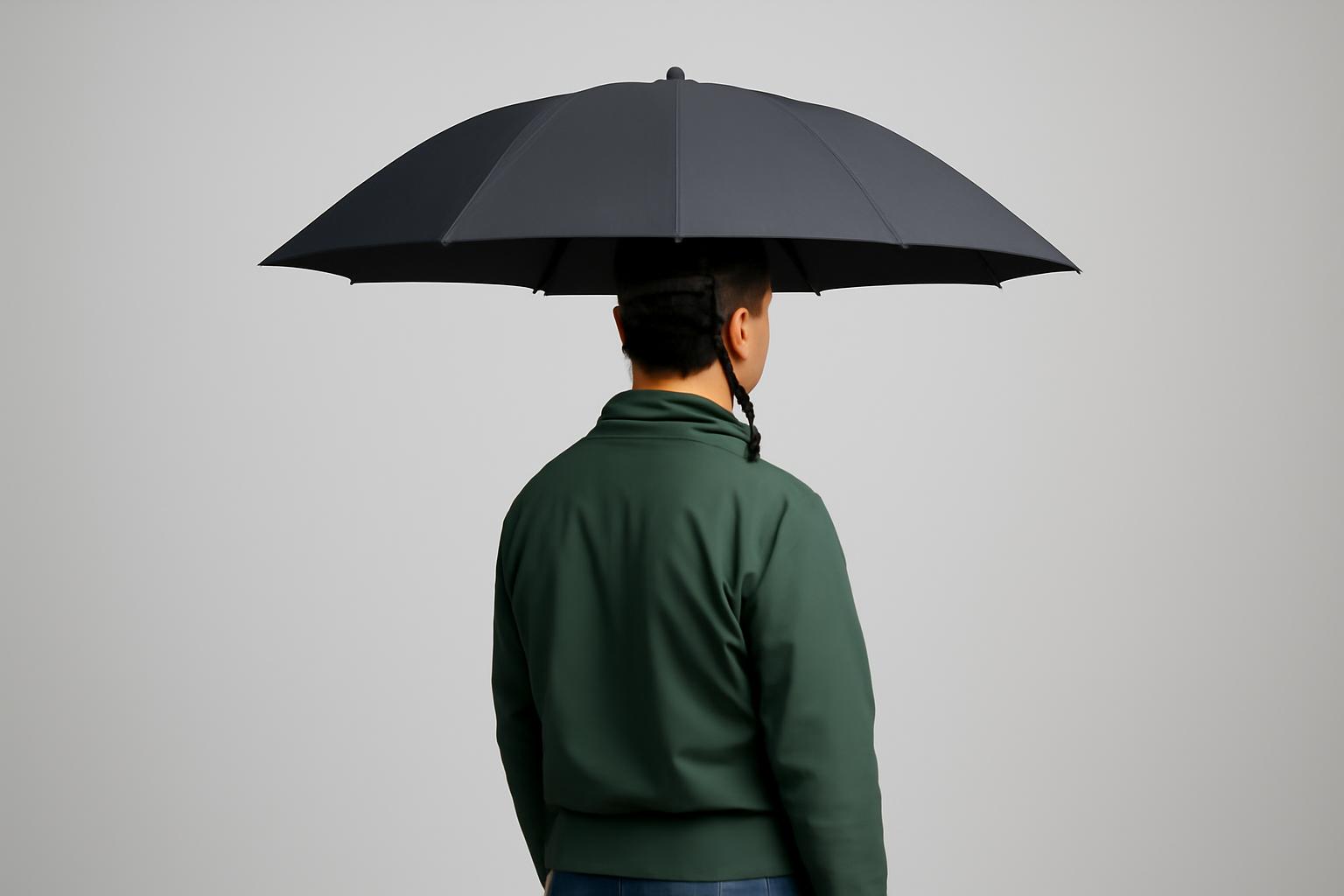
A hands free umbrella is not a magic Seattle-weather hack. It will not beat strong gusts, it will not keep every part of you dry, and it will not replace basic rainy-day judgment. What it can do, in the right conditions, is solve a smaller and very real travel problem: sometimes the useful thing is not maximum weather protection, but getting one hand—or both—back.
That matters in Seattle because many good rainy-day visits are not one long outdoor march. They are a sequence of short moves: hotel to bakery, bakery to bookstore, bookstore to ferry terminal, terminal to museum, market to coffee stop, viewpoint to warm indoor backup. In that kind of day, friction adds up. You check directions, tap transit, hold a railing, carry a drink, manage tickets, or grab a quick photo when the clouds briefly lift. A standard umbrella can help, but it also occupies one hand almost the entire time.
So the most useful way to think about a hands free umbrella in Seattle is not as storm gear. It is better understood as transition gear. If your trip already favors compact neighborhood loops, indoor anchors, and flexible timing, a hands-free setup may make the day feel smoother. If your plan depends on long, exposed, windy walks, it probably will not.
This is also where the category gets confusing. “Hands free umbrella” is not one thing. The phrase covers pack attachments, body-worn holders, wearable canopies, and umbrella hats, along with many ordinary umbrellas that are not truly hands-free at all. That means the right question is usually not “What is the best hands free umbrella?” It is “What type, if any, fits the way I move through Seattle?”
Why Hands-Free Umbrellas Fit Seattle’s Rainy-Day Travel Style
Seattle Know’s travel guidance consistently points toward a simple rainy-day pattern: choose a base that reduces backtracking, keep short visits car-light, build the day around one anchor, and use weather as a routing signal instead of a reason to cancel the plan (Seattle Know homepage).
That logic matters because Seattle often works best in clusters. Instead of trying to cross the whole city for every attraction, you get a better day by staying in one area longer, alternating short outdoor stretches with dry stops, and saving your longest walk for the clearest window. The city feels easier when the plan is compact.
A hands-free setup fits that style because its main benefit is momentum. It helps during all the little transitions that define a wet urban day: opening a transit app, zooming a map, holding coffee, managing a tote, steadying yourself on slick pavement, or taking a fast waterfront photo without first finding shelter.
Seattle Know’s advice on where to stay makes the same point from another angle: choose your base by how you will move—walks, transit, ferry access, and evening rhythm—not by chasing a single “best” landmark area (How to Choose Where to Stay in Seattle). When your base lines up with your movement pattern, rainy weather becomes easier to manage because each outside segment is shorter and more purposeful.
That is exactly the context where a hands free umbrella can make sense. It is not there to conquer the forecast. It is there to reduce annoyance inside a day that already has built-in flexibility. If your plan is hotel to breakfast, breakfast to one main district, district to ferry or museum, then back by transit, the value is practical rather than dramatic.
It also suits travelers who do not want to overpack. A hands-free umbrella can complement that mindset because it may add convenience without forcing you into a full technical rain setup.
The tradeoff is still the same: Seattle drizzle is often manageable; Seattle gusts are what break umbrella optimism. So the category fits calm-to-moderate urban conditions, short walking segments, and flexible itineraries. It is not a substitute for common sense, and it is not the answer to every rainy day.
Top Hands-Free Umbrella Types Available Today
The retail market is broad enough to be misleading.
A Walmart search shows the same category sprawl from a different angle: 484 results mixing regular umbrellas, head-mounted hats, rain accessories, and larger wearable canopy ideas rather than one clean product class (Walmart hands free umbrella results).
That does not prove quality or demand by itself. What it does show is that the label is noisy. Marketplace breadth tells you the term is used loosely, not that all of the results solve the same problem well.
For Seattle travelers, it helps to sort the market into four broad types:
-
Backpack attachments and strap kits These use a daypack as the support structure. The umbrella is guided high near the shoulder and stabilized lower down so you can walk without holding it.
-
Wearable body holders These are strap-on holders designed to grip a regular umbrella without requiring a backpack.
-
Wearable canopies These sit farther from the normal umbrella idea. Think of them more as personal rain shelters than classic city umbrellas.
-
Umbrella hats These are the cheapest and simplest to understand. They are also the easiest to overestimate.
Those types should not be judged by the same standard. A backpack attachment is trying to make an existing routine more efficient. A body holder is solving for people who do not want to wear a pack. A canopy is closer to task gear. A hat is a low-commitment experiment. Once you separate them that way, the category becomes much easier to think about.
For Seattle specifically, the useful test is not abstract performance. It is trip shape. Are you carrying a daypack? Will you be weaving through crowded indoor-outdoor transitions? Are you mostly standing, strolling, or walking briskly? Do you need quick fold-away behavior at ferry boarding, store entrances, or museum doors? Those questions matter more than the label on the product page.
Backpack Strap Attachments for Seattle Walkers and Ferry-Goers
For travelers who already carry a small daypack, attachment-style systems are the easiest part of the category to understand. They do not ask you to change how you travel. They ask you to use the bag you already planned to wear.
One lightweight commercial attachment in the evidence is listed at 10 g / 0.35 oz, and user comments on that page say the small clips can be difficult to reopen after assembly, which is a useful reminder that the mount itself can matter as much as the umbrella (hands-free umbrella kit product page).
That usability point matters for travel. A lightweight system sounds ideal until you remember how trips actually work. You may switch between a flight bag, a daypack, and a personal item. You may want to set something up quickly in the morning and take it apart at night. If an attachment is fiddly, semi-permanent, or hard to move between bags, its real convenience drops.
DIY approaches in the evidence point to the same underlying lesson. One hiking method uses a high anchor on the shoulder strap and a lower anchor near the sternum area so the umbrella shaft is guided in two places rather than one.
That two-point control idea is probably the most important practical insight in the whole category. If you only secure the umbrella at one spot, wobble becomes the story. If you secure it high and low, the system starts to behave more like wearable gear and less like a loose object attached to you.
Another DIY account described using a lightweight trekking umbrella and a modified attachment method for shade, rain, and even hail without wind, while also making clear that the setup was not intended for high-wind conditions (hands-free trekking umbrella writeup). That caveat matters more than the success story. It suggests that backpack-mounted systems can be believable in calm conditions without being all-weather tools.
For Seattle visitors, this makes attachment-style systems appealing in a narrow, sensible way. If you already wear a small backpack and your day is built around short walks between indoor anchors, this type may fit naturally into the routine. It keeps the whole setup relatively compact, lets the pack carry the load, and avoids introducing another body-worn device.
It is especially easy to picture on a ferry-oriented day or a neighborhood loop: a walk to the terminal, time in line, a short waterfront stretch, then a warm stop. Those are all environments where your hands are busy with tickets, phones, railings, bags, or cameras, and where the walk itself is usually measured in segments rather than miles.
What this category does not do, at least from the evidence here, is justify overconfidence. The hiking posts are anecdotal. The commercial listing is still a seller page. The more defensible conclusion is simply that backpack attachments can make sense when your bag is already part of the plan and the weather is cooperative.
Wearable Holders and Canopies for Urban Seattle Exploring
Not every Seattle traveler wants a daypack. Some people prefer a coat pocket, crossbody bag, or light tote and would rather not add a backpack just to support an umbrella. That is where body-worn holders become relevant.
One seller page in the evidence describes a wearable holder meant to work with standard umbrella shafts in the 8 to 10 mm range and presents the product as light enough for extended wear, but those details come from the seller rather than from independent testing (wearable umbrella holder product page).
The appeal is easy to understand. A holder-style device aims to let you use your own umbrella, avoid carrying a pack, and keep both hands free for urban tasks. In Seattle terms, that means phone checks on the sidewalk, transit taps, pastry-and-coffee balancing, or quick ticket handling outside a museum or ferry terminal.
The challenge is fit. Holder-style designs depend on the umbrella shaft diameter, the shape of the handle, the angle at which the umbrella sits on your body, and the amount of movement you create while walking. A product can sound universal on a seller page and still be awkward in real use if your umbrella or body position does not match the assumptions behind it.
That makes this category less about simple existence and more about compatibility. If you are considering a body-worn holder, the real question is not whether the idea works in theory. It is whether your umbrella, your stride, and your rainy-day routine work with it. For travel, that argues strongly for testing before the trip instead of treating the first rainy morning in Seattle as the experiment.
Wearable canopies sit even farther from the classic umbrella model. One Amazon listing presents a wearable rain canopy as hands-free, adjustable, lightweight, and wind-resistant, while marketing it mainly for photography, dog walking, and similar outdoor uses rather than everyday city weaving (wearable canopy listing).
In Seattle, that could still be relevant on a viewpoint stop, in a ferry line, or during a slow waterfront pause. But it suggests a more specialized use case than a normal city umbrella replacement.
So the wearable-holder and canopy categories are best seen as urban convenience tools with narrower fit questions than backpack attachments. They may suit travelers who strongly value free hands and dislike backpacks. They are harder to discuss confidently because the evidence here is thinner, more seller-driven, and less independently tested.
Umbrella Hats: Cheap Hands-Free Alternative or Novelty?
Umbrella hats are the simplest form of hands-free rain gear in the category because they reduce the concept to its most basic promise: cover your head, free your hands, and keep the cost and commitment low.
That sounds attractive for travel. If all you want is a little overhead cover while you check directions, wait for a ferry, or stand outside a bakery, a head-mounted option is easy to understand. It is also easy to toss into a bag as a low-stakes backup rather than a core system.
The trouble is that the independent evidence here is not kind to hat-style designs. In a windy Oregon downpour, the Statesman Journal field test rated the umbrella-hat entries among the worst performers, describing problems like twisting in wind, lifting upward, awkward opening, and failure to keep the tester properly dry (Statesman Journal field test).
That does not make umbrella hats useless. It does narrow the sensible use case. They may work better as line-waiting or emergency drizzle gear than as true walking protection. In Seattle terms, that means they make more sense for a short ferry wait, a quick run outside, or a deliberately low-stakes backup than for an exposed neighborhood walk.
So are they novelty? Often, yes. But “novelty” does not have to mean “worthless.” It can also mean “limited tool with obvious compromises.” The mistake is expecting them to behave like a serious solution for gusty urban weather.
That framing is the fairest one for budget-minded travelers. If the goal is a cheap experiment, umbrella hats are easy to justify. If the goal is dependable rainy-day walking comfort, the evidence does not support much optimism.
Real-World Performance: Wind, Rain, and PNW Tests
This is the part of the conversation where the category becomes more useful, because it forces a shift from product-page promises to actual conditions.
The first thing to say plainly is that the independent evidence base is thin. Much of what exists comes from seller descriptions, marketplace listings, and individual hiking accounts rather than broad urban testing. That means confidence should stay modest.
Even the favorable anecdotal evidence is conditional. The hiking accounts in the evidence like umbrellas for ventilation, shade, and partial rain protection, but they also keep returning to the same limits: low wind is important, lower-body wetness still happens, and the setup works best when expectations are realistic rather than heroic.
That matters for Seattle because many frustrating rainy moments are not full-body soaking events. They are partial-wetness events. Your sleeves get damp. Your jeans collect spray. Your tote drips. Your phone hand stays exposed. That is why “hands-free” and “keeps you dry” are related but not identical ideas.
The category makes the most sense when you define success correctly. If success means “I can walk from one covered place to another while using my phone and not juggling an umbrella handle,” the best designs may do that reasonably well. If success means “I can move through wind and sustained rain like I am wearing full shell gear,” the evidence does not support that expectation.
The Oregon field test described earlier is useful mainly because it strips away fantasy. One backpack-style product did better than the others but still left the tester’s hands and phone exposed. Other designs bounced, twisted, or performed poorly once wind entered the picture. That is not a condemnation of the entire category. It is a reminder that this is partial protection with variable stability, not weather invincibility.
The hiking evidence points in the same direction from a different context. A well-secured umbrella can feel great in light rain, sun, or straight-down precipitation. It can also quickly feel limited when gusts, crowding, or constant directional changes enter the scene. Urban Seattle adds all three at times: wind tunnels near corners, exposed waterfront edges, and constant transitions in and out of buildings.
So the most responsible summary is this: hands-free umbrellas may be useful in calm drizzle, light rain, and short city walks, especially when your itinerary already alternates outdoor pieces with indoor stops. They become much less convincing when asked to perform like full rain gear on long, open, windy routes.
That is why trip shape matters so much. In Seattle, a neighborhood-based rainy day can suit this category because it keeps the umbrella in its comfort zone: short movement, lots of resets, and the option to fold it away quickly. A long exposed wander asks the category to be something it has not proved it is.
Safety Tips for Using Hands-Free Umbrellas in Seattle
The next safety principle follows directly from the evidence: low wind is not a bonus feature, it is part of the use case. The hiking DIY accounts limit themselves to calmer conditions, and the Oregon field test shows how quickly umbrella stability degrades once wind becomes part of the problem. If the weather looks gusty enough that you already distrust a normal umbrella, a hands-free version is unlikely to become the safer answer.
Setup matters too. Lightweight attachments and DIY systems are only helpful if they can be deployed, adjusted, and removed without fuss. The evidence includes user complaints about difficult clip re-opening on one commercial kit and repeated emphasis in DIY posts on getting the anchor points right. For travel, the practical lesson is to test your setup before the trip and with the exact bag and umbrella you plan to use.
Seattle-specific trip planning helps here. A hands-free umbrella is safest and most useful when it sits inside that flexible approach instead of replacing it.
A good operating mindset is simple: use the setup for short urban stretches, expect some partial wetness, and stay willing to fold it, reroute, or step inside. That is not a failure of the gear. It is the whole point of planning Seattle well in the rain.
Integrating Hands-Free Umbrellas into Your Seattle Itinerary
The best way to use a hands free umbrella in Seattle is not to build your trip around gear. It is to plug the idea into an itinerary style that already works in wet weather.
Seattle Know’s lodging advice is useful here because it starts with movement: choose a base that matches how you want to travel, whether that means easy transit, simpler ferry access, quieter evenings, or compact first-time sightseeing (How to Choose Where to Stay in Seattle).
Once your base is chosen well, rainy days naturally become smaller. You are less likely to crisscross the city and more likely to move in loops: breakfast nearby, one main district, one indoor anchor, one weather-dependent walk, then an easy return. That is the exact shape that gives hands-free umbrellas their best chance to be helpful.
A practical rainy Seattle loop often has five parts:
- a short first walk rather than a long opening trek
- one clear indoor anchor
- a second outdoor move only if the weather window is decent
- a warm stop before the longest exposed segment
- a simple return instead of a citywide zigzag
In that pattern, a hands-free setup is not the star of the day. It is a friction reducer. It makes the little transfers easier. You can check directions without standing under an awning. You can keep your coffee, transit card, and phone more manageable. You can step through the city with fewer micro-interruptions.
This is also why lighter, lower-bulk approaches are the most Seattle-compatible in spirit, even if you never buy specialized gear. If your system is compact enough to live in a day bag without feeling like a project, you are more likely to actually use it when the weather is inconvenient instead of extreme. That is a better fit for city travel than a large specialized setup you have to plan around.
The category is easiest to integrate when you think in terms of routine:
- If you already carry a small daypack, attachment-style setups are the most natural to evaluate first because they use the structure you already have.
- If you dislike backpacks, body-worn holders exist, but they are worth testing before travel because fit and umbrella compatibility matter.
- If you are only curious and cost-sensitive, hat-style options make the most sense as backups, not as the plan.
- If the day looks blustery enough that a normal umbrella feels doubtful, the simplest answer is often to skip the category and lean harder on your layer, indoor backups, and tighter route.
That last point is the real Seattle takeaway. A hands free umbrella is not about beating the weather. It is about helping a well-shaped rainy-day itinerary run more smoothly. Pair it with a smart base, short walks, indoor fallbacks, and flexible timing, and it can be genuinely useful. Ask it to be storm gear, and the category quickly starts promising more than the evidence supports.
Do hands-free umbrellas work for Seattle ferry day walks?
Sometimes—mainly when the ferry day is already simple and the walking segments are short.
That trip shape suits the concept well because ferry days involve tickets, phones, railings, photos, and short bursts of outdoor exposure. The caution is wind. Waterfront and terminal areas can change fast, so a hands-free setup is best treated as optional convenience, not something you commit to no matter what the harbor is doing.
What’s the lightest hands-free setup for backpack users?
In the evidence reviewed, the lightest clearly specified commercial attachment was listed at 10 g / 0.35 oz; the total carried weight still depends on the umbrella you pair with it (hands-free umbrella kit product page).
In practice, that means backpack users should think in systems rather than parts. A tiny attachment only stays tiny in real use if the umbrella is also light, quick to stow, and stable on the pack you actually carry.
How wind-resistant are hands-free umbrellas in drizzle vs downpours?
The evidence suggests they make more sense in drizzle than in downpours, and more sense in calm conditions than in gusty ones. In the Oregon field test, wind exposed the weak points quickly: twisting, lifting, bouncing, and incomplete protection all showed up once the weather turned rougher (Statesman Journal field test).
So the safest general rule is to treat hands-free umbrellas as limited, partial protection. Light rain and short city walks are the favorable case. Gusty weather is the warning sign.
Are umbrella hats worth it for budget Seattle travelers?
They can be, if you treat them as cheap backup gear rather than dependable walking protection. Retail search results clearly show that the market includes very low-cost head-mounted options alongside other rain accessories, which makes them easy to try without much commitment (Walmart hands free umbrella results).
The problem is performance ceiling. For a budget traveler, that may still be acceptable if the job is “help me through a short wait in light drizzle.” It is much less convincing if the job is “carry me through a windy Seattle walk.”
Can I make a DIY hands-free mount for my travel pack?
Probably, if your pack has usable attachment points and you test the setup before you travel. The most credible DIY method in the evidence uses a high strap anchor plus a lower sternum-area restraint so the umbrella is controlled in two places rather than left to sway freely (hands-free hiking umbrella tutorial).
That structure matters more than the exact materials. The caution is compatibility: a system that feels stable on one hiking pack may be awkward on a slim urban daypack. If you go DIY, test it as a travel system, not just as a clever idea.