
Plan a Rainier Wedding Day That Can Adapt to the Mountain
Weddings operate within a three-hour timeframe, including travel, with 30 minutes on site. Build the day around one area and a same-side backup.
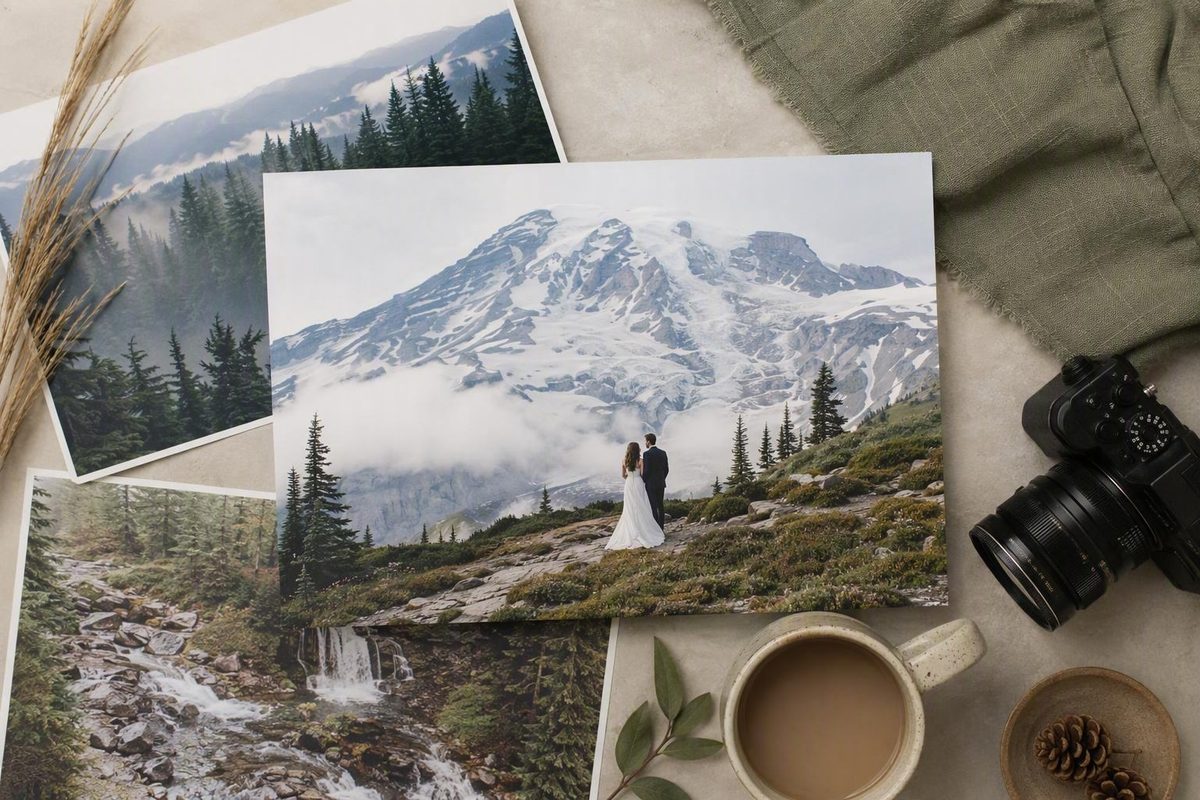
A Mount Rainier elopement works best when the plan is built around authorization, seasonal access, travel time, party size, and changing conditions—not one photograph of one viewpoint. The mountain may be hidden, a high road may remain snow-covered, or parking and construction may change what is practical. A resilient plan remains meaningful anyway.
This is researched, preliminary travel-planning information, not firsthand wedding-planning, legal, permitting, photography, accessibility, or mountain-safety advice. The National Park Service, the issued permit, the government office issuing the marriage license, current operating notices, and qualified vendors should control decisions for your date.
Start with the constraints that shape the whole day
Before choosing a cabin, photographer, trail, or exact date, make six decisions in this order:
- Approximate season. Decide whether broad summer access, fall uncertainty, or a deliberately snowy experience fits your priorities.
- Total party size. Count everyone who may participate, not only the couple and guests.
- Desired scenery. Rank mountain views, wildflowers, forest, river, lake, waterfall, or snow rather than expecting to fit every landscape into one day.
- Acceptable hiking effort. Define distance, elevation gain, surface, pace, and how formal clothing will affect movement.
- Principal park area. Choose the side of Mount Rainier around which the ceremony, lodging, and transportation will be organized.
- Weather backup. Decide what you will do if the preferred road, area, view, or outdoor ceremony becomes impractical.
Mount Rainier is not one compact venue. Paradise, Sunrise, Longmire, White River, Chinook Pass, and other areas involve different entrances and roads. Their operating seasons, nearby communities, scenery, facilities, and driving routes differ. A cabin that looks close on a regional map can still be poorly positioned for the entrance serving the ceremony area.
When describing the proposed party to the National Park Service, include the couple, guests, officiant, photographer, videographer, planner, florist, and any other participating vendors. Commercial planning guides report that vendors may count toward ceremony totals, but the current NPS instructions and issued permit determine the official participant count for an event.
Some photographer-authored guides favor groups of roughly 8–12 participants, partly because smaller parties may have more possible ceremony-location options. That is experience-based planning guidance, not a universal legal maximum. One commercial guide, for example, reports different location categories for different group sizes while warning readers to confirm current park rules (reported group and ceremony-location guidance).
A permitted wedding is not a private park rental. Roads and public areas remain available to other visitors, so a ceremony cannot depend on exclusive use of parking, trails, overlooks, facilities, or the surrounding landscape. Weekdays and early or late starts may reduce crowd exposure, but they cannot guarantee privacy.
The simplest structure is a one-anchor plan:
- Select one authorized ceremony area.
- Build the permit, lodging, and transportation plan around that area.
- Add nearby portraits only if the authorization, access, and schedule allow.
- Finish with one uncomplicated activity, such as a meal outside the park or a short walk.
- Keep every operational backup on the same side of the mountain whenever possible.
This structure leaves room for parking delays, slower guest transitions, changing weather, and the possibility that a secondary viewpoint will not be practical. It also keeps the wedding from becoming a rushed tour of disconnected locations.
Choose a season by access and risk, not photographs alone
There is no universally best month for a Mount Rainier elopement. The right period depends on whether you value the widest likely access, possible wildflowers, lower crowd exposure, snow, or tolerance for disruption.
July through September generally offers the broadest access. That does not mean every road, trail, visitor facility, or authorized ceremony site will be open. Higher areas can retain snow well into July, while wildfire, construction, maintenance, severe weather, and other closures can affect an otherwise promising summer date. A photographer’s guide updated in January 2026 similarly characterizes summer as the broadest-access period while emphasizing seasonal roads, snow, parking, crowds, and unreliable cell service (2026 seasonal planning overview).
Late July through August is a commonly reported wildflower range. Bloom timing changes with elevation, snowpack, temperature, and annual weather. An August date may improve the possibility of seeing flowers, but it does not reserve a bloom, guarantee clear views, or establish that a particular meadow will be snow-free.
Summer’s advantage is also its drawback. Broader road and trail access brings heavier use of Paradise, Sunrise, and other recognizable areas. Parking pressure and public activity should be treated as timeline constraints rather than problems that an early start will automatically solve.
September can suit couples willing to accept more uncertainty. Conditions may be cooler, visitor pressure may ease, and fall color may begin in some areas. The tradeoff is increasing exposure to rain, wildfire smoke, active fire closures, early snow, and abrupt changes in road or trail access. September should not be treated simply as summer with fewer people.
Spring is primarily a snow and limited-alpine-access plan. Lower areas may offer forest, river, bridge, or waterfall scenery while high roads and trails remain unavailable. Couples attracted to photographs from a particular trail should verify its current road and snow status instead of planning around a historical opening date.
Winter requires specialist planning. Expect fewer available ceremony locations, slower travel, current road verification, winter-driving preparation, and equipment matched to the proposed activity. A general packing list cannot establish whether a winter road, snowshoe route, or backcountry itinerary is safe.
A practical decision rule is:
- Choose summer for the widest likely range of operating roads and high-elevation options.
- Choose September if potentially quieter conditions are worth greater weather, smoke, and closure risk.
- Choose spring or winter only if snow, restricted access, and fewer location choices are part of the intended experience.
As the date approaches, check current NPS alerts, road and entrance status, construction, weather, snow, wildfire, and smoke information. Historical patterns help with early planning; they do not promise access for a particular day.
Compare the main park areas before choosing a ceremony site
The areas below are for geographic and visual orientation. They are not a list of automatically authorized wedding sites. An attractive overlook or trail does not become a ceremony location simply because it appears in a photographer’s portfolio. Match the exact proposed location to the current NPS Special Use Permit map, written instructions, and permit decision.
Paradise is associated with meadow, glacier, waterfall, and close-mountain scenery. It also receives substantial visitor demand, and high-elevation snow may remain into July. Parking, snow, public activity, and walking surfaces therefore belong in the core plan rather than in a last-minute checklist.
Sunrise offers open alpine terrain and high-elevation vehicle access while its seasonal road is operating. It is not a year-round option. A Sunrise plan needs a confirmed alternative that does not rely on the same seasonal road or reproduce the same access risk.
Tipsoo Lake and Chinook Pass offer lakes, meadows, and pulled-back perspectives toward Mount Rainier. Highway access is seasonal. Exact jurisdiction also matters: locations near a park boundary may be managed by different agencies, so identify the land manager and obtain the appropriate authorization for the precise ceremony point.
Longmire and lower-elevation forest or river settings offer a distinct visual alternative when high roads are unavailable or clouds obscure the mountain. They can reduce dependence on alpine blooms and panoramic visibility. Lower elevation does not automatically mean open, private, step-free, or suitable for every participant.
The Tatoosh Range can provide terrain looking back toward Mount Rainier. That landscape description is not approval for a ceremony on an unnamed ridge, overlook, or trail. The exact point still has to be matched to the responsible land manager and current ceremony rules.
Compare possible areas by the experience they require:
- Roadside or short-walk scenery: better suited to simple timelines and parties that need less walking, subject to verified parking, surfaces, and permit conditions.
- Moderate hiking: offers more landscape variety but requires realistic estimates for pace, elevation gain, clothing, food, water, and turnaround time.
- Demanding backcountry travel: should be evaluated as a separate outdoor undertaking, not treated as an ordinary wedding-day add-on.
Do not label a site “accessible” because a vendor describes it as easy. For participants with limited mobility, verify the parking position, walking distance, surface, grade, steps, seasonal snow, restroom availability, permitted seating or mobility aids, and the complete route between the vehicle and ceremony point.
| Area | Typical scenery | Likely operating season | Hiking range | Crowd pressure | Lodging side | Questions to verify with NPS |
|---|---|---|---|---|---|---|
| Paradise | Meadows, glaciers, waterfalls, close mountain views | Broadest in summer; snow may remain into July | Roadside viewpoints to demanding alpine routes | Often high in peak season | Ashford or Elbe side | Is the exact ceremony point authorized? What date-specific capacity, parking, seasonal, and mobility conditions apply? |
| Sunrise | Open alpine terrain, ridges, expansive mountain views | Seasonal road operation centered on summer | Short walks to strenuous alpine hikes | Often high when fully open | Northern or White River side; often approached from Enumclaw | Is the road operating? Which ceremony locations and capacities apply on the requested date? |
| Tipsoo Lake and Chinook Pass | Lakes, meadows, reflected or pulled-back views | Seasonal highway access | Roadside and short-walk options through longer loops | Moderate to high at popular times | Packwood or southeast side | Who manages the exact point? Is a ceremony authorized there? What current capacity and mobility conditions apply? |
| Longmire and lower forest | Old-growth character, rivers, bridges, lower-elevation atmosphere | Potentially available beyond the alpine season, subject to current operations | Short walks to longer forest routes | Variable | Ashford or Elbe side | Which ceremony areas are approved? What roads, parking, restrooms, surfaces, and grades will be available? |
| Tatoosh-facing terrain | Ridgelines and views back toward Rainier | Highly dependent on road and trail conditions | Often moderate to demanding | Variable | Usually approached from the south, depending on the route | What is the jurisdiction? Is the site authorized for a ceremony, portraits, both, or neither? |
Every seasonal and mobility description in this table is provisional. Current conditions and the issued permit override the typical pattern.
Use the current NPS permit process—not an old blog summary
Every wedding ceremony inside Mount Rainier National Park requires National Park Service authorization. The current NPS page provides the Special Use Permit information and an interactive map with seasonal and location filters. It also states that weddings operate within a three-hour timeframe, including travel to and from the approved location, with a 30-minute on-site ceremony. The page lists mora_special_use@nps.gov and 360-569-6513 for the Special Use Permit coordinator (Mount Rainier permits and reservations).
That official page also explains that approval is conditional. NPS evaluates whether an activity would impair park resources or values, interfere with public access, or diminish visitor enjoyment. The final permit may impose conditions that are not captured by a general webpage or vendor summary.
Current-policy verification dashboard
NPS page checked August 11, 2026
| Item | Status for this guide | What to do |
|---|---|---|
| Wedding authorization | Confirmed on the displayed NPS page | Apply through the Special Use Permit process and follow the issued conditions. |
| Three-hour wedding timeframe and 30-minute on-site ceremony | Confirmed on the displayed NPS page | Build travel, arrival, ceremony, and departure around the stated framework. |
| Permit contact | Confirmed on the displayed NPS page | Use the email and phone number above for the complete proposal. |
| Wedding-specific fee and recommended application lead time | Not confirmed from complete wedding instructions available for this guide | Ask the permit coordinator before making nonrefundable commitments. |
| Entrance fee or pass | Separate from the wedding authorization | Check the current fee or pass requirement for every vehicle and participant. |
| Timed entry or other access reservations | Not established here for every 2026 date or corridor | Check the current NPS reservation and operating notices for the intended entrance and time. |
| Photography or filming authorization | Depends on the exact activity and permit conditions | Disclose crew size, equipment, locations, and activity to NPS. |
| Ricksecker Point construction | NPS displayed a possible June–August 2026 closure | Treat it as a status item requiring current confirmation, not a guaranteed closure. |
| Roads, fire alerts, and seasonal operations | Time-sensitive | Follow the current alerts and conditions links available through the NPS site. |
Third-party guides conflict on wedding application fees, management charges, and suggested lead times. This guide therefore does not publish a definitive current wedding fee or deadline. Ask the permit coordinator what applies to the intended date, including application charges, management fees, monitoring, insurance, and cost recovery.
Keep the following requirements separate:
- Wedding authorization: permission for the ceremony or associated special use.
- Park entrance: the wedding permit does not replace an applicable entrance fee or pass.
- Camping or lodging: reservations may be required independently.
- Wilderness travel: a separate wilderness permit may apply.
- Climbing: registration or another authorization may apply.
- Commercial services: vendors may have separate commercial obligations.
- Photography and filming: separate review may depend on crew size, activity, equipment, impact, and the wedding permit’s conditions.
Do not assume that a photographer always needs a separate permit, or that photography is always exempt. Give NPS the exact crew size, equipment list, locations, and proposed activities. Disclose trail portraits rather than assuming the ceremony authorization covers them.
The permit also does not create exclusive use. NPS does not close park roads or public areas for a wedding, so guests must be prepared to share parking, trails, overlooks, and facilities with other visitors.
Design a legal, low-impact ceremony setup
Provide NPS with a complete participant list and an accurate description of the proposed activities, timing, equipment, and setup. Site suitability and permit conditions may depend on total party size, how participants reach the area, what is placed on the ground, and how the event could affect resources or other visitors.
Commercial guides report restrictions involving chairs, tables, tents, awnings, blocked areas, confetti, rice, and elaborate decorations. Treat those reports as a list of questions, not as a substitute for the issued permit. The permit coordinator should confirm what is prohibited, restricted, or allowed at the exact site.
Ask specifically about:
- Bouquets and floral materials
- Minimal decorations
- Chairs or accommodations connected with mobility needs
- Food or cake
- Champagne or other beverages
- Music or amplified sound
- Small ceremonial objects
- Photography lighting, tripods, reflectors, or other equipment
- Anything participants intend to place on the ground
Do not buy, ship, or transport a setup based on assumptions. An object that appears small or harmless may still conflict with resource-protection rules, public-access requirements, or site-specific permit conditions.
Keep the ceremony within its approved footprint and do not obstruct a trail, road, overlook, doorway, parking area, or public gathering space. Guests should be ready to yield to visitors and follow directions from park staff.
Leave No Trace checklist
- Remain on designated trails or durable surfaces.
- Never enter fragile meadows for a photograph or a clearer view.
- Follow temporary barriers, wildlife restrictions, and area closures.
- Keep decorations and ceremony materials to the approved minimum.
- Secure lightweight materials so wind cannot scatter them.
- Pack out flowers, packaging, food, paper, and every other item.
- Do not rearrange rocks, branches, plants, signs, or natural features.
- Keep the ceremony footprint compact.
- Follow every condition in the issued permit.
Marriage paperwork is a separate process. A park permit authorizes an activity in the park; it does not create a legally valid marriage or replace a marriage license.
Because this guide does not have a complete current government source for Washington marriage requirements, it does not state a waiting period, expiration period, witness requirement, fee, or return deadline as settled law. Verify each point with the Washington county that will issue the license.
Marriage-paperwork checklist
- Which Washington county will issue the license?
- How and when must the application be submitted?
- Is there a waiting period?
- When does the license expire?
- Who is eligible to officiate?
- How many witnesses are required?
- What identification and fees apply?
- Must any participant appear in person?
- Who completes and signs each section?
- Who returns the completed license?
- What return method and deadline apply?
- How can certified copies be ordered afterward?
Couples traveling from another state or country should complete this verification before the trip. A photographer’s blog or real-elopement story is not a final source of marriage law.
Build a timeline that fits the permit window and the park
Start with fixed constraints:
- Authorized ceremony location
- Authorized ceremony date and time
- NPS wedding timeframe
- Travel to and from the approved location
- Available daylight
- Current road and entrance access
- Parking and walking time
- Guest mobility and restroom needs
Preparation, dining, hiking, and unrelated photography may need to occur outside the wedding timeframe or outside the park, depending on the issued conditions. A continuous photography package does not itself extend the ceremony authorization.
Minimal-hiking template
- Get ready at lodging near the correct entrance.
- Travel to one authorized roadside or short-walk ceremony site.
- Allow time for parking, restrooms, and the walk from the vehicles.
- Hold the ceremony within the approved timeframe.
- Take nearby portraits only where and when allowed.
- Leave the park for a meal or private celebration.
This format reduces travel risk and is generally more resilient than combining several major park areas. “Short walk” still requires direct verification of distance, grade, surface, steps, snow, and restroom access.
Paradise-area inspiration template
One documented summer elopement included cabin preparation, a riverside first look, a mossy forest stop, a designated ceremony site, meadow and mountain portraits, pizza, a first dance, and sunset views (one Paradise elopement account).
That sequence is inspiration from one event, not proof that the same ceremony site, flowers, weather, visibility, trail access, travel time, or sunset conditions will be available. A more conservative adaptation would be:
- Preparation at a south-side cabin
- Lower-elevation first look
- Authorized Paradise-area ceremony
- Nearby portraits
- Off-site meal
- Optional later portraits only if access, timing, and permit conditions support them
Guest-inclusive template
- Set an early gathering time at the lodging.
- Assign every participant to a vehicle.
- Distribute offline maps and a meeting point.
- Allow extra time for parking and restrooms.
- Walk at the pace of the slowest participant.
- Hold the ceremony.
- Complete family and group portraits promptly.
- Return to lodging or a reserved meal location.
Guest transitions usually require more coordination than couple-only transitions. Allow for missed turns, formal clothing, uneven surfaces, vehicle loading, and the time needed to gather everyone after each stop.
Hiking template
- Complete the legal ceremony at an authorized location.
- Return ceremony materials to the vehicles.
- Change footwear or clothing if needed.
- Begin a separately evaluated portrait hike.
- Confirm whether the trail, timing, crew, equipment, and photography activity are covered by the issued authorization.
- Set a turnaround time that does not depend on reaching the final viewpoint.
Experience-based vendor guidance suggests placing 10–15 minutes between ordinary transitions, with larger allowances for driving and parking in peak periods. One photographer-authored planning guide also recommends selecting lodging on the correct side of the park and building the day around fixed events rather than scheduling activities back to back (timeline and lodging guidance).
Avoid combining opposite sides of the park in one compressed schedule. A route that appears possible under clear, low-traffic conditions may collapse after one full parking area, construction delay, slower guest transition, or weather change.
Photography coverage should match complexity rather than a presumed industry standard:
- Short coverage: one simple location, a brief ceremony, and nearby portraits.
- Half-day coverage: preparation, the ceremony, and one additional setting.
- Full-day coverage: guests, multiple settings, a substantial hike, extended activities, or both early and late light.
Ask each provider what “half day” or “full day” means in hours. Confirm the deliverables, image or film counts, gallery schedule, travel, permit assistance, retainers, taxes, cancellation terms, overtime, and weather-rescheduling policy.
As one provider-specific example, Leesha King Photography’s undated promotional page lists $4,000 plus Washington State sales tax for half-day coverage and $6,000 plus tax for full-day coverage, with planning-related inclusions described by the business (Leesha King Photography’s listed pricing). Those changeable figures apply only to that provider and do not establish an average Mount Rainier elopement cost.
Create Plan A, Plan B, and a decision deadline
A useful backup plan addresses more than rain. The principal disruption categories are:
- Clouds that hide the mountain
- Persistent rain
- Lingering or early snow
- Wildfire smoke
- Active fire closures
- Construction
- Full parking areas
- Road or entrance closures
- Unreliable cellular service
Mount Rainier visibility is never guaranteed, including in summer. A hidden mountain does not eliminate the value of a forest, river, waterfall, lake, bridge, or close-up ceremony setting. The backup should change the visual emphasis rather than attempt to reproduce an unavailable panorama.
One September elopement offers a bounded example: fire and early snow reportedly closed the planned hike, so the couple held a rainy forest ceremony. Mountain portraits became possible the following morning (September fire-and-snow case study). That outcome demonstrates flexibility, not a repeatable solution. Another morning may be cloudy, inaccessible, or incompatible with travel and vendor schedules.
Define three levels before the wedding week:
- Plan A: the preferred authorized ceremony area under normal operating and weather conditions.
- Plan B: another location already covered by the issued permit or affirmatively confirmed in advance by the responsible permit coordinator or land manager.
- Severe-weather plan: postponement, a legally permitted off-site ceremony, or another arrangement confirmed with the relevant property owner, agency, officiant, and vendors.
A merely “potentially approvable” location is not an operational wedding-day backup. Discuss alternatives before the permit is finalized and make sure the plan you intend to use is actually authorized.
Backups should remain on the same side of the mountain whenever possible. A substitute across the park may require another entrance, a different lodging route, separate authorization, and several uncertain road segments.
Use a decision schedule:
- Months in advance: monitor broad seasonal patterns, major construction, anticipated road operations, and permit changes.
- Several weeks in advance: confirm the issued permit, participant count, vendors, lodging route, vehicle plan, and authorized backup.
- Final week: review NPS alerts, weather, snow, fire information, smoke forecasts, and road status.
- At the agreed deadline: make the operational decision with the photographer, planner, officiant, driver, and other affected vendors.
- Day of: recheck official alerts before departure when service is available, but do not wait until every vehicle is moving to decide what a closure means.
Download maps, permit documents, contact details, lodging directions, and meeting instructions before entering the park. Assume cellular service may be unreliable.
A general packing list should include:
- Warm layers appropriate to the season and elevation
- Rain protection
- Food and water
- Marriage documents
- A copy of the permit
- Appropriate footwear
- Backup clothing and dry storage
- Basic emergency and first-aid supplies
- Offline maps
- Activity- and season-specific safety equipment
Winter, climbing, and backcountry itineraries require guidance beyond this list. Match the equipment, route evaluation, transportation, and professional support to the actual undertaking.
Weekdays and early or late timing may reduce crowd and parking pressure, but they cannot eliminate either. Build the schedule so another visitor in the background is an inconvenience rather than a crisis.
Choose lodging, transportation, and vendors around one side of the park
Confirm the principal ceremony area before making a nonrefundable lodging reservation. Broad geographic pairings include:
- Ashford or Elbe: commonly used for the Paradise and Nisqually side
- Packwood: useful for southeast approaches and some Tipsoo Lake or Chinook Pass plans
- Enumclaw: a possible base for northern access
These are planning orientations, not promises of the fastest route. Drive times change with the entrance, traffic, weather, road work, seasonal closures, and the exact property.
Seattle can work before or after the elopement, especially for an airport connection or separate city stay. It can also create a long, risk-prone wedding-day transfer. For the city portion of the trip, a Seattle neighborhood lodging guide can help with choosing a base; it is not Mount Rainier wedding-lodging advice.
Arrange a vehicle and driver plan rather than assuming a car-free Seattle itinerary will extend naturally to remote park locations. Decide:
- Who will drive each vehicle?
- Can each vehicle manage the expected road conditions?
- Where will everyone meet if cell service fails?
- Who carries the permit, marriage documents, food, water, and emergency supplies?
- What happens if one vehicle is delayed?
- Who will avoid driving after champagne or other alcohol?
- Who is the designated return driver after an early start or long hike?
Build a budget from categories instead of relying on an unsupported average:
- NPS application, authorization, monitoring, or cost recovery
- Park entrance
- Marriage license and certified copies
- Photography and videography
- Lodging
- Rental vehicle, fuel, and driver arrangements
- Attire and alterations
- Flowers
- Hair and makeup
- Food and beverages
- Equipment rental or purchase
- Taxes and gratuities
- Travel insurance where appropriate
- Weather, lodging, or transportation contingencies
One photographer’s package is useful for comparing that provider’s services, not for estimating the market as a whole. Compare complete proposals rather than headline prices.
Vendor-comparison checklist
- Exact coverage hours
- Number and type of deliverables
- Image or film delivery schedule
- Sales tax
- Travel charges and mileage limits
- Permit-application assistance
- Local timeline and location support
- Backup-location process
- Weather-rescheduling terms
- Cancellation and refund terms
- Retainer and payment schedule
- Insurance
- Required commercial authorization
- Replacement arrangements if the vendor becomes unavailable
- Overtime pricing
- Expectations for hiking, winter travel, or early and late coverage
Before leaving for the park, complete this final verification list:
- [ ] Issued permit and all conditions
- [ ] Correct date, time, and authorized ceremony location
- [ ] Plan B covered by the permit or otherwise confirmed in writing
- [ ] Complete participant total
- [ ] Vendor, photography, and filming authorization questions resolved
- [ ] Current road, entrance, construction, and fire status
- [ ] Weather, snow, and smoke review
- [ ] Parking and meeting plan
- [ ] Lodging route on the correct side of the park
- [ ] Marriage license and return instructions
- [ ] Emergency contacts
- [ ] Downloaded maps and permit copies
- [ ] Severe-weather option
- [ ] Backup decision time and person responsible for the call
Frequently asked questions
Do you need a permit to elope at Mount Rainier?
Yes, if the wedding ceremony takes place inside Mount Rainier National Park. Every ceremony requires NPS authorization, and the current permit map and issued conditions determine where, when, and how it may occur (official Mount Rainier permit information).
The wedding authorization is separate from entrance charges and from requirements that may apply to camping, wilderness travel, climbing, commercial services, photography, or filming. Describe the entire plan to the Special Use Permit coordinator, including participants, vendors, equipment, timing, ceremony activities, and proposed portraits.
What month is best for a Mount Rainier elopement and wildflowers?
There is no guaranteed best month. Late July through August is commonly reported as a likely wildflower period, while July through September generally provides the broadest high-elevation access. Snowpack, elevation, temperature, and annual weather can shift both trail access and bloom timing.
Choose summer when access is the priority. Consider September when you are willing to accept greater exposure to rain, smoke, early snow, and sudden closures. Do not make the ceremony depend on flowers being present in one specific meadow.
Can we have a private ceremony at Paradise or Sunrise?
You can request an authorized ceremony location in or near those areas when one is available under current NPS rules, but you should not expect exclusive use. Public roads, parking areas, trails, overlooks, and facilities remain available to other visitors.
Weekdays and early or late hours may reduce crowd exposure, but they do not guarantee privacy. Keep the ceremony compact, avoid obstructing public access, and choose an authorized backup that remains acceptable if other visitors are nearby.
Can we elope at Mount Rainier without a long hike?
Potentially, yes. The park includes roadside and short-walk scenery as well as moderate and demanding routes. A minimal-hiking plan can pair an authorized ceremony site with nearby portraits and a meal outside the park.
Verify the exact parking position, walking distance, grade, path surface, steps, snow, restrooms, and permit conditions. “Easy,” “short,” and “accessible” are not interchangeable, particularly when participants have limited mobility or seasonal conditions affect the route.
What should our backup plan include if weather, smoke, or closures disrupt the day?
Choose a second location on the same side of the park that is already covered by the issued permit or has been affirmatively approved in advance by the responsible authority. Also define a severe-weather option, such as postponement or a legally permitted off-site ceremony, with the relevant land manager, property owner, officiant, and vendors.
Set a decision deadline, monitor official alerts and forecasts during the final week, and download maps and instructions. The backup should work even if Mount Rainier remains hidden; it should not merely delay the same mountain-view plan by an hour.
The practical sequence is straightforward: choose the season and total party, identify an appropriate park area, check the current NPS ceremony map and instructions, confirm the permit and marriage paperwork, reserve lodging on the correct side of the park, and establish both an authorized Plan B and a severe-weather alternative.
The strongest Mount Rainier elopement plan is not the one with the most locations. It is the one that still feels like your wedding when the mountain is cloudy, the road changes, or the original viewpoint is unavailable.