
5 Cool Parks in Seattle for Art, Industry and Hidden Gardens
Choose a distinctive Seattle park for industrial scenery, waterfront art, a freeway-top landscape or hidden gardens—with a manageable rain plan.
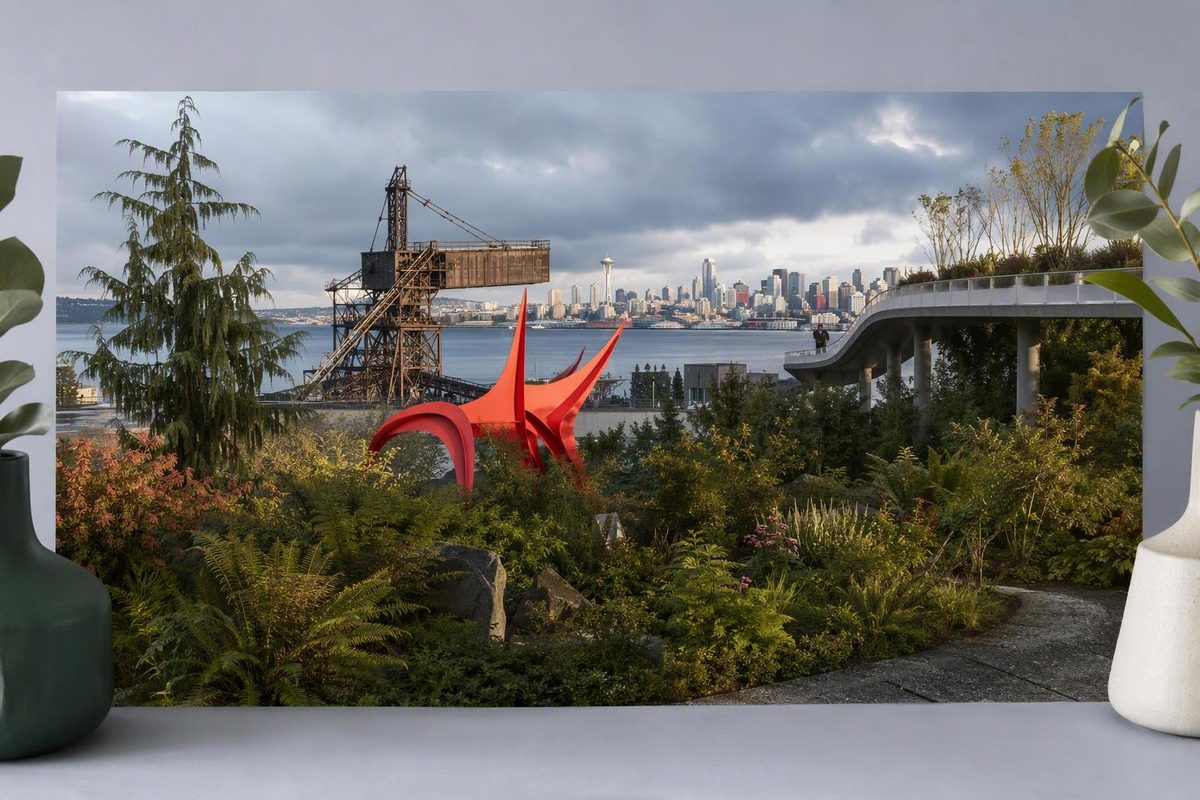
Choose Gas Works Park for an unusual industrial landscape, or Olympic Sculpture Park for an easy outdoor art stop near downtown. If you have only a short break, Freeway Park and Waterfall Garden Park offer unusual settings without committing to a long nature outing. Kubota Garden deserves a separate South Seattle visit.
Here, “cool parks” means places with something beyond lawns and a walking loop: old machinery, monumental sculpture, a landscape above a freeway or carefully designed water and rock features. For beaches, longer hikes and broader recreation choices, use our Seattle park comparison.
Choose by the day you already have planned
These are suggested time allowances on site, not travel times or official route durations.
| Park | Best reason to choose it | Suggested time | Planning trade-off |
|---|---|---|---|
| Gas Works Park | Industrial structures and Lake Union views | 45–75 minutes | A waterfront viewpoint, not a swimming stop |
| Olympic Sculpture Park | Large-scale art beside the water | 45–60 minutes | Art remains worthwhile under clouds; lingering is less appealing in wind and rain |
| Freeway Park | Landscape architecture over I-5 | 20–40 minutes | Best as a downtown break rather than a whole afternoon |
| Waterfall Garden Park | A tucked-away waterfall in Pioneer Square | 15–25 minutes | Public access is limited to opening hours |
| Kubota Garden | Bridges, ponds and a longer garden wander | 60–90 minutes | Make it your South Seattle anchor, not a downtown add-on |
Gas Works Park: industrial scenery with a skyline backdrop
Location: 2101 N Northlake Way, on Lake Union’s north shore.
Landscape architect Richard Haag incorporated structures from a former coal gasification plant into the park rather than clearing the entire industrial site. That combination of machinery, open space and downtown views is the reason to come—not simply to check off another waterfront park. The Cultural Landscape Foundation’s history explains the design.
Keep the visit simple: look at the industrial structures from permitted areas, walk toward the hill and spend your remaining time with the lake view. Seattle Parks lists a play area, play barn, sundial and picnic facilities; the Burke-Gilman Trail runs past the parking lot. Do not enter the lake here: swimming, wading, fishing and boat launching are prohibited because the sediment contains hazardous substances. City visitor information and restrictions.
Removal of tower catwalks, ladders and other components began in April 2026, so older photographs may not match every detail. Stay outside fenced-off areas rather than treating the structures as climbing equipment. TCLF’s update on the removals.
Olympic Sculpture Park: an easy downtown art-and-water choice
Location: 2901 Western Avenue.
This is the strongest choice if you are staying downtown and want a distinctive park without making a separate cross-city outing. Seattle Art Museum’s waterfront collection of monumental sculptures is free, with grounds open year-round from 30 minutes before sunrise until 30 minutes after sunset. Walk the paths and let the art be the main attraction; clear mountain views are a bonus, not a requirement. SAM’s park guide.
It is an outdoor museum rather than a playground. Do not touch or climb the sculptures, and walk bicycles and scooters through the grounds. Active sports are not allowed. Those rules matter when choosing a stop for children who want energetic play. Visitor policies.
Freeway Park: a landscape where you would not expect one
Location: 700 Seneca Street, between downtown and First Hill.
Freeway Park’s defining feature is its setting above Interstate 5. Opened in 1976, the landscape was designed by Lawrence Halprin & Associates under Angela Danadjieva’s design direction. Its plazas, fountains and concrete forms make it a useful short stop for anyone interested in architecture or urban design. Seattle Parks’ history and location details.
Allow a brief daytime wander rather than building your whole day around a fountain being on. The city’s 2026 improvement program includes restroom renovation, benches and wayfinding; consult the city’s improvement page if access to a particular feature matters.
Waterfall Garden Park: a small Pioneer Square pause
Location: 219 Second Avenue S.
A 22-foot waterfall gives this pocket park its character. It occupies the site of UPS’s first headquarters and is a private space with public access during park hours—not an always-open city park. As checked October 9, 2026, the Alliance for Pioneer Square lists daily hours of 8 a.m.–5:45 p.m. Check its visitor listing before making a special trip.
Treat it as a short stop within a Pioneer Square day, not a destination requiring a dedicated journey. Despite the garden setting, it is still an outdoor stop rather than a dependable heavy-rain refuge.
Kubota Garden: give the garden its own outing
Location: 9817 55th Avenue S, South Seattle.
Kubota Garden blends Japanese garden concepts with native Northwest plants across 20 acres. Fujitaro Kubota began developing the garden in 1927; today its hills and valleys contain streams, waterfalls, ponds, bridges and rock outcroppings. Choose it when the garden itself is the activity, rather than when you need a quick skyline photograph. Seattle Parks’ garden history.
Allow more time than you would for either downtown pocket park. The foundation describes winding, hard-packed gravel paths and grade changes on its guided walks, so do not assume every route is a level paved stroll. Plan a daylight visit. Kubota Garden Foundation visitor information. Our Rainier Beach half-day guide helps turn this into a neighborhood outing.
A simple downtown plan with a rain backup
For a short first visit, choose Olympic Sculpture Park plus lunch, not all five parks. If conditions turn unpleasant, shorten the outdoor stop and switch to the downtown Seattle Art Museum, about a mile south of the sculpture park. Unlike the park, the museum normally charges admission. SAM’s hours and tickets.
As checked October 9, 2026, the museum’s regular opening days are Wednesday–Sunday, with later hours on Thursday; it is closed Monday and Tuesday. Check the same visitor page for holiday exceptions before relying on it as your indoor backup. On closed days, use a rainy-day neighborhood plan instead of extending an exposed waterfront walk just to complete the itinerary.