
Choose the Right Gas Works Park Outing for Your Seattle Day
Choose a quick Lake Union viewpoint stop, slow down for lawns and industrial history, or connect your outing to the Burke-Gilman Trail.
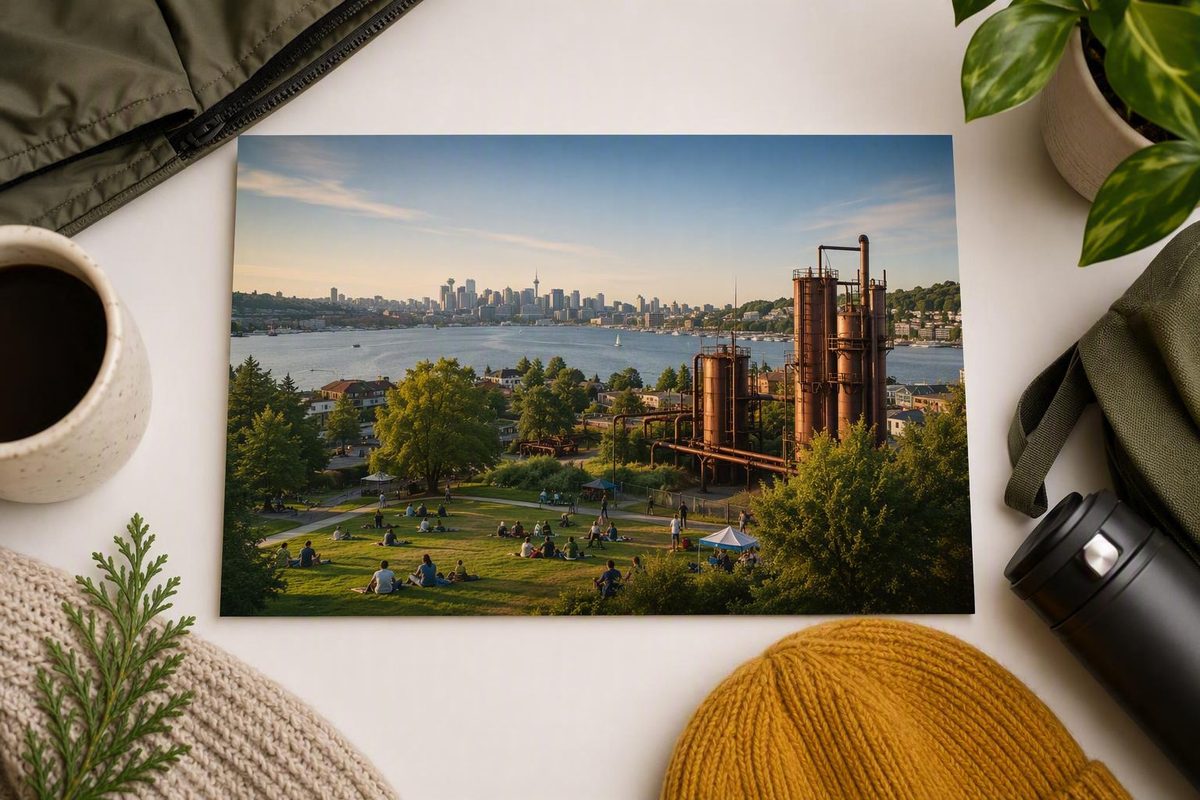
Gas Works Park is worth including when you want Lake Union scenery, broad lawns and unusual industrial character without building your day around a scheduled attraction. Use it as a flexible outdoor anchor: stop briefly for the machinery, Kite Hill, sundial and skyline, stay longer for a picnic or play time, or connect the park to a walk or bicycle ride on the Burke-Gilman Trail.
Prioritize it for views, open space, kite flying and industrial history. Shorten or reconsider the visit during sustained rain or poor visibility, or when you need accessibility details that have not yet been confirmed for your intended route.
Choose your Gas Works Park visit
Start with the outing that fits the rest of your Seattle day. These durations are flexible planning suggestions, not official or measured visit times.
| Outing | Suggested time | Best for |
|---|---|---|
| Quick viewpoint stop | About 45 minutes | Industrial landscape, Kite Hill, sundial and skyline |
| Relaxed park visit | About 90 minutes | Main sights plus lawn, play or picnic time |
| Trail-linked outing | Two hours or more | Walking or cycling on the Burke-Gilman Trail |
The 45-minute version works when Gas Works Park is one stop in a Wallingford or Fremont day. View the preserved machinery from the public park areas, walk toward Kite Hill if conditions suit you, find the sundial and finish with the outlook across Lake Union.
Choose about 90 minutes when you want more than a photo stop. Add time on the lawn, watch traffic on the lake, fly a kite or bring something to eat. Families can also include the play area, subject to its current condition.
Allow two hours or more when the journey is part of the outing. Reach the park on foot or by bicycle using the Burke-Gilman Trail, pause for the main features and then continue along a preselected section of the trail or the broader Lake Union loop.
Its strongest features—the hill, lawns, water views and industrial landscape—depend heavily on the weather. On a wet or low-visibility day, it works better as a short outdoor segment than as the centerpiece of a full itinerary.
Follow a simple first-visit route
Begin with the former plant structures. Pipes, towers and heavy machinery establish the park’s identity immediately, but not every surviving structure is open for close exploration. Some industrial ruins are preserved behind fencing, so treat fences and other barriers as firm boundaries rather than invitations to find a closer route, as described by the Washington Trails Association’s Gas Works Park overview.
Continue through the open grass toward the park’s recreational areas. This is the place to slow down if you have allowed 90 minutes rather than rushing directly to the hill. Depending on your plans, pause for a picnic, let children use the play area if it is open, or watch the activity on Lake Union.
Next, head toward Kite Hill if the weather, ground conditions and your mobility allow. The artificial hill has a sculptured sundial at its summit. From there, turn toward the lake and downtown skyline.
That sequence—industrial structures, open lawn, hill, sundial and water-facing view—captures the park’s defining experience without requiring a complicated itinerary. If the hill is not suitable for your group, the visit can still focus on the machinery, lawns and lower viewpoints.
Avoid assuming that a feature shown on a map or described in a guide is operating normally that day. Check the park operator’s notices before leaving, particularly when one feature is essential to your visit.
Understand why the park looks different
Gas Works Park occupies the former Seattle Gas Light Company gasification-plant site. The plant operated from 1906 to 1956, and the park opened to the public in 1975. Landscape architect Richard Haag designed the park around the preservation and adaptive reuse of industrial features, and the site was added to the National Register of Historic Places in 2013 (historical overview).
Those dates help explain why the park does not look like a conventional waterfront green space. The machinery is not incidental infrastructure left beside the lawns. It is central to the park’s post-industrial design.
Instead of erasing every trace of the former plant, the design placed recreational space around surviving structures.
For a first visit, there is no need to master the plant’s technical history. The essential point is that the park allows two versions of the site to remain visible at once: an industrial landscape and a public recreational space.
The preserved structures should still be treated as historical features to observe. Stay within clearly public areas and respect fencing, closures and signs encountered during your visit.
Plan a walking or cycling approach
Gas Works Park is on the north shore of Lake Union, at the south end of Wallingford and near Fremont. That location makes it practical to use as the outdoor anchor in a neighborhood-focused day rather than crossing the city repeatedly between unrelated stops.
Walking from Wallingford or Fremont is a supported approach, although your exact route will depend on where you begin. Map the complete walk before leaving if you have a fixed return time, are unfamiliar with the surrounding streets or need particular surface and grade conditions.
It serves both walkers and cyclists and can turn the park from a destination-only stop into part of the outing itself. Cyclists should plan where they will leave the trail and how they will manage their bicycles while spending time in the park.
A longer walk can incorporate part of the Lake Union loop. Treat that as an extension rather than assuming Gas Works Park supplies a complete, signed itinerary for the entire circuit. Choose the section and turnaround point in advance, especially if your day includes another reservation or timed activity.
For transit, use the current regional trip planner immediately before departure rather than relying on an undated bus number. Service patterns, stops and disruptions can change. Check the entire journey in both directions, including the walk between the stop and the part of the park you intend to visit.
Driving requires similar caution. The presence of a parking area does not guarantee that a space will be available or establish what current parking rules apply. Events and busy-weather days can also change the practical value of driving.
If you require a step-free journey, confirm the complete route rather than checking only whether a bus or parking area serves the vicinity. The relevant questions include the connection into the park, the surfaces and grades along your chosen route, and whether Kite Hill or the sundial is suitable for your needs.
Know the water, structure and booking rules
Gas Works Park is a waterfront viewpoint, but do not assume that every activity normally associated with a lakeside park is permitted. Water access and special-use rules can change or involve safety and environmental restrictions, so confirm the current position on the official Gas Works Park page before planning an activity beyond ordinary use of the lawns, paths and viewpoints.
| Plan around these park features | Verify before making them part of the day |
|---|---|
| Walking in public park areas | Any direct access to Lake Union |
| Lawns and views | Swimming, wading or fishing |
| Picnicking | Launching a boat or other watercraft |
| Kite flying | Organized events or commercial shoots |
A view of Lake Union does not by itself establish beach, swimming, fishing or launch access. If getting onto or into the water is central to your plans, choose a designated facility whose current rules explicitly support that activity.
Use the same conservative approach around the industrial landscape. Some ruins are behind fencing, and access may differ among structures. Stay in clearly permitted public areas rather than treating towers, ladders, platforms or machinery as climbable attractions.
Do not assume that the arrangements for a casual park stop also apply to a ceremony, organized gathering, professional production or activity that limits general public use. Check current Seattle Parks instructions before committing vendors, equipment or participants. The same applies to grills and fires: the presence of a grill or picnic feature does not establish that fires are allowed under current restrictions.
Check current conditions before leaving
Current hours, closures, events and facility conditions should come from Seattle Parks and Recreation rather than an undated attraction listing. Use the city’s searchable parks directory to locate the current Gas Works Park listing and review any notices attached to it.
Make one final check for:
- Opening and closing times
- Temporary closures affecting lawns, paths or viewpoints
- Play-area and other facility status
- Fire restrictions and grill rules
- Scheduled events that may affect crowds or access
- Current transit stops and service alerts
- Parking rules and conditions if you plan to drive
- Route-specific accessibility information
Visitors with accessibility requirements should confirm the details that determine whether their chosen outing will work, including surfaces, grades, step-free connections, parking conditions and restroom access. Do not assume that reaching the park boundary means every viewpoint or feature can be reached by the same route.
Dependable covered shelter should not be the basis of the plan unless its current availability has been confirmed. During steady rain, make Gas Works Park the shorter outdoor part of a Wallingford or Fremont day and keep a dry alternative available.
The choice ultimately comes down to three versions of the same outing: make Gas Works Park a quick Lake Union viewpoint, slow down for its lawns and industrial history, or connect it to the Burke-Gilman Trail. Its distinctive value lies in the combination of scenery and adaptive reuse, so choose your pace first and confirm current access details before setting out.