
Things to Do in Seattle: First-Time Sights, Neighborhoods and Day Trips
With one day, take the Pike Place, waterfront cluster plus Seattle Center; they are the two closest to each other and hold the signature sights.
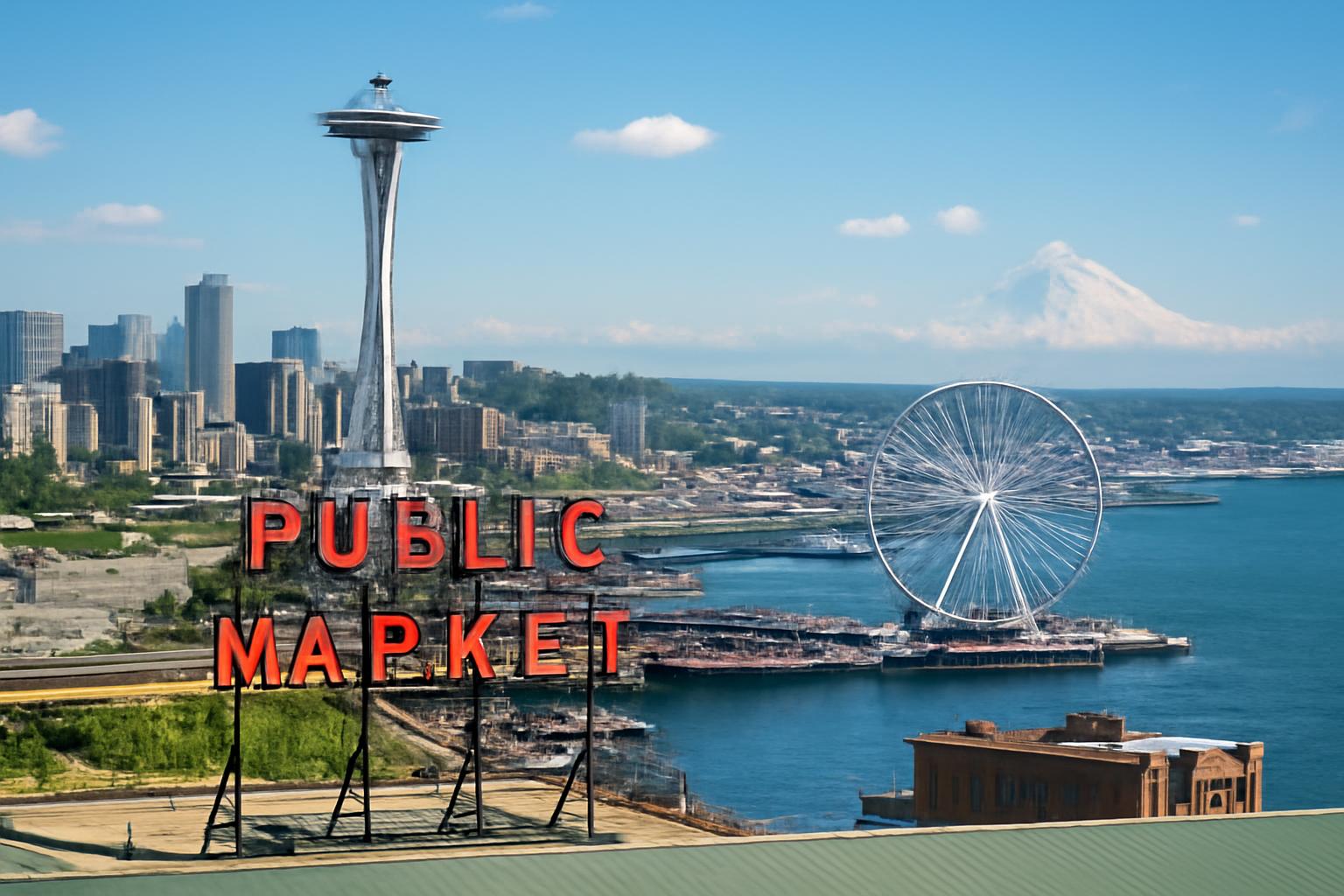
Overview
The best things to do in Seattle on a first visit are Pike Place Market and the downtown waterfront, the landmark cluster at Seattle Center (the Space Needle, Chihuly Garden and Glass, and MoPOP), free skyline viewpoints like Kerry Park, and one neighborhood outing such as Fremont. Which of these you pick, and in what order, depends on four factors: where things sit, the weather, your budget, and how many days you have.
Seattle rewards planning by area more than planning by attraction. Sources across the travel corpus, from Tripadvisor’s Seattle attractions list to first-time visitor guides, name the same core sights. What they rarely do is tell you which ones sit within walking distance of each other, which ones work in the rain, and which advertised “Seattle” experiences are actually excursions that consume most of a day.
This guide uses a consistent comparison lens throughout. For each recommendation, you will see what it is best for, how it fits with nearby options, how it handles weather, and whether it costs money or is free. Where the evidence supports a real comparison, such as the paid Space Needle observation deck versus the free view from Kerry Park, you get that comparison directly. Where current details change often, such as Space Needle hours or Mount Rainier road conditions, you get the official source to check instead of a number that may be stale by the time you travel.
One rule holds the whole plan together: pick one geographic cluster per block of time, and treat anything outside the city as a separate decision. The rest of this guide shows you how to apply that rule.
Start with Seattle’s first-time highlights
If you only have a day or two, prioritize the two clusters that hold most of Seattle’s signature attractions. The recurring first-time list across travel coverage, including Tripadvisor, centers on Pike Place Market, the Space Needle, Chihuly Garden and Glass, and the Seattle Center campus. Those names sort neatly into two areas. Pike Place Market and the downtown waterfront form one walkable zone. The Space Needle, Chihuly Garden and Glass, and MoPOP form a second, because as FWT Magazine notes, all three sit at Seattle Center. Starting with these two clusters gives you the core of a first visit with minimal backtracking, and everything else in this guide builds around them.
Pike Place Market and the waterfront
Pike Place Market is the natural first stop because it anchors a whole walkable area, not just a single building. It leads first-time lists across the corpus, including Hand Luggage Only’s Seattle guide, which places the market at the top of its recommendations. Plan it as a half of a day paired with the waterfront below it, rather than a quick photo stop.
The market itself is browsing territory: produce stalls, fish vendors, craft sellers, and food counters packed into a compact set of levels and arcades. From there, the downtown waterfront is a short walk downhill. Hand Luggage Only describes the waterfront as a good place for a casual stroll, with shops, restaurants, and attractions including the Seattle Great Wheel and the Seattle Aquarium, and suggests visiting at dusk to watch the sunset. That pairing is the practical point. You do not need to choose between the market and the waterfront; they work as one continuous route, market first, then down to the water.
One caution on timing. Pike Place Market is a collection of independently operating businesses, not one venue with a single schedule. Published opening hours vary between guides, and a fishmonger, a craft stall, and a restaurant in the same arcade can keep different hours. Do not build your morning around one blanket opening time you read online. Check the specific businesses you care about, or the market’s official visitor information, close to your visit. The safe general pattern is that the market is a daytime destination and the waterfront extends naturally into the evening.
Seattle Center’s landmark cluster
Seattle Center is the most efficient major-attraction stop in the city, because three headline attractions share one campus. FWT Magazine states that the Seattle Space Needle, Chihuly Garden and Glass, and the Museum of Pop Culture (MoPOP) are all located at the Seattle Center. Inked with Wanderlust confirms the proximity, noting that MoPOP sits directly next to the Space Needle.
That geography changes how you should plan. Instead of treating the Space Needle, Chihuly, and MoPOP as three separate decisions scattered across a map, treat them as one block of time at one location. You can walk between all three without transit. If you want two of the three, you lose nothing by doing them back to back. If you only want one, the others are right there if your plans change or the weather turns.
The cluster also mixes indoor and outdoor time well. The Space Needle is the outdoor-view component, Chihuly Garden and Glass combines gallery space with a garden, and MoPOP is fully indoor. That makes Seattle Center a flexible block: on a clear day you lead with the Needle, and on a wet day you lead with the museums and decide about the observation deck later. Getting there from downtown is straightforward without a car, which the logistics section below covers, so you can slot this cluster into either your first or second day depending on the forecast.
Find Seattle’s best outdoor views and waterfront experiences
Seattle’s scenery is a large part of why people visit, and much of it costs nothing. The useful planning move is to separate the free outdoor options from the paid ones, then match them to your route and the weather rather than trying to do all of them.
The supported free options cover a lot of ground:
- Kerry Park, which the University of Washington’s local outings page recommends for the best views of downtown Seattle, the Space Needle, Elliott Bay, and Mount Rainier.
- Olympic Sculpture Park, which appears among Tripadvisor’s popular Seattle attractions and combines outdoor art with waterfront walking.
- The downtown waterfront stroll, which Hand Luggage Only recommends for shops, restaurants, and sunset viewing.
Paid outdoor options sit alongside these. The Seattle Great Wheel on the waterfront and harbor sightseeing on the water are both established choices; Tripadvisor’s listings show a large category of tours and cruises operating from the city. Treat cruises as a broad option to research separately, since current operators, schedules, and fares are not something this guide can verify for your dates.
The practical takeaway: if your budget is tight, the free layer alone (Kerry Park, Olympic Sculpture Park, and the waterfront walk) delivers most of Seattle’s scenic payoff. Add paid options where they fit your route, not as separate trips of their own.
Choose your skyline view: Space Needle or Kerry Park
If you want one skyline experience and need to choose, the decision is between paying for the view from the Space Needle and getting the view of it from Kerry Park for free. These are different products, not substitutes.
The Space Needle is the observation experience. You are inside the landmark looking out over the city and the water. It is a paid attraction, and per the official Space Needle site, general admission currently runs $35.00 to $55.00, with prices varying by season and time of day. Hours also shift through the year; the site states it is open year-round but hours vary by season, and Paper Planes and Caramel Waffles notes that opening hours are posted on the website around one month in advance. Check both before you commit to a time slot.
Kerry Park is the composition. It is a free viewpoint, and it is the one place where the classic Seattle skyline photo includes the Space Needle itself, along with downtown, Elliott Bay, and on clear days Mount Rainier, per the UW outings page. The Needle cannot appear in a photo taken from its own deck.
The rule: pick Kerry Park if your priority is the iconic photo or your budget is limited. Pick the Space Needle if being up in the landmark is the point. Doing both is reasonable, since they answer different wants.
Museums and indoor options for rainy weather
Rain is a real planning variable in Seattle, so build at least one indoor block into any visit longer than a day. The good news is that the city’s indoor options are strong enough that a wet day does not have to be a lost day.
The clearest evidence-backed rainy-day anchor is the science museum at Seattle Center. Hand Luggage Only describes it as full of interactive displays that keep science fun for everyone, and calls it a great spot to get out of the unpredictable rain that sometimes happens in Seattle. Because it sits in the same campus as MoPOP and Chihuly Garden and Glass, a rainy morning at Seattle Center can string together two or three indoor attractions without ever committing to a long outdoor walk.
Beyond that campus, the indoor layer is broad. Tripadvisor’s category counts list 29 specialty museums in the Seattle area, which tells you the depth is there even before you narrow by interest. The Seattle Aquarium, on the downtown waterfront, gives you an indoor anchor in the Pike Place cluster as well, so both of the core first-time areas have a wet-weather fallback. Visit Seattle’s things-to-do page frames the city’s options as covering everyone from families looking for budget-friendly finds to seasoned travelers, and museums are where much of that range lives.
Two honest limits on this advice. First, the available evidence supports the science museum as broadly engaging but does not establish detailed age-by-age suitability, so if you are traveling with a toddler versus a teenager, check exhibit descriptions on official museum sites before buying tickets. Second, museum hours and admission prices change; verify them close to your dates rather than trusting a guide’s snapshot. The planning rule stands regardless: know which indoor anchor belongs to each cluster you plan to visit, and you can swap your day order when the forecast turns.
Explore Seattle through food, coffee, and neighborhoods
Once the landmarks are scheduled, the rest of a Seattle trip is best spent eating, drinking coffee, and walking neighborhoods. This is where the city stops being a checklist and starts being a place, and the evidence supports a few specific ways in.
Start with what you have already planned. Pike Place Market doubles as a food destination, so your market morning covers a meal without a separate stop. Coffee is everywhere and does not need an itinerary: Hand Luggage Only points to a whole heap of indie coffee shops, co-ops, and small coffee bars scattered across the city, and Inked with Wanderlust similarly describes dozens of local coffee shops and bakeries. The practical move is to treat coffee as a walking break wherever you are, not a destination that pulls you off route.
For a dedicated food outing, the Chinatown–International District is the supported pick. Hand Luggage Only highlights it for bubble-tea shops, restaurants, and the city’s best dim sum. It gives you a dining block that is distinct from the tourist core.
For a half day that feels different from downtown, go to Fremont. Paper Planes and Caramel Waffles describes it as a district full of independent shops, breweries, and restaurants, notes you could easily spend a day there, and puts it only a 15 minute bus ride from downtown. The same guide sketches a workable walking route: start at the Fremont Troll, the public sculpture under the bridge, then walk down the hill through the archways toward Fremont Brewing’s Urban Beer Garden and on to Gasworks Park. That single route strings together public art, a brewery stop, and a park in one line, which is exactly the kind of low-effort sequencing a short trip needs.
The takeaway: budget one meal-driven outing (Chinatown–International District), one neighborhood block (Fremont), and let coffee fill the gaps. That covers Seattle’s food-and-neighborhood side without overloading the schedule.
Build your itinerary by area
The single biggest planning mistake first-time visitors make is booking attractions individually and then discovering they are crisscrossing the city. The fix is to plan by area. The evidence in this guide supports three clusters that each work as one block of time: Pike Place and the waterfront, Seattle Center, and Fremont.
The matrix below compares them on the criteria that actually drive the choice. It deliberately avoids fixed durations, because how long each cluster takes depends on your pace, the weather, and how many paid attractions you enter.
| Area cluster | Anchor experiences | Best use | Planning role |
|---|---|---|---|
| Pike Place–waterfront | Pike Place Market, waterfront stroll, Seattle Great Wheel, Seattle Aquarium (Hand Luggage Only) | Browsing, food, and a continuous downhill walk from market to water; strong at dusk for sunset | The default first block of any visit; fully walkable within itself |
| Seattle Center | Space Needle, Chihuly Garden and Glass, MoPOP, all on one campus (FWT Magazine) | Big-ticket attractions back to back; flexible between indoor and outdoor depending on weather | The major-attraction block; reachable from downtown by monorail |
| Fremont | Fremont Troll, independent shops, Fremont Brewing’s beer garden, Gasworks Park (Paper Planes and Caramel Waffles) | A slower neighborhood half day away from the tourist core; a 15 minute bus ride from downtown per the same guide | The beyond-the-landmarks block; best once the first two clusters are covered |
Here is how to turn the matrix into a plan. With one day, take the Pike Place–waterfront cluster plus Seattle Center; they are the two closest to each other and hold the signature sights. With two days, give each of those clusters more room on day one and day two, and add Kerry Park or the Chinatown–International District where they fit your route. With three days, day three is your choice between Fremont and an excursion, which the day-trip section below helps you decide.
Two boundaries on this framework, stated plainly. The evidence supports these three clusters and their internal walkability, but it does not support complete timed itineraries, so treat each row as a building block rather than a schedule. And other areas worth a visit, such as Pioneer Square, are not in the matrix because the supplied sources do not establish enough about them to compare fairly. Plan those separately if they interest you.
Plan the logistics before you go
A good shortlist still fails if the logistics do not hold up, so resolve four practical questions before you lock anything in. First, transportation: can you run your plan without a car, and where does that stop being true? Second, physical demands: Seattle has real hills, and clusters that look close on a map can involve climbs, so if anyone in your group has mobility needs, check each venue’s official accessibility information and think through walking distances, seating, and transfers before booking. The supplied evidence does not establish attraction-specific accessibility details, which is exactly why the official pages are the right source. Third, money: know which stops are paid, which are free, and whether a bundled pass fits your actual list. Fourth, timing: several key details here change by season and are only reliable when checked close to your dates. The next two sections handle transportation and verification in turn.
Exploring central Seattle without a car
For the central clusters in this guide, you do not need a rental car, and skipping one simplifies the whole trip. FWT Magazine puts it directly: there is very little need for a car if you stay in the downtown area.
Start with the airport. From Sea-Tac, ride the Link light rail into the city, which FWT Magazine recommends and which the UW outings page calls the cheapest method for airport transportation. Rideshare (Uber or Lyft) or a cab is the alternative if you land late or have heavy luggage.
Within the core, the supported options cover everything in the area matrix. FWT Magazine notes you can walk, use rideshare, or take the Seattle Center Monorail within downtown; the monorail is the direct link between the downtown core and the Seattle Center cluster. Tripadvisor describes the city as very walkable with an efficient public transportation system of buses and light rail. Fremont, per Paper Planes and Caramel Waffles, is a 15 minute bus ride from downtown.
The boundary: this car-free case is specifically about central Seattle. It does not mean every neighborhood or excursion is equally convenient by transit. As the day-trip sections below explain, Bainbridge Island works without a car because the ferry is the transportation, while Mount Rainier generally means driving or booking a guided tour. Decide on a car based on your excursion plans, not your city plans.
Check current hours, prices, reservations, and closures
The details most likely to break a Seattle plan are the ones that change: hours, prices, reservations, and seasonal closures. Build a short verification pass into the week before your trip instead of trusting any guide’s snapshot, including this one.
The Space Needle is the clearest example. The official site states it is open year-round but hours vary by season, lists general admission at $35.00 to $55.00 with prices varying by season and time of day, and asks visitors to review changes and closures ahead of time. Paper Planes and Caramel Waffles adds that hours are posted on the website around one month in advance, which sets your realistic verification window.
Pike Place Market needs the same discipline for a different reason: it is many independent businesses, and published hours conflict between guides. Check the specific stalls or restaurants you care about rather than relying on one blanket schedule.
For Mount Rainier, the National Park Service maintains a road status page that it updates whenever conditions change; check it, and the park alerts, right before any trip there.
On sightseeing passes: FWT Magazine suggests pre-purchasing the Seattle CityPASS as an economical way to take in up to six top attractions, and the Space Needle site currently lists CityPASS at $119.00 to $139.00. Do not assume the pass automatically saves money. The method is simple: list the attractions you will actually visit, total their current individual prices from official sites, and compare that sum to the current pass price. If your plan leans on free options like Kerry Park and the waterfront, a pass may not earn its cost.
Decide whether a Seattle day trip fits your schedule
Excursions are where short Seattle trips most often go wrong, because travel lists mix them in with city attractions as if they cost the same amount of time. They do not. Before adding any trip outside the city, answer three questions. How much of a day does it really take: Hand Luggage Only frames Bainbridge Island as a free-afternoon outing, while Paper Planes and Caramel Waffles calls Mount Rainier a full day out of the city. How do you get there: a walk-on ferry needs no car, while Mount Rainier means driving or a guided tour per the UW outings page. And how stable are the logistics: ferry schedules are routine to check, while national park road access changes with conditions per the NPS road status page. On a one- or two-day trip, the honest answer is usually to stay in the city. With three days, one excursion fits.
Bainbridge Island by ferry
Bainbridge Island is the lowest-commitment excursion from Seattle, and it makes sense when you want a water-and-scenery break without giving up a full city day. Hand Luggage Only recommends it specifically for travelers who find themselves with a free afternoon in the city, which is the right framing: this is a partial-day outing, not a full-day commitment.
The key planning insight is that the ferry ride is not just transportation, it is part of the sightseeing. You board downtown, and the crossing itself gives you views of the city and Elliott Bay from the water. Tripadvisor puts the ferry ride at about 35 minutes each way and describes it as a refreshing escape from the city. That means a round trip buys you roughly seventy minutes of on-the-water scenery plus your time on the island, all without a car, since you can walk on downtown and explore Bainbridge’s town area on foot.
Compare that against the alternative uses of the same afternoon. A Bainbridge outing takes less time than the full-day Mount Rainier excursion described below, requires no driving, and departs from the same downtown core where your other plans already live. If you want an excursion but only have a spare half day, this is the one to take. Verify current Washington State Ferries schedules and fares before you go, since sailing times and prices are not something this guide can pin down for your dates.
Mount Rainier requires a full-day plan
Mount Rainier is the most rewarding excursion from Seattle and the most demanding one, so treat it as a full-day decision, not an add-on. Paper Planes and Caramel Waffles is direct about the commitment: expect an early start, and you will be back in the city for dinner. Nothing else fits in that day.
Distance is the reason. The UW outings page puts Paradise at 112 miles southeast of Seattle and Sunrise at 101 miles southeast, naming them the most easily accessible spots in Mount Rainier National Park. That same source gives the transportation rule: this is a driving trip, and if you do not have a car, consider signing up for a guided tour. There is no version of this excursion that runs on city transit.
Two pieces of current official guidance shape 2026 planning. First, entry: the National Park Service announced on February 25, 2026 that Mount Rainier National Park will not require timed entry reservations for any portion of the park in 2026, and will instead use parking management strategies. The same announcement suggests arriving before 7 a.m. or after 4 p.m. and favoring weekdays, since the park is busiest on weekends and holidays. Second, access: roads within the park open and close with conditions. The NPS road status page shows some routes open while others, notes that road status can change at any time, so check that page and the park alerts before departure, and it advises checking signs on closed road gates before proceeding. Check that page and the park alerts immediately before you commit to the drive.
The rule: only schedule Rainier if you have three or more days in Seattle, and even then, confirm road status first and hold a city cluster as your backup.
Other excursions need separate logistics checks
Snoqualmie Falls and Olympic National Park also show up regularly in Seattle trip coverage, and both are legitimate destinations. Tripadvisor’s listings show a deep market of day trips and half-day tours from the city, which tells you organized options exist. What the evidence behind this guide does not establish is the part you actually need to plan: complete transportation choices from Seattle, realistic door-to-door times, and how these trips compare to Bainbridge or Rainier on total commitment.
So treat them as research tasks rather than plug-in itinerary items. Before adding either one, confirm three things from current sources: how you would get there (own car, tour, or transit), what the realistic round-trip time is for your season, and whether any access or weather constraints apply to your dates. Olympic National Park in particular is a large area, and which part you target changes the answer to all three questions.
The safe default for a short first trip stands: cover the city clusters first, use Bainbridge as your low-commitment excursion, reserve Rainier for a three-day visit with confirmed road access, and leave other excursions for a trip where you have verified the logistics yourself.