
Best Kayaking in Seattle by Skill Level and Water Type
Lake Union is the strongest first paddle, with Space Needle views and dockside rentals. Other picks span quiet channels, big-lake wakes and open Puget Sound.
Overview
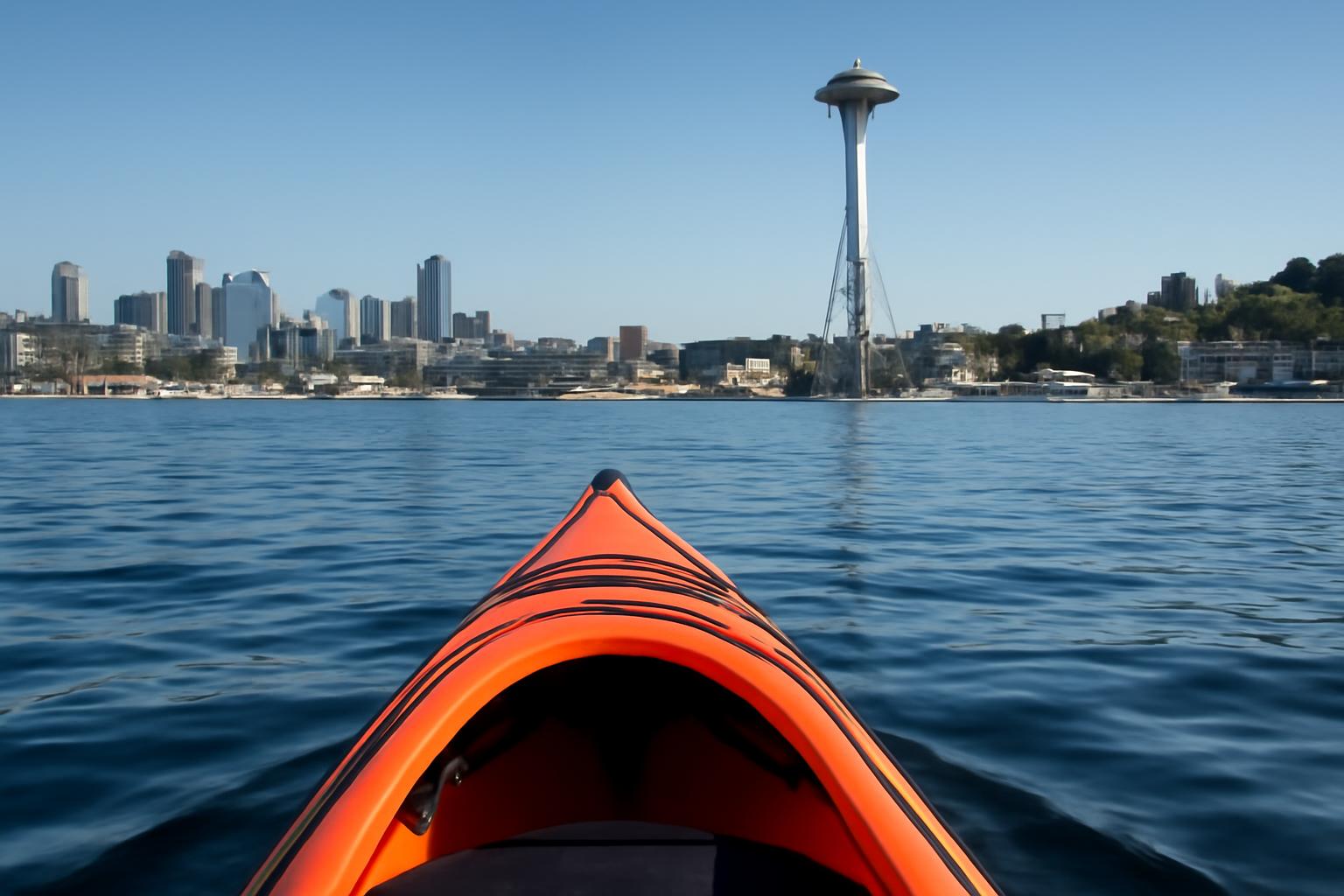
The best kayaking in Seattle depends on your skill and the water you want. Lake Union is the strongest first paddle, with Space Needle views and rental docks. The Washington Park Arboretum offers quieter, bird-rich water. Magnuson Park is a practical Lake Washington launch. Alki, Elliott Bay, and the Golden Gardens to Carkeek run suit paddlers ready for open Puget Sound water.
That split matters because Seattle’s paddling ranges from sheltered freshwater channels to exposed saltwater with currents, wind, and commercial traffic. TripSavvy describes Lake Union as one of the best places to kayak in Seattle and calls it perfect for beginners, while it warns that Elliott Bay is open water with major boat traffic and stronger currents. Treat those as different outings, not points on the same list.
Use the matrix below to shortlist a location, then read the profile for the tradeoffs behind each row.
| Location | Best for | Water type | Signature experience | Rental or launch access | Main caution |
|---|---|---|---|---|---|
| Lake Union | Beginners, first-time visitors | Sheltered urban freshwater | Space Needle and skyline landmarks from the water | NWOC rents on Lake Union year round, weather permitting, with dock launching | Shared water with other boat traffic; weather still matters |
| Washington Park Arboretum | Quiet nature seekers | Protected freshwater channels | Bird life, including bald eagles and ducks, close to the city | Reachable by paddle from Lake Union area launches; personal boats via nearby hand-carry sites | Not guaranteed calm; conditions and crowds vary |
| Magnuson Park (Lake Washington) | Beginners with their own boat | Large open lake, near-shore paddling | Big-lake paddling from a major public launch | Launch your own kayak at 7400 Sand Point Way NE or rent from Sail Sand Point (per TripSavvy) | Motorboat wakes; launch fee applies for hand-carried boats |
| Alki / Elliott Bay | Guided beginners; independent paddlers with rescue skills | Exposed Puget Sound saltwater | Full Seattle skyline from open water | Alki Kayak Tours offers guided tours, classes, and rentals | Open water, currents, major vessel traffic |
| Ballard / Golden Gardens to Carkeek | Experienced paddlers | Exposed Puget Sound saltwater | Beach-to-beach Sound paddle | Ballard Kayak rents kayaks and paddleboards for independent outings | Shipping wakes and wind; recommended for experienced paddlers |
Cells marked with operator names reflect what those operators publish; confirm current hours, prices, and prerequisites directly before you go.
Best places to kayak in Seattle
The same five areas come up across local guides for good reason: each answers a different goal. Lake Union delivers city landmarks. The Arboretum delivers quiet water and birds. Magnuson Park gives you the most practical Lake Washington access. Alki and Elliott Bay trade shelter for the full skyline. The Ballard and Golden Gardens stretch is the true Puget Sound option for capable paddlers.
Treat the profiles below as recommendations for different goals, not a ranking. A location that is right for a first paddle can be wrong for someone chasing open-water views, and the reverse is just as true. Pick the experience first, then check that the water matches your ability on the day you plan to go.
Lake Union for landmarks and an accessible first paddle
Choose Lake Union if you want the classic Seattle paddle with the lowest planning overhead. TripSavvy calls the lake, located in the heart of the city, one of the best places to kayak in Seattle, with views of the Space Needle, distant mountains, and other city sights, and describes paddling around the lake as perfect for beginners.
The logistics support that reputation. Northwest Outdoor Center (NWOC) operates on Lake Union with kayak instruction, equipment, and rentals, stays open year round for rentals weather permitting, and lets you launch directly from its docks on the lake. That combination means you can show up without a boat, without a roof rack, and without a launch-fee question, and still be on the water quickly.
Beginner-friendly is not the same as empty. Lake Union is a working urban lake, so expect other boats and give them room. Weather can also close the door: NWOC’s own year-round framing is conditional on weather, which tells you rain and wind cancel rentals here too. Check the forecast, then book. If the day looks calm, this is the default answer for a first Seattle paddle.
Washington Park Arboretum for birds and quieter water
Choose the Arboretum if you want nature over skyline. A local Washington paddling guide at cynhw.com highlights the quietness you can still find in the Arboretum despite how close it sits to the city, and calls the area one of the easiest places to get close to nature without driving more than an hour from Seattle. For a visitor without a car day, or a local with two free hours, that proximity is the point.
The wildlife case is specific. TripSavvy notes the natural area is home to various birds, from bald eagles to ducks, and describes paddling through the protected waterways around the Washington Arboretum. Protected channels also mean less fetch for wind to build waves, which is why the area suits slower, observational paddling.
Two cautions keep expectations honest. First, protected does not mean permanently calm; wind and weather still reach these channels, so judge conditions on the day. Second, the Arboretum is not an isolated pond. Its waterways connect directly to Portage Bay and Lake Union, per the cynhw.com guide, which is an asset if you want a longer route and a distraction if you only budgeted for a short one. Set your turnaround before you launch.
Magnuson Park and Lake Washington for a beginner-oriented launch
Choose Magnuson Park if you own a kayak or want big-lake water without saltwater exposure. Paddle Your State describes Magnuson Park, on the shores of Lake Washington, as an excellent place for beginner paddlers to enjoy their day. TripSavvy adds the practical detail: you can launch your own kayak from Magnuson Park at 7400 Sand Point Way NE or rent from Sail Sand Point at the same location.
The main on-water caution is wakes. Paddle Your State warns paddlers to stay out of the way of speedboaters because they love to make a wake. Lake Washington is large and popular with motorized traffic, so plan to hug the shoreline and expect chop on busy summer afternoons even when the wind is light.
The launch itself has real logistics. Seattle Parks and Recreation calls Magnuson home to Seattle’s most popular public boat launch, with the ramp at the southeast end of the park, entry at NE 65th Street off Sand Point Way NE, and road access to the launch area closed and locked at 10:00 p.m. Hand-carried boats pay a launch fee here, which the access section below covers in detail. Budget time for the drive-in and fee, then enjoy one of the simplest own-boat launches in the city.
Alki and Elliott Bay for open-water skyline views
Choose Alki and Elliott Bay only when the skyline payoff justifies open water. Paddle Your State is direct about the reward: kayaking on Elliott Bay and seeing the Seattle skyline from the water is special and unique. No freshwater location matches that view.
The exposure is equally direct. TripSavvy explains that Elliott Bay is the part of Puget Sound that sits next to Seattle, which means open water with major boat traffic, and notes there may be more currents to paddle against, concluding this is not the place for your first time in a kayak. Read that as a two-part test: your skills need to handle the conditions, and your attention needs to handle the traffic.
The practical middle path is a guide. Alki Kayak Tours operates on Puget Sound from the Alki area with guided tours, classes, and kayak rentals. A guided outing puts a professional between a newer paddler and the bay’s variables, which is why a beginner can reasonably see Elliott Bay from a tour while the same beginner should not rent and go alone. Independent rental on open saltwater is a different qualification question; ask the operator directly what experience or rescue skills they require before they will rent to you, and treat their answer as the real eligibility rule. Book the tour if you are unsure. The view is the same from a guided boat.
Ballard and Golden Gardens for Puget Sound paddling
Choose the Ballard and Golden Gardens area when you are ready for a committed Puget Sound paddle. Paddle Your State names the run from Golden Gardens to Carkeek Park one of the best spots for kayaking in Seattle, and it is explicit that the route is generally recommended for more experienced paddlers due to shipping wakes and wind. That warning is the core planning fact for this stretch, not a footnote.
The route rewards the effort. Per the same source, you get beach time at both ends, and you can arrange a pickup at either end by a friend with a kayak rack, which turns the paddle into a one-way trip instead of an out-and-back. That shuttle option is useful precisely because conditions on the Sound can make the return leg harder than the outbound one.
For equipment, Ballard Kayak rents kayaks and paddleboards for paddlers who want to do their own thing, alongside its tours. The same logic from Alki applies here: independent rental on exposed saltwater assumes you can manage wind, wakes, and a capsize away from easy help. If that is not yet you, take the guided version of this coastline or build experience on Lake Union and Lake Washington first.
How to match the water to your skill level
Match the water, not the label. A location tagged beginner-friendly is a summary of typical conditions, not a promise about the day you show up. The useful move is to evaluate any Seattle launch against a consistent set of factors before you commit.
Work through these questions for the specific day and route you have in mind:
- Shelter and water type. Protected freshwater channels like the Arboretum behave differently from open saltwater like Elliott Bay, which TripSavvy describes as open water with major boat traffic.
- Wind and wakes. Paddle Your State flags shipping wakes and wind on the Golden Gardens to Carkeek run and motorboat wakes on Lake Washington. Wakes arrive even on windless days.
- Currents. TripSavvy notes Elliott Bay may have more currents to paddle against. Freshwater lakes largely spare you this variable.
- Vessel traffic. More traffic means more attention spent on avoidance and more wake exposure. Urban lakes have traffic; the Sound has bigger traffic.
- Rescue capability. Can you get back into your boat after a capsize, in the actual water temperature, without help? If not, stay where a swim to shore is short or go guided.
- Distance from a protected landing. The farther you are from a calm place to land, the more every other factor costs you.
Score yourself honestly against the hardest factor, not the average. A confident lake paddler with no self-rescue practice is a beginner on Elliott Bay. The cold-water reality sharpens this: a Seattle-area kayak guide writing at madelinemarquardt.com notes that Pacific Northwest waters are cold and recommends a wetsuit, especially when paddling alone on Puget Sound, to avoid hypothermia. Cold water shrinks the margin for error on every factor above, because a capsize that is a nuisance in August lake water is a serious problem in the Sound.
The practical rubric, then, is a progression. Sheltered freshwater with short swims to shore fits any careful beginner. Big lake water with wakes fits beginners who stay near shore and watch traffic. Open saltwater with wind, currents, and shipping wakes fits paddlers with rescue skills and immersion protection, or newer paddlers on a guided trip who meet the operator’s requirements and go out in conditions the guide judges appropriate. Conditions can move a location up this ladder overnight, so re-run the check on the morning you paddle.
Plan your rental, launch, and conditions
Once you have a location shortlist, three practical checks decide whether the outing actually happens: how you get a boat, whether you can legally and conveniently launch it, and whether the day’s conditions cooperate. Each check has a different failure mode. Rental terms and prices change, so they need direct confirmation with the operator. Launch fees and access rules are set by Seattle Parks and Recreation and have specific, verifiable details. Weather and water conditions change daily and can cancel an otherwise perfect plan, since Paddle Your State notes Seattle kayaking may be put on hold any time of year because of rain and wind. The next three sections work through each check with what the current evidence supports, and flag exactly what you still need to confirm yourself before you load the car or book the slot.
Rent, take a tour, or bring your own kayak
Pick the format that matches your skills and the water, then verify the terms. You have four realistic options in Seattle: rent independently, book a guided tour, take a lesson or class, or launch your own boat. The right choice shifts by location.
On sheltered water, independent rental is the simple default. NWOC on Lake Union offers kayak instruction, equipment, and rentals, is open year round for rentals weather permitting, and launches from its own docks. At Magnuson Park, TripSavvy points to Sail Sand Point for rentals and to the public launch for personal boats. For a first paddle on calm freshwater, renting on-site removes transport, storage, and launch-fee questions at once.
On Puget Sound, the decision splits. Alki Kayak Tours offers guided tours, classes, and rentals on the Sound, and Ballard Kayak rents kayaks and paddleboards for independent outings. But location suitability and rental eligibility are different questions. A beginner can suit an Elliott Bay guided tour while failing to qualify for, or safely handle, an independent rental on the same water. Ask each operator what they require for solo rental on open water, including any self-rescue or experience expectations, and answer honestly. If the operator’s bar is higher than your skills, that is information, not an obstacle; book the tour or the class instead.
Bringing your own kayak makes sense once you paddle often enough that rental friction outweighs transport friction, and it opens launches with no rental desk, like the quieter hand-carry sites.
Whichever format you choose, confirm these directly on the operator’s booking page or by phone before you commit:
- Current prices, minimum durations, and reservation requirements
- Operating days and hours for the season you are visiting
- Age rules for children and minimums for solo boats
- Prerequisites for independent rental, especially on saltwater
Aggregator listings and third-party roundups go stale on all four points, so treat the operator’s own page as the source of record.
Launch fees, parking, and access rules
If you bring your own kayak, the launch rules are more specific than most guides suggest, and Seattle Parks and Recreation publishes the details. Start with the official Magnuson Park boat launch page, which covers the citywide system, and recheck it close to your trip date for current fees and any closures.
The structure works like this. Seattle Parks and Recreation operates 7 motorized boat ramps on Puget Sound, Lake Washington, and the Ship Canal. Launch permits are required at the 5 motorized launches on Puget Sound and Lake Washington, regardless of where you park: Atlantic City (Rainier Beach), Don Armeni (Alki), Eddie Vine (Shilshole), Magnuson Park (Sand Point), and Stan Sayres (Mount Baker). Day use permits are $12 per day, sold on the PayByPhone app, and annual boat launch permits are $150, valid January 1 through December 31, purchasable online through ActiveNet, by phone at (206) 684-7249, by mailed application, or in person at Evans, Meadowbrook, Rainier Beach, or Southwest pools.
Two details catch kayakers specifically. First, per the same Seattle Parks page, hand-carry boat launches do not require permits, but hand-carry users must pay launch fees when using the motorized ramps on Lake Washington and Puget Sound. Carrying your kayak does not exempt you at Magnuson or Don Armeni. Second, the Washington State Parks Discover Pass is not valid at boat ramps in Seattle, so do not assume your state pass covers a city launch.
Two ramps skip the permit entirely: the Sunnyside Ave N and 14th Avenue NW boat ramps on the Ship Canal require no launch permit, but Seattle Parks notes they have little to no parking. They work best if you can be dropped off or park a single vehicle nearby, not for trailer setups.
At Magnuson itself, plan around the site logistics from the official page: enter at NE 65th Street off Sand Point Way NE, drive east about half a mile to the piers, use the two south lanes for launching and the two north lanes for retrieval, park trailers in the two reserved lots south of the ramps, keep tie-ups to 15 minutes, and remember that road access to the launch area is closed and locked at 10:00 p.m. Seattle Parks also publishes an interactive map of motorized ramps and hand-carry launches at maps.seattle.gov if you want a quieter carry-in spot near your chosen water.
Fees, hours, and closures change, so treat the numbers above as what the city published, and confirm them on the official page before you drive out with a boat on the roof.
Weather, cold water, and boat traffic
Make the go-or-no-go call on the day, not when you book. Paddle Your State is blunt that kayaking in Seattle may be put on hold any time of year because of rain and wind, and it identifies July and August as the driest months and likely the best times to visit. If your dates are flexible, aim for that window. If they are not, build a backup indoor plan and check the forecast the morning of.
Conditions do more than cancel trips; they move locations up the difficulty ladder. Wind turns a pleasant Sound paddle into the experienced-only run Paddle Your State describes between Golden Gardens and Carkeek. Motorboat wakes on Lake Washington and shipping wakes on Puget Sound arrive regardless of wind, and TripSavvy’s warning about Elliott Bay’s major boat traffic and currents applies most on busy, choppy days. A location you paddled comfortably in July can be a poor choice on a windy October afternoon.
Cold water is the constant underneath all of this. The kayak guide at madelinemarquardt.com notes that Pacific Northwest waters are cold, recommends wool because it stays warm when wet, and advises a wetsuit to avoid hypothermia, especially when paddling alone on Puget Sound. Dress for the water temperature, not the air temperature, and shorten your planned distance when the water is cold enough that a swim would be dangerous.
Before you launch, run a short same-day check:
- Wind and rain forecast for your specific water, not just the city
- Water temperature and whether your clothing matches immersion, not air
- Expected boat traffic for the day and route
- Daylight remaining, with a conservative turnaround time
One boundary worth stating plainly: this article does not give you a complete legal equipment checklist, because the supplied sources do not establish one. Washington State Parks confirms that the state’s recreational boating laws apply to all boats, motorized and non-motorized, including kayaks, and notes that some waterways have additional equipment and operational restrictions. Verify current requirements for life jackets, signaling, and local rules through Washington State Parks’ boating laws page before you go.
Connected urban routes and how to extend them
Seattle’s central waterways connect, which is the city’s real advantage for paddlers who want more than a loop. The Arboretum links to Portage Bay and Lake Union, per the cynhw.com guide, and TripSavvy notes Lake Union connects onward to Lake Washington, the Ship Canal, and even Puget Sound through the Ballard Locks for experienced paddlers. That means you can treat a short protected paddle as the first segment of a longer route and extend it as your skills grow.
Two honest limits frame the snapshots below. The supplied sources do not establish mileage or typical durations for these routes, so plan by time and energy rather than distance targets. And Paddle Your State’s advice about the region’s long paddling trail applies here in spirit: it recommends doing long, complex routes in segments through the summer rather than in one push.
Arboretum to Portage Bay and Lake Union
This is the natural first extension for a paddler comfortable in protected water. The cynhw.com guide states that the Arboretum waterways connect directly to Portage Bay and Lake Union, and that if you are feeling ambitious you can paddle all the way through to Gas Works Park. The route stitches together two of the profiles above: you start among the quiet channels and bird life the guide praises, then transition into the busier, landmark-facing water of Lake Union.
Plan it as a one-way commitment check rather than a fixed itinerary. Each segment adds exposure: Portage Bay carries more boat traffic than the Arboretum channels, and open Lake Union adds wind fetch and the urban traffic noted in the Lake Union profile. Because the sources do not publish distances or times for this route, set your turnaround by the clock and your energy, not by a landmark you feel obligated to reach. Half your available time, minus a buffer, is a reasonable turnaround rule for an out-and-back. If conditions build or the traffic feels like more than you want to manage, turning around in Portage Bay still gives you a complete, satisfying paddle. Gas Works Park is the ambitious end of this route, in the guide’s own framing, not the required one.
Lake Union toward the Ship Canal and Puget Sound
This progression is where the connected system stops being a beginner story. TripSavvy describes Lake Union as a great jumping-off point because you can access the much larger Lake Washington, the Ship Canal, and even Puget Sound if you are more experienced, noting you will have to go through the Ballard Locks to reach the Sound. Each stage of that sentence is a step up in commitment.
Read it as a ladder, not a route to attempt in one day. Lake Union itself is the accessible base. Heading toward Lake Washington puts you on much larger water with the motorboat wakes Paddle Your State warns about at Magnuson. The Ship Canal adds channel traffic. The locks and Puget Sound add the open-water conditions, currents, and vessel traffic that TripSavvy and Paddle Your State both reserve for experienced paddlers. TripSavvy’s own qualifier, “if you’re more experienced,” is the eligibility rule for the far end of this progression.
The practical way to use the connection is segmented planning, consistent with Paddle Your State’s advice to break long, complex paddles into summer segments. Paddle Lake Union until it is easy. Add the canal or the Lake Washington direction as separate outings. Treat the locks-to-Sound passage as a distinct trip you plan deliberately, with the skills, immersion clothing, and conditions check the open-water sections above describe, or take it with a guide.
Seattle paddles versus nearby day trips and overnight destinations
Sort recommendations by commitment before you compare them, because “kayaking near Seattle” covers three different trip types. Mixing them is how a two-hour plan turns into a full day, or how an overnight destination gets judged as a disappointing afternoon.
The first type is the Seattle-proper session: Lake Union, the Arboretum, Magnuson Park, Alki and Elliott Bay, and the Golden Gardens stretch. These are the focus of this guide. You can reach them without leaving the city, rent on-site at several of them, and fit them into a morning or afternoon. The cynhw.com guide’s point about the Arboretum captures the category: real nature access without driving more than an hour from the city.
The second type is the nearby day trip. Paddle Your State’s example is Lake Sammamish, about a half hour from Seattle, which it suggests hitting on the way to Eastern Washington or Leavenworth. Trips like this add drive time and their own parking and access questions, so verify current pass and fee requirements for any state park launch directly with the managing agency before you go; the supplied sources do not settle those details for Lake Sammamish.
The third type is the destination trip. The kayak guide at madelinemarquardt.com frames its recommendations explicitly as places for an overnight sea kayaking adventure near Seattle. Those trips involve expedition planning, immersion gear for cold Puget Sound water, and multi-day logistics. They are a different product from an urban paddle, not a higher-ranked version of one.
The decision rule is simple. If you have a free morning or afternoon, choose from the five Seattle profiles above and match the water to your skills. If you have a full day and a car, a nearby lake can be worth the drive. If you want an overnight on the Sound, plan it as its own trip with its own research. Keep the categories separate and each plan gets easier.