
Seattle's Best No-Hike Viewpoints for Mount Rainier and the Olympic Mountains
Kerry Park suits the iconic Seattle image. Magnolia suits a broader clear-day outing where patience may pay off.
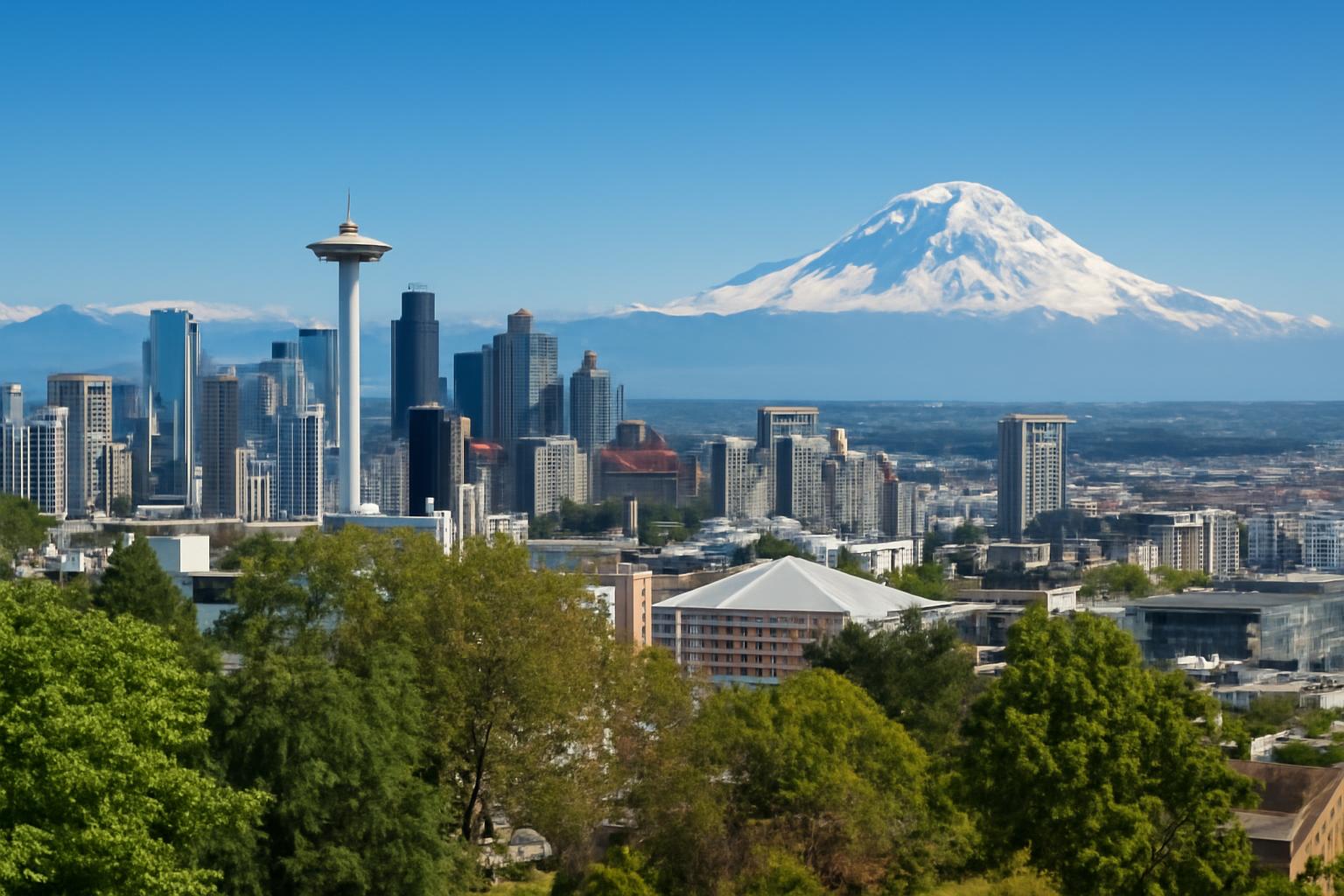
If you land in Seattle on a clear day, the city can feel almost unfairly scenic. To the southeast, Mount Rainier rises beyond neighborhoods, lakes, and skyline gaps as a huge snow-covered cone. To the west, the Olympic Mountains spread in a long blue wall over Puget Sound. You do not need a hike, a rental car marathon, or a national park day trip to see either one.
The real trick is not chasing one magical overlook and hoping conditions cooperate. It is choosing the right kind of clear-day plan. Seattle works best when you treat viewpoints as part of a neighborhood outing, not as isolated trophies. Pick one area, keep the schedule loose, and leave room for the weather to make the final decision.
That matters because Seattle mountain viewing is wonderfully dramatic and maddeningly inconsistent. You can wake up to blue sky over downtown and still lose Rainier to haze, low cloud, or flat light. You can spend an hour assuming the Olympics are gone, then watch them reappear in sharp relief as the air clears over the Sound. A flexible plan turns that uncertainty from a problem into part of the fun.
For short-trip visitors, that usually means one of three strategies:
- a west-side bluff evening for skyline and Rainier
- a northwestern beach-and-overlook evening for the Olympics
- a ferry ride when you want the scenery to unfold without overcommitting to one fixed viewpoint
When the Mountain Is Out: Visibility Basics
Yes, you can see Mount Rainier from Seattle, and when you can see it clearly, there is no mistaking what you are looking at. Rainier rises to about 14,410 feet, and Seattle guides that focus on city viewpoints note both its enormous presence and the fact that Seattle gets roughly 150 rainy days a year, with July through September usually giving visitors the easiest odds for clear views. Duende’s Seattle Rainier guide also recommends checking the Space Needle webcam before you commit to a viewpoint run because the mountain can disappear even when the city itself looks decent at ground level (Duende’s Seattle Rainier guide).
That is why locals say “the mountain is out.” The phrase is less poetic than practical. A Seattle Q&A summary describes Rainier as roughly 60 to 70 miles from many city viewpoints and explains how low clouds, marine layer, haze, smoke, and weak light can erase it. That same local guidance says late morning through mid-afternoon can be better than first thing in the morning after summer cloud burns off, and post-storm days outside peak summer can be especially crisp (Quora’s Seattle Rainier visibility summary).
The Olympic Mountains follow the same broad logic, but the experience is a little different. Rainier usually reads as one dominant form. The Olympics are more about ridge lines, layers, and width. On a hazy evening, you may still get a beautiful waterfront sunset while losing most of the mountain detail. On a cooler, cleaner day, the range can suddenly look much closer than you expected.
That difference is useful when you are planning. A Rainier-first day is often about finding a clean south-facing corridor with enough elevation or openness. An Olympics-first day is often about going west, giving yourself time, and accepting that atmosphere matters almost as much as raw visibility. The same “clear day” can favor one range more than the other.
A simple morning check helps more than heavy forecasting. If the webcam looks sharp, move one viewpoint higher in your day than you might instinctively want to. If the mountain is faint or missing, do not spend the whole day zigzagging across the city trying to force it. Seattle rewards people who stay in one zone and let conditions improve rather than rebuilding the schedule every hour.
That is also why neighborhood clusters beat one-off scenic errands. If the mountains vanish, Queen Anne still gives you city views, Ballard still gives you a good beach evening, UW still gives you a pleasant campus walk, and a ferry is still a ferry. The outing should work even if visibility only partly cooperates.
Queen Anne & Magnolia: Top Rainier Spots with Olympic Bonus
If Mount Rainier is the main goal, Queen Anne and Magnolia are among the most useful places to start. Kerry Park is the classic skyline-and-Rainier shot, while Magnolia Boulevard offers a longer bluff edge with broader directionality. Seattle viewpoint coverage specifically highlights Kerry Park for the downtown, Space Needle, Elliott Bay, and Rainier composition, and describes Magnolia Boulevard as one of the clearer places to look west toward the Olympics and south toward Mount Rainier on clear days, with sunset light sometimes adding pink color to Rainier (Duende’s Seattle Rainier guide).
Kerry Park earns its reputation because it does one thing extremely well. If the mountain is visible, the composition feels immediately recognizable: city in front, Rainier behind, all in one compact frame. For first-time visitors, that clarity matters. You do not have to scan around wondering whether you are standing in the right place or facing the right direction. You arrive, look out, and either the view is there or it is not.
The downside is equally obvious. Miss Rover’s Seattle viewpoint guide notes that Kerry Park gets crowded on nice weekends and that parking is very limited, especially when the weather is good and the mountain is visible (Miss Rover’s Seattle viewpoints guide). In practice, that means Kerry is better treated as a quick, high-value stop than a long, relaxed hangout. If you want the photo, go. If you want quiet, plan a second stop.
That second stop is often Magnolia. Magnolia is less about one perfect frame and more about optionality. The bluff lets you work with the day instead of against it. If Rainier is the strongest feature, you can favor the southward openings. If the western light and Sound are better, you can lean into the Olympic side. If both ranges are faint, it is still a satisfying place to watch the water, light, and city edge work together.
This difference makes Magnolia especially good for visitors who dislike all-or-nothing sightseeing. Kerry Park is photogenic but binary. Magnolia is more forgiving. It can be a view stop, a scenic drive-by, a sunset pause, or the outdoor portion of an easy west-side evening. It also tends to feel less compressed than Kerry, even when other people are around.
Ella Bailey Park is a quieter Magnolia backup if you want similar west-side scenery without the same level of expectation.
For short-trip visitors, this cluster works especially well late in the day. You can start with Kerry if visibility is strong, drift toward Magnolia for a less hurried second look, and still end the evening without feeling like you spent half your time in transit. That is the broader strength of this area: it gives you an efficient Rainier-first plan with the possibility of Olympic bonus views, not the other way around.
If you are deciding between Kerry Park and Magnolia and only have time for one, the easiest rule is this: choose Kerry if you want the iconic Seattle image, and choose Magnolia if you want a broader clear-day experience that may reward patience more than speed. They are close enough in theme to pair well, but different enough that they solve different travel moods.
University of Washington & South: Lakeside Rainier Views
If you want Rainier without the skyline dominating the frame, the University of Washington and the Lake Washington side of the city make a strong second cluster. These viewpoints feel less postcard-famous than Kerry Park, but they often give a cleaner read on the mountain itself.
UW’s Rainier Vista alignment around Red Square and Drumheller Fountain is one of the city’s best no-hike mountain sightlines, while Seward Park offers a very different Rainier experience from the shore of Lake Washington. Seattle-specific and Rainier-focused guides consistently list both as accessible places to see the mountain without turning the day into a hike (Sand and Elevation’s Rainier viewpoints guide).
The UW option is about geometry. When visibility lines up, the campus does much of the work for you. The south-facing axis frames Rainier cleanly, and the surrounding setting feels organized rather than dramatic. That makes it especially good for travelers who want a clear mountain view as part of a broader day rather than as a dedicated scenic mission.
It is also one of the easiest stops to layer into another plan. If you are already headed to the university area for museums, coffee, or a campus walk, Rainier Vista is an efficient add-on. You do not have to build the entire outing around it. On a clear day, you simply take advantage of a city feature that already exists.
Seward Park feels different from the first step. Instead of skyline and bluff edges, you get water, shoreline, and a more relaxed foreground. The mountain reads across Lake Washington rather than behind downtown structures, which gives the scene more openness and less compression. If you want room to linger, bring snacks, or spend part of an afternoon outside without standing shoulder to shoulder at a famous overlook, Seward often feels better.
The tradeoff is not difficulty but commitment. Seward is more of a deliberate south-city outing than a quick slot-in stop, especially if you are staying central or north. It makes the most sense when you want a slower half day, not when you are trying to squeeze three separate scenic neighborhoods into one weather window. If you stay until dusk, the park atmosphere improves for some travelers and gets a little buggier for others, so it is wise to think of it as a relaxed stop rather than a precision sunset platform.
That last point matters because 520 Bridge View Park is easy to misunderstand. It is best treated as a bonus if you are already moving through the east side of the city or connecting neighborhoods in that direction. It is not the place to build a whole afternoon around. Its value is low commitment: if conditions are excellent, you stop; if not, you keep moving.
So which is the better Rainier choice: UW or Seward? Usually, UW is better for efficiency and framing, while Seward is better for atmosphere and breathing room. One is an elegant city sightline. The other is a waterside reset. Both fit well into a clear-day plan; they just belong to different kinds of days.
Ballard & North Seattle: Olympic Mountains Sunsets
For Olympic Mountains views, Ballard and the northwestern edge of Seattle are among the simplest answers. This is the part of the city where you stop thinking about south-facing mountain corridors and start thinking about west-facing evenings.
Golden Gardens Park is one of Seattle’s most consistently recommended westward parks for Olympic views, especially around sunset, when beach, Sound, and mountain silhouettes align into an easy end-of-day outing (Miss Rover’s Seattle viewpoints guide).
Golden Gardens works because it is not overly conditional. Yes, the Olympics look best when the air is clean. But even when they soften into blue layers or partial silhouettes, the setting still earns the trip. You have shoreline, open sky, and enough room to stay awhile. That makes it a safer bet than a viewpoint that only feels worthwhile if every long-distance detail is sharp.
It is also a good answer for visitors who do not want their Seattle scenic time to feel formal. You can show up with takeout, walk the beach, sit on driftwood, or just watch the evening change. The mountains may be the reason you came, but they do not have to do all the work.
If you want more elevation and less beach, Sunset Hill Park is the logical step up. Washington’s National Park Fund specifically places it above Shilshole Bay for Olympic-facing sunsets, and lists Carkeek Park as another clear-day option for broad northwestern mountain panoramas (Washington’s National Park Fund Seattle viewpoint roundup).
The practical difference among these spots is mostly mood. Golden Gardens is the beach evening. Sunset Hill is the overlook evening. Carkeek is the quieter northern park evening. None of them guarantees razor-sharp Olympic detail, but all three give you the right orientation and a setting that still works if the mountains end up softer than you hoped.
That is why Ballard is such a comfortable base for Olympics-first visitors. You can build a whole evening that feels local rather than checklist-driven: one scenic stop, one meal, a little wandering, and no need to bounce across the city chasing an angle. For short stays, that kind of low-friction plan is often better than trying to mix Ballard, Queen Anne, and Seward into the same day.
If your weather confidence is only moderate, Ballard is also more forgiving than a Rainier-first run. Rainier viewpoints can feel disappointing when the mountain refuses to appear. Ballard’s west-facing parks usually still give you a satisfying Seattle evening even when the Olympics stay faint. That makes them a strong choice when the forecast says “maybe.”
Discovery Park: Overlaps for Both Ranges
Discovery Park belongs in this conversation, but with more qualification than the curbside or campus viewpoints. It can reward you with broad scenery and multiple sightlines, yet it is not the purest version of “no-hike Seattle viewpoint.”
The easiest way to think about Discovery is as a scanning landscape rather than a single overlook. Different sections open in different directions, so the park can overlap both Rainier and Olympic viewing depending on where you are, how far you walk, and what the sky is doing. That makes it more flexible than it first appears, but also less immediate than places like Kerry Park or Golden Gardens.
That distinction matters for visitors with limited time. If you want a fast payoff, Discovery can feel diffuse. If you want a longer outdoor block with room for bluff views, water, and changing angles, it can feel richer than the city’s tighter viewpoints. It is less of a stop and more of an outing.
The catch is access. Photography coverage of the park highlights the West Point Lighthouse side for Rainier imagery and notes that reaching the beach and lighthouse can involve about a 1.5-mile trail from the parking area, with the feel of that walk changing depending on closures and your own mobility or energy for the day (Explore With Alec on photographing Rainier from Discovery Park).
That makes expectation-setting essential. Discovery Park is still a good fit for travelers who do not want a strenuous hike, but it is not the same category of effort as stepping out at Kerry Park, rolling up to Magnolia Boulevard, or walking onto a ferry. If your real goal is minimum walking and maximum certainty, other viewpoints are better.
Where Discovery shines is in combination with Magnolia. They sit close enough to form a logical west-side half day: start with an easy bluff stop, then decide whether you want a longer park wander or whether the weather is not worth the extra effort. That choice-based structure is exactly what clear-day Seattle planning should feel like.
So yes, Discovery Park can be part of a no-hike or low-hike mountain strategy, but only if you define the day correctly. It is not the easiest mountain stop in Seattle. It is one of the most spacious.
Ferry Rides: Panoramic Mobile Viewpoints
If you want mountain viewing without having to pick a single fixed overlook, ferries are one of Seattle’s most forgiving scenic tools. They turn the whole experience into a moving viewpoint: skyline behind you, open water around you, and mountain chances in multiple directions if the air is clear.
Clear-day ferry guidance for the Seattle area specifically calls out the Seattle–Bainbridge route at about 35 minutes and the Edmonds–Kingston route at about 30 minutes, with possible views of the Olympic Mountains, the Cascades, and Mount Rainier from the water. That same guidance warns that delays are common on weekends and in summer (Olympic Hiking Co.’s ferry guide).
For most short-trip visitors, Seattle–Bainbridge is the easiest ferry answer because it leaves from downtown, works well for walk-on passengers, and gives you scenic value quickly. You do not need a car, and you do not need to turn the far side into a major island itinerary. One crossing, a short waterfront wander, and a return trip can already feel complete.
Seattle–Bremerton is the longer downtown option at about 60 minutes, which means more deck time and more room for the ferry itself to be the event. Olympic trip-planning coverage also notes that the downtown ferry terminal is about a 15-minute walk from Pike Place Market, and reminds travelers that loading, unloading, and traffic conditions can shift timing enough that checking Washington State Ferries before leaving is the smart move (MyOlympicPark’s Seattle ferry guide).
That comparison helps with trip design. If you are ferry-first and time is tight, Bainbridge usually makes more sense. If you actively want a longer ride and do not mind spending more of the outing on the boat, Bremerton can be more satisfying. Edmonds–Kingston is excellent if you are already north of central Seattle, but less useful for a visitor staying downtown without a strong reason to reposition.
The bigger advantage of ferries is emotional, not just scenic. A park viewpoint can fail hard if the mountain never shows. A ferry rarely feels like a waste. Even with partial visibility, you still get water, marine traffic, shifting angles on the city, and that very specific Puget Sound sense of distance and scale. When conditions improve mid-crossing, the mountains become a bonus instead of the only point of the outing.
For uncertain weather, that matters. If the webcam looks only moderately promising, a ferry is often a better gamble than crisscrossing the city for one peak-specific shot. If the day turns brilliant, you still win. If it stays mixed, the trip remains pleasant.
Planning Your Viewpoint Day: Neighborhoods, Transit & Weather
The simplest way to plan a viewpoint day is to decide what kind of success you want before you worry about individual stops.
If Rainier is the priority, build around Queen Anne or Magnolia. If Olympic sunsets matter more, Ballard is the cleaner base. If the ferry itself is non-negotiable, stay close enough to downtown or the waterfront that boarding feels like the obvious move instead of a separate expedition. If you are still sorting that out, this guide on how to choose where to stay in Seattle is a useful companion because it frames neighborhoods by how you actually move through the city, not by map aesthetics alone.
That base decision is more important than most visitors expect. A short Seattle trip usually gets easier when you stop asking, “What is the single best viewpoint?” and start asking, “What shape do I want this half day to have?” A Queen Anne evening feels very different from a Ballard evening, even if both are scenic. A ferry half day feels different again. Pick the shape first, then add the viewpoint.
For no-car travelers, this is especially helpful. Seattle is absolutely workable without driving, but it becomes less pleasant when you try to collect viewpoints from opposite ends of the city in one clear-weather sprint. One cluster per half day is usually the sweet spot: - Queen Anne and Magnolia together - Ballard with Golden Gardens or Sunset Hill - UW as part of an east-side campus day - one ferry as its own anchor
That structure reduces the most common mistake: losing the best visibility window while you are still in transit between neighborhoods that do not naturally connect.
It also helps to match effort to forecast confidence. If the weather looks excellent, use your higher-value mountain stop earlier. If conditions look uncertain, choose the version of the day that still pays off without perfect long-range clarity. That often means Ballard over Seward, Magnolia over a cross-city chase, or a ferry over trying to force both Rainier and Olympic viewpoints into one outing.
A good fallback plan matters just as much as a good scenic plan. If the morning starts gray, do not declare the day ruined. Use indoor anchors, then keep one short outdoor viewpoint in reserve. Pike Place Market, coffee stops, museums, and neighborhood wandering all pair well with a late visibility check. Seattle often rewards patience more than optimism.
There is also a useful difference between “view-heavy” and “view-dependent.” Kerry Park is somewhat view-dependent; the payoff is specific. Golden Gardens is view-heavy; the scenery still works even if the mountains stay subtle. Ferries are even more resilient because the crossing itself is an attraction. When forecast confidence is low, choose plans in that second category.
A few practical rules make all of this easier:
- Do not build the day around more than one major scenic anchor.
- If Rainier appears in the morning, act on it.
- If the Olympics are your priority, protect the evening light.
- Treat Discovery Park as an outing, not a quick stop.
- Treat 520 Bridge View Park as a bonus, not a destination.
- Bring an extra layer even on a nice day, because bluff roads, beaches, and ferry decks can feel much cooler than inland streets.
That last point sounds small, but it is often the difference between staying for the good light and leaving early. Seattle viewpoint days are rarely ruined by lack of scenery alone. They are more often shortened by poor timing, overpacked routing, or the false idea that every scenic stop needs to happen on the same day.
If you want the clearest action framework, use this:
- Rainier-first, shortest effort: Queen Anne with a Magnolia backup
- Rainier-first, calmer mood: UW or Seward, depending on how much time you want outside
- Olympics-first, easiest evening: Ballard with Golden Gardens or Sunset Hill
- Most weather-forgiving scenic outing: a ferry
- Best west-side combo day: Magnolia plus Discovery if you want both easy and longer options
That is enough. Seattle does not require complicated mountain-chasing. It requires good timing, a flexible neighborhood choice, and the willingness to let a clear day stay simple.
Can you see Mount Rainier from Seattle on a clear day?
Yes. On a clear day, Rainier is visible from many parts of Seattle, and it usually looks unmistakable once the air is clean enough for a full view. The best city sightings tend to come from south-facing openings, higher ground, or broad lake and water corridors.
What Seattle ferries offer the best mountain views?
For most visitors, Seattle–Bainbridge is the simplest scenic ferry because it leaves from downtown and is easy to use as a walk-on outing. Seattle–Bremerton gives you more time on the water, and Edmonds–Kingston is a strong option if you are already north of the city. All are weather-dependent.
Are there viewpoints showing both Mount Rainier and Olympic Mountains?
A few broad viewpoints can work for both, especially Magnolia Boulevard and some larger open areas such as Discovery Park or the 520 viewpoint area. Usually, though, you are not getting one perfectly balanced frame of both ranges at once; you are getting a place that lets you look in more than one promising direction.
Best time of year/day for mountain views from Seattle?
Summer gives you more chances overall, but the cleanest views are really about air clarity, not just season. Late morning can outperform early morning when marine layer needs time to burn off, and post-storm days can be especially sharp even outside summer.
Do I need to hike for these Seattle mountain viewpoints?
No. Most of the strongest options here are overlooks, parks, campus sightlines, or ferry decks. Discovery Park is the main partial exception because some of its more rewarding angles can involve a longer walk.
Seattle’s clear-day mountain strategy is simple once you stop trying to do everything: choose the range you care about most, pick the neighborhood or ferry that matches it, check visibility before you leave, and keep one fallback in the plan. When the mountain is out, you will be in the right part of the city for it. And if it is not, you will still have a good Seattle day.