
Ride the Link Light Rail from SeaTac Airport to Downtown Seattle: Your Step-by-Step Guide
Once you reach the platform, board the northbound 1 Line toward Lynnwood City Center for downtown Seattle. The endpoint can confuse first-time riders.
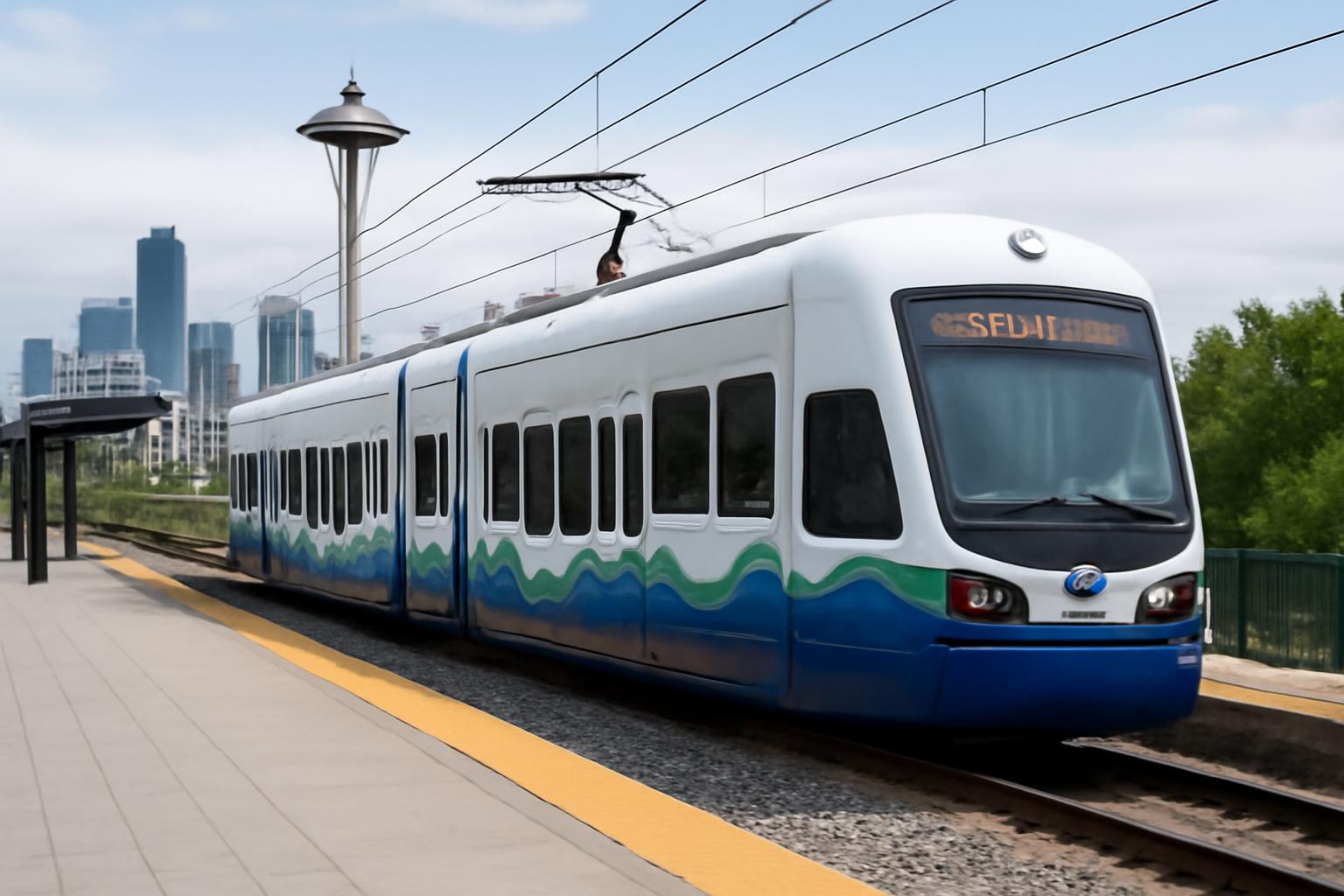
If you’re flying into Seattle and want a straightforward car-free arrival, the seatac to downtown seattle light rail trip is usually the simplest place to start. For many first-time visitors, Link works because it removes the biggest variable in an airport transfer: freeway traffic. Instead of guessing what I-5 will feel like when you land, you follow the airport signs, board the correct northbound train, and ride straight into the part of Seattle where walking and transit are easiest.
That matters most on short trips. If your hotel is near the downtown core, Pioneer Square, or another central station area, you can land, get into the city without renting a car, and keep the rest of the trip compact. The rail ride itself is commonly planned at about 38 to 40 minutes, but your true airport-to-hotel time will be longer once you add the walk from the terminal and any wait for the next departure Port of Seattle.
The key is going in with the right expectations. It is a regular urban light rail line that happens to give travelers a direct, useful connection from SeaTac/Airport Station to the downtown spine. If that matches how you want to travel, it can be an excellent first move.
Why Take the Link Light Rail from SeaTac to Downtown Seattle
For most visitors staying in central Seattle, the main advantage is directness. The 1 Line serves SeaTac/Airport Station and continues north to the downtown stations most short-stay travelers actually use, including International District/Chinatown, Pioneer Square, Symphony, and Westlake. The same line also connects the airport area with nearby stations such as Tukwila International Boulevard to the north and Angle Lake to the south, which helps when you are double-checking that you are on the right train Explore Seattle Southside’s Link overview.
The other big advantage is predictability. A car ride can be more comfortable, especially with heavy luggage, but the train avoids normal road congestion and gives you a stable planning number. For a downtown stay, that tradeoff is often worth it: you give up curb-to-curb service, but you gain a simpler arrival pattern and a much lower cost than a taxi or rideshare.
It also fits the way Seattle often works best for a short visit. If you stay near the central transit spine, the airport transfer is easier on arrival day, neighborhood-hopping is easier during the trip, and departure day becomes less of a logistics problem. If you are still deciding on a base, think first about where to stay in Seattle in terms of transit access, not just views or hotel branding.
That said, light rail is not automatically the best choice for everyone. If your lodging is far from a station, if your final walk is uphill and several blocks long, or if you are traveling with multiple large suitcases, the convenience gap narrows fast. Link is strongest when your hotel is already aligned with downtown transit.
Step-by-Step Directions: Baggage Claim to SeaTac/Airport Station
The airport part is the piece that makes first-timers hesitate, but the route is more structured than it first feels. From baggage claim, head up to the fourth floor, cross the skybridge into the parking garage level, and then follow the airport’s Link Light Rail signs to the station. If you would rather not do the full walk, the Port of Seattle says a free Train-to-Plane shuttle runs between the station area and the terminal from 5 a.m. to midnight; for assistance, it lists 206-787-4069 and 206-787-5906 Port of Seattle.
A simple mental map helps more than overthinking it:
- Exit toward baggage claim or the main terminal corridor.
- Follow signs for Link Light Rail.
- Go up to the fourth floor.
- Cross the skybridge into the parking garage.
- Keep following the station signs until you reach SeaTac/Airport Station.
What usually throws people off is not complexity so much as distance. After a flight, almost any walk inside an airport feels longer than it looks on paper. The good news is that this is a well-used route, and the signage is built for exactly this trip. If you see the Link signs, trust them and keep going.
If you have only a backpack or rolling carry-on, walking is often the fastest and least fiddly option because you stay in control of your timing. If you are tired, traveling with kids, or managing mobility limits, the shuttle can make the station approach feel much more manageable.
The station itself is officially marked accessible on Sound Transit’s stop page, which is useful if you need elevators or step-free access. What that designation does not remove is the length of the terminal-to-station transfer, so it is smart to budget a little extra time rather than treating the airport walk as trivial SeaTac/Airport Station | Sound Transit.
Tickets and Fares: How to Pay for Your Ride
Payment is easy once you know the choices, but it helps not to oversimplify the fare. For a practical planning number, most current visitor guides still treat the airport-to-downtown ride as about $3 one way. One 2026 comparison guide lists the broader adult one-way range at $2.25 to $3.25 and says seniors 65+ pay $1, which is a good reminder to check current pricing before you travel rather than memorizing a single flat number Starline Town Car’s 2026 comparison.
For how to pay, the Port of Seattle says you can tap to pay with credit, debit, or ORCA card, buy a ticket from the ticket machines, or use the Transit GO Ticket app [Port of Seattle]. In other words, you do not need to set up a complicated local transit account just to get into town.
The most useful payment options for most travelers are:
- Contactless credit or debit card
- Digital wallet on your phone
- ORCA card
- Transit GO Ticket app
- Paper ticket from the station machine
A local step-by-step guide also notes that a new ORCA card costs $3 plus stored fare value, which matters only if you expect to use transit repeatedly over the next few days rather than just once from the airport Airport Transportation guide.
For a short stay, the right choice depends on how often you plan to ride after you reach downtown. If this is mostly a one-time airport transfer, tapping a bank card or buying a single ticket is usually easiest. If you will be using regional transit repeatedly, ORCA can be more convenient because it works across multiple local systems.
One small but important practical point: if you buy a paper ticket, keep it with you for the ride. And if you tap with ORCA or a bank card, make sure you completed the tap before boarding. That is the kind of detail that feels obvious only after you have done it once.
Boarding the Correct Train: Northbound to Downtown
Once you reach the platform, the decision you need to make is simple: board the northbound 1 Line toward Lynnwood City Center for downtown Seattle. Do not get on the southbound train toward Federal Way Downtown or stations south of the airport Seattle Airport to Downtown Seattle by Train.
This is the part where first-time riders can get momentarily unsure, because the line’s endpoint names are not the same thing as your destination. You are not boarding based on the word “downtown” alone. You are boarding based on direction: from the airport, downtown Seattle is northbound.
Older instructions may still refer to the correct platform as the Northgate side, because that used to be the better-known northern endpoint. If you run into that wording in older travel advice, do not let it throw you. The practical rule stays the same: from SeaTac/Airport Station, choose the train heading north into Seattle.
Use this quick check before you board:
- Correct direction for downtown Seattle: northbound
- Wrong direction from the airport: southbound
- Best confirmation: check whether downtown station names appear ahead on the display
If you can see International District/Chinatown, Pioneer Square, Symphony, or Westlake in the stop pattern, you are in the right place. If the listed stops are all south of the airport, wait for the next train.
The Journey: Stops, Duration, and Onboard Experience
Once the train leaves the airport, the ride becomes the easy part. For planning, many travelers use about 38 to 40 minutes from the airport to the downtown core, and one 2026 transportation comparison puts the more realistic airport-to-hotel total closer to 45 to 50 minutes once you include the station walk and any wait for the next departure Seattle Town Car’s 2026 transportation guide.
In stop terms, the route makes good sense once you picture the corridor. From SeaTac/Airport Station, the line continues north past Tukwila International Boulevard, then toward the stadium district and the main downtown stations: International District/Chinatown, Pioneer Square, Symphony, and Westlake. South of the airport, the line continues toward Angle Lake, which is useful mainly as a reminder that not every train you see at the airport is taking you toward downtown [Explore Seattle Southside’s Link overview].
The onboard experience is typical city light rail, not a dedicated airport shuttle. It is easy to use, but it is not designed around oversized vacation luggage.
A few practical expectations help:
- If you land during peak commuting windows, the train can feel tighter than you might expect.
- Compact luggage is much easier than multiple large bags.
- If one train looks uncomfortably full, waiting for the next one is often the better move.
- Downtown stations are underground, so pay attention to the station name before the doors open.
For many visitors, the journey feels calmer than the airport walk that comes before it. Once you are sitting down or at least settled on board, the transfer is largely on rails in every sense.
Downtown Stations: Exits and Walks to Attractions
Choosing the right station matters more than many first-time visitors expect. Seattle is manageable without a car, but it feels much easier when you exit close to your actual hotel or first destination rather than just “somewhere downtown.”
A practical downtown guide points many visitors to Westlake for the retail core and central hotels, while Pioneer Square is the logical stop for historic Seattle, galleries, and Underground-tour territory. The same guide recommends using Google Maps or the Transit GO app to compare your best final exit rather than assuming every downtown stop is interchangeable [Seattle Airport to Downtown Seattle by Train].
As a starting point, think of the main stations this way:
- Westlake: strongest all-around choice for many central hotels, shopping, and onward transit
- Symphony: useful for parts of the business district and some convention-area stays
- Pioneer Square: best fit for the historic district, galleries, and nearby stadium access
- International District/Chinatown: best if you are staying or eating in that district, or making another connection
For Pike Place Market, either Westlake or Symphony can make sense depending on which side of downtown you are aiming for and how much uphill or downhill walking you want to do with luggage. For the Seattle Convention Center, an older but still practical downtown directions page says Westlake Station is about a four-minute walk if you exit via Pine Street, continue to Sixth Avenue, then turn on Pike Street [Airport Transportation guide].
For Seattle Center and the Space Needle, many visitors still use one of the central downtown stations rather than expecting Link to drop them right at the attraction. In practice, that means choosing the stop that best matches your hotel or your next transit connection, not chasing a single “perfect tourist station.”
That is why it is worth checking your exact hotel address before you board. A property that looks “downtown” on a booking site may be much easier from Westlake than Pioneer Square, or vice versa. Five minutes of comparison on your phone can save you a longer bag-drag at the end of the ride.
Schedules, Hours, and Service Alerts
For planning purposes, it is best to think of Link as frequent all-day service, not a train you need to schedule to the minute hours in advance. A recent transportation guide summarizes the airport segment as running roughly every 8 to 15 minutes over service hours that are approximately 5 a.m. to 1 a.m. Those are useful planning numbers, not guarantees, and they are exactly the kind of details to re-check on your travel day [Seattle Town Car’s 2026 transportation guide].
That same-day check matters more than many travelers realize. Late-night service, maintenance work, crowding after major events, or elevator outages can all change what feels like a simple trip on paper. If your flight is delayed, the right move is to verify service after you land, not just when you leave home.
Sound Transit’s station page is the best place in this evidence set for real-time arrivals and station-specific information, and it is the one to check if you want current conditions rather than a generic guidebook summary [SeaTac/Airport Station | Sound Transit].
A good rhythm is simple:
- Check service before heading to the airport for your flight to Seattle.
- Check again after landing if your arrival time shifted.
- Confirm the next northbound train before making the full station walk.
That habit becomes especially useful if you are arriving early in the morning, close to midnight, or during a period of planned service work.
Luggage, Accessibility, and Practical Tips
Link is very workable with normal travel luggage, but the trip gets easier the more honest you are about the airport walk. In a Seattle traveler discussion focused specifically on seniors using the train from SEA, posters described the route as manageable with two carry-ons and pointed to escalators, elevators, and level platform access as the main features that make it feasible Tripadvisor discussion of light rail from SEA/TAC.
That said, the hardest part for many riders is still not the train itself. It is the transfer between the terminal and the station. Even with accessibility features in place, it is a real walk after a flight, and that can matter more than the rail ride once you are tired, traveling with kids, or carrying awkward bags.
A few practical realities help set expectations:
-
Carry-ons are the easiest fit. A backpack and a rolling cabin bag are usually much simpler than multiple large cases.
-
Crowding changes the luggage experience. A bag setup that feels fine on a half-full train can feel clumsy on a busier one.
-
Accessible does not mean effortless. Elevators, escalators, and level boarding help, but they do not erase distance.
-
Your final downtown walk counts too. The trip is best when your hotel is genuinely near the station you use.
If you want to make the ride smoother, a few habits help:
- Save your hotel address before you leave the airport Wi-Fi bubble.
- Compare the walk from Westlake, Symphony, and Pioneer Square before boarding.
- Keep bags close to you rather than spreading them into door space.
- If a train is very full, let it go and take the next one.
- If the airport walk itself sounds draining, use the free shuttle when it is operating.
The best traveler profile for this trip is still the same one the route naturally favors: solo travelers, couples, or small groups with light to moderate luggage and a downtown base near transit. The farther you move away from that profile, the more worth it becomes to compare the train against a taxi or rideshare.
For short Seattle visits, though, Link still does something especially useful: it puts you directly into a walkable urban base without making you solve parking, traffic, or rental-car logistics first. That is why this connection matters. It is not just a cheap ride from the airport. It is often the move that lets the rest of a compact Seattle trip stay simple.
How long does the SeaTac to downtown Seattle light rail take?
Plan on roughly 38 to 40 minutes on the train to the downtown core, with your total airport-to-hotel trip usually running longer once you add the terminal walk and any wait for the next departure Port of Seattle.
How much is the light rail fare from SeaTac to downtown?
A safe planning number is about $3 one way, but a 2026 comparison guide lists the adult fare more broadly at $2.25 to $3.25 and says seniors 65+ pay $1, so it is smart to verify current pricing before you travel Starline Town Car’s 2026 comparison.
Does the light rail from SeaTac go direct to downtown Seattle?
Yes. The 1 Line runs directly from SeaTac/Airport Station into downtown Seattle, so most riders heading to the central city do not need a transfer [Explore Seattle Southside’s Link overview].
Can I take luggage on the SeaTac light rail to downtown?
Yes. Normal travel bags, especially carry-ons, are commonly manageable on the train, and Seattle travelers specifically discussing airport use describe the route as workable with small bags and step-free access features [Tripadvisor discussion of light rail from SEA/TAC].
What if I miss the last train or arrive late?
Do not assume service runs all night. Check real-time station information before leaving baggage claim, especially if your flight arrived late or was delayed; if rail service is no longer practical, a taxi or rideshare is usually the easier fallback. An older Seattle conference transportation page listed a last northbound downtown trip at 11:44 p.m., but treat that as dated context, not a current promise (Airport Transportation guide).