
See Seattle in Simple, Walkable Clusters
A compact one-day introduction centers on Pike Place, the waterfront and Pioneer Square. Longer plans use nearby clusters and rain-ready backups.
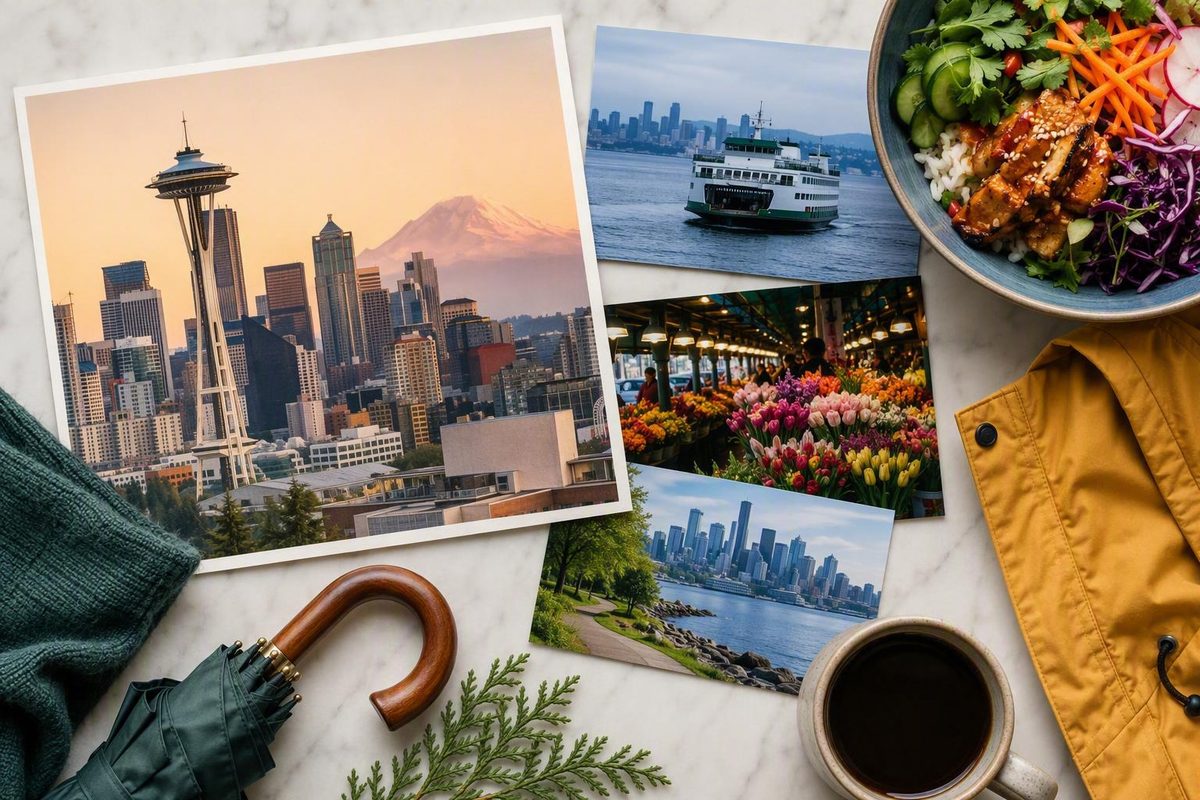
The best places to visit in Seattle do not fit neatly into a universal top-10 ranking. A first-time visitor who loves markets and neighborhood restaurants needs a different plan from someone focused on museums, architecture, parks, history, or skyline photography.
A simpler approach is to divide the city into compact clusters. Choose one anchor activity, add one or two nearby stops, and keep an indoor alternative ready. You will spend less time crossing the city and more time experiencing it.
For most first trips, the essential shortlist is:
- Pike Place Market and the waterfront for food, market activity, Elliott Bay, and central sightseeing.
- Seattle Center for the Space Needle and major museums.
- Pioneer Square for historic architecture and an underground tour.
- One neighborhood, usually Capitol Hill, Ballard, or Fremont.
- One park, viewpoint, or ferry experience, such as Kerry Park, Gas Works Park, or Bainbridge Island.
This is a prioritized planning guide, not an objective ranking. Attractions that appear repeatedly in Seattle itineraries are generally popular and useful for building a short trip, but that does not make them right for every traveler.
How to Choose the Right Seattle Places for Your Trip
Start with the experience you care about most, then build around its location. One principal attraction per half-day usually leaves room for a meal, a neighborhood walk, and an optional stop without turning the day into a race.
A practical first-trip sequence is:
- Pike Place Market and one waterfront activity.
- Seattle Center and one museum or observation experience.
- Pioneer Square or a character-rich neighborhood.
- One park, viewpoint, or ferry ride.
If you have only one day, prioritize Pike Place, the waterfront, and Pioneer Square. With two days, add Seattle Center and Capitol Hill. A third day creates room for Ballard and Fremont or a Bainbridge Island outing.
At-a-glance selector
| Your priority | Best starting cluster | Environment | Good additions |
|---|---|---|---|
| Food and market activity | Pike Place Market | Mixed, with covered areas | Waterfront walk, Seattle Aquarium |
| History | Pioneer Square | Mixed | Underground tour, Klondike Gold Rush museum |
| Iconic attractions and museums | Seattle Center | Mixed | Lower Queen Anne, Kerry Park |
| Food, arts, parks, and nightlife | Capitol Hill | Mixed | Cal Anderson Park, Volunteer Park |
| Locks, public art, and neighborhood wandering | Ballard or Fremont | Mostly outdoor or mixed | Golden Gardens, Gas Works Park |
| Public skyline views | Kerry Park or Gas Works Park | Outdoor | Queen Anne or Fremont |
| Scenic water outing | Bainbridge Island ferry | Mixed and weather-dependent | Short island walk, café, gallery |
The environment label matters. Seattle Center works well in unsettled weather because you can choose an indoor museum instead of an outdoor viewpoint. Pike Place combines covered and open-air spaces. Parks, beaches, ferries, and distant mountain views depend more heavily on wind, rain, and visibility.
Do not use the selector as permission to cross the city repeatedly. Pike Place, Ballard Locks, Volunteer Park, and Kerry Park may all appeal, but forcing them into one day creates unnecessary transit and leaves little time to explore any of them.
Seattle Know’s homepage presents its approach as organizing trips around neighborhoods, ferry outings, markets, parks, and indoor fallbacks. Its Seattle trip-planning overview recommends choosing a base, selecting one anchor activity, and retaining a weather-ready alternative.
The site’s editorial approach similarly focuses on clean routes, practical context, and sensible backup plans rather than exhaustive sightseeing lists.
Before committing to an itinerary, confirm admission prices, operating hours, temporary exhibits, reservation requirements, event dates, transit service, ferry schedules, and accessibility details with the relevant official operators. These details can change independently of general travel advice.
Pike Place Market, the Waterfront, and Pioneer Square
Pike Place Market is the clearest central anchor for a first Seattle visit. It combines produce and specialty vendors, prepared food, flowers, crafts, shops, multiple levels, and the familiar fish-throwing activity. It also sits close enough to the waterfront for the two areas to form one practical sightseeing cluster.
The market can be crowded, so do not reduce it to a sign photograph and a quick look at the fish counter. Treat it as a district. Explore beyond the most visible entrance, browse the lower levels and nearby lanes, and stop for food when something genuinely interests you. A local travel guide describes the market as a combination of fish throwing, flowers, produce, artisans, farm products, and numerous food choices, which helps explain why it works as more than a single photo stop (Seattle weekend guide).
There is no need to repeat disputed superlatives about Pike Place being the country’s oldest continuously operating farmers market. Likewise, do not build a visit around the contested idea that the commonly identified Starbucks storefront is unquestionably the original location. The market’s present-day variety is a stronger reason to visit.
From the market, continue west or downhill toward Elliott Bay. The principal waterfront choices are:
- Waterfront walk: The most flexible option, allowing you to adjust your route, pace, and spending.
- Ferry outing: A larger commitment that works better as a planned half-day than an impulsive extra.
Choose one rather than assuming they all fit comfortably. A timed cruise limits flexibility, while a waterfront walk is easy to shorten or extend. If you choose the aquarium, allow enough space in the itinerary to enjoy it rather than treating it as a passage between other attractions.
Continue south to Pioneer Square if time and energy permit. The atmosphere changes from market stalls and piers to brick buildings, older streetscapes, public spaces, and historical interpretation.
Underground tours are the neighborhood’s most distinctive structured activity. They discuss early Seattle and rebuilding after the 1889 fire while taking visitors into spaces below the present street level. The nearby Klondike Gold Rush museum is another possible history stop. A three-day itinerary describes both Pioneer Square’s brick architecture and underground tours connected with post-fire rebuilding (Pioneer Square itinerary overview).
Confirm the chosen tour’s schedule, ticket requirements, route conditions, format, and accessibility before booking.
Clear-weather version: Explore Pike Place, descend to the waterfront, choose a walk or cruise, and continue south to Pioneer Square.
Rainier-day version: Spend more time in Pike Place’s covered portions, choose the aquarium or a nearby museum, and reserve an underground tour. Keep outdoor transitions short and use meals or coffee stops as deliberate breaks.
If you have only half a day, choose either Pike Place plus the waterfront or Pike Place plus Pioneer Square. A full market visit, aquarium, cruise, and underground tour do not belong in the same compressed period.
Seattle Center, Lower Queen Anne, and Kerry Park
Seattle Center is one of the easiest major attraction clusters to understand. It brings together the Space Needle, Chihuly Garden and Glass, Museum of Pop Culture, Pacific Science Center, International Fountain, Climate Pledge Arena, and other cultural and performance venues in a relatively compact area.
The challenge is choosing what to leave out:
- Space Needle: Choose it for iconic architecture and a dedicated observation experience.
- Chihuly Garden and Glass: Choose it for glass art and a visually focused museum visit.
- Museum of Pop Culture: Choose it for music and popular-culture subjects.
- Pacific Science Center: Choose it for interactive exhibits.
- International Fountain: Add it as an outdoor pause rather than treating it as a full attraction.
- Climate Pledge Arena or another performance venue: Include it when you are attending a scheduled event, not simply as another box to check.
These attractions are physically close, but entering several museums still takes time. A better plan is one major attraction plus one shorter stop, or two attractions if you are comfortable devoting most of the day to the complex. A first-timer guide identifies the Space Needle, MoPOP, Chihuly, International Fountain, Climate Pledge Arena, and Pacific Science Center as part of this cluster (Seattle Center overview).
The monorail connects the downtown core with Seattle Center and can remove a repetitive walk from the day. Check official service information before relying on it, particularly around maintenance, special events, or late-evening plans.
Lower Queen Anne is the natural place to look for a meal or a change of pace. Instead of spending every hour inside Seattle Center, step into the surrounding neighborhood, eat, and then decide whether you still want another museum.
Kerry Park is the classic optional add-on. It is a free Queen Anne viewpoint with a composed view of downtown and the Space Needle; Mount Rainier may appear beyond the city when visibility cooperates (first-timer Seattle guide). It is not a guaranteed mountain-view stop, nor is it physically equivalent to ascending an observation tower.
The connection from Seattle Center involves an uphill walk. That may be a pleasant neighborhood transition for an active visitor in dry weather, but it is not universally easy. Consider transit or a rideshare, or omit Kerry Park if hills, fatigue, rain, time, or mobility needs make the detour impractical.
A sensible Seattle Center day might look like this:
- Travel from downtown by monorail or another convenient option.
- Visit the Space Needle or one museum.
- Pause at the International Fountain and walk through the grounds.
- Eat in Lower Queen Anne.
- Visit a second attraction only if time and energy allow.
- Add Kerry Park if conditions are clear and the uphill connection suits you.
When rain, wind, or low visibility reduces the appeal of an outdoor viewpoint, choose MoPOP, Chihuly, Pacific Science Center, or another indoor venue instead. An observation deck can still be worthwhile in atmospheric weather, but pay for it only if the architecture and experience matter even without a long-distance view.
Check Seattle Center and Climate Pledge Arena event calendars before visiting.
Capitol Hill, Fremont, and Ballard for Neighborhood Seattle
After the central landmarks, choose one neighborhood that matches your interests and lodging base. Capitol Hill, Fremont, and Ballard provide different experiences and do not need to be compressed into the same day.
Capitol Hill for food, culture, parks, and evenings
Capitol Hill is a strong choice for visitors who prioritize cafés, restaurants, independent culture, nightlife, parks, and light-rail access. It works particularly well as a late-afternoon and evening cluster after central sightseeing, though its parks and museums also support a daytime visit.
Useful anchors include:
- Broadway
- The Pike/Pine corridor
- Cal Anderson Park
- Volunteer Park
- Seattle Asian Art Museum
- Volunteer Park Conservatory
- SIFF Cinema Egyptian
- Streissguth Gardens
Broadway and Pike/Pine suit unstructured wandering, eating, and evening activity. Cal Anderson Park provides an outdoor pause near busier commercial streets. Volunteer Park shifts the day toward greenery, architecture, art, and the conservatory. Streissguth Gardens can be a quieter addition when you are already exploring the northern side of the neighborhood.
Light rail and walking can be practical when your stops are near Capitol Hill Station or concentrated along Broadway and Pike/Pine. That does not mean every visitor should avoid driving: a car may still make sense within a broader regional trip. Parking, hills, evening timing, and the distance between specific stops should shape the decision. A commercial neighborhood guide identifies Broadway, Pike/Pine, Cal Anderson Park, Volunteer Park, Seattle Asian Art Museum, the conservatory, SIFF Cinema Egyptian, and Streissguth Gardens among the area’s principal destinations (Capitol Hill neighborhood guide).
Fremont for public art and a compact wander
Fremont is easier to approach as a short neighborhood ramble than as a checklist. The Fremont Troll is the recognizable anchor, but the broader appeal lies in public art, local streets, shops, food, and proximity to Lake Union.
Pair Fremont with Gas Works Park. The park occupies a former gasification-plant site and looks across Lake Union toward downtown, producing a perspective unlike Kerry Park or an indoor observatory.
Fremont plus Gas Works Park can fill a relaxed half-day. Add Ballard only if you are comfortable with another transit segment and have not scheduled a long museum visit or meal.
Ballard for locks, gardens, beaches, and a slower day
Ballard suits travelers who want to slow down and spend meaningful time outside the central tourist corridor. Its strongest anchor is the Hiram M. Chittenden Locks. The grounds include paths, lawns, gardens, water crossings, viewpoints, and a fish ladder.
Other Ballard options include:
- Golden Gardens for a beach setting and outdoor time.
- National Nordic Museum for a cultural institution and dependable indoor anchor.
- Neighborhood streets and dining for a slower, less scheduled visit.
The clearest choice is therefore:
- Pick Capitol Hill for food, arts, nightlife, and transit convenience.
- Pick Fremont for public art and Gas Works Park.
- Pick Ballard for the locks, a museum, a beach, and a longer neighborhood day.
Combining Fremont and Ballard can work because they occupy the same broad part of the city. Adding Capitol Hill usually creates a less efficient itinerary unless your evening plans specifically take you there.
Parks, Gardens, and Free Seattle Views
Seattle’s parks and public viewpoints balance a museum-heavy trip, create lower-cost sightseeing opportunities, and reveal how the city relates to hills, lakes, and salt water. Choose the place that fits your route rather than crossing town solely to complete a list.
A concise first-visit shortlist is:
- Kerry Park: A composed skyline view that includes the Space Needle.
- Gas Works Park: Downtown viewed across Lake Union.
- Olympic Sculpture Park: Outdoor art combined with a waterfront walk.
- Discovery Park: A larger outdoor outing that deserves more time.
- Volunteer Park: Green space that pairs naturally with Capitol Hill.
- Green Lake: A recreational circuit around the lake.
- Alki Beach: A West Seattle beach and waterfront setting.
- Golden Gardens: A beach option that pairs with Ballard.
- Kubota Garden: A Japanese garden in South Seattle.
These places are not interchangeable. Kerry Park is primarily a viewpoint and may be a short stop. Gas Works Park has more room to linger and a lake-level city perspective. Olympic Sculpture Park works as part of a central waterfront route. Discovery Park is more appropriate when the outdoor outing itself is the anchor.
Green Lake has a roughly three-mile walking, running, and biking path, making it better suited to an extended outdoor break than a quick photograph. Seattle neighborhood references distinguish Green Lake’s recreational circuit, Ballard’s Golden Gardens, West Seattle’s Alki Beach, and Fremont’s proximity to Gas Works Park (Seattle neighborhood overview).
Kubota Garden has been described as a free, 20-acre Japanese garden in South Seattle. Verify current access, opening information, temporary restrictions, and transportation before making the trip, especially because it sits away from the central first-visit clusters (two-day Seattle itinerary).
Public viewpoints do not reproduce the elevated, indoor, or architectural experience of a paid observation deck. Kerry Park may provide a classic skyline composition, but it does not place you within the skyline or offer indoor shelter. Gas Works Park provides open space and a strong city view across water, not an enclosed panorama.
No park, ferry, tower, or observation deck can guarantee a Mount Rainier or mountain-range view. If visibility is central to your decision, check conditions shortly before paying for an attraction or making a long detour.
For an efficient plan, match the park to the rest of the day:
- Pike Place or Belltown: Olympic Sculpture Park.
- Seattle Center or Queen Anne: Kerry Park.
- Fremont: Gas Works Park.
- Capitol Hill: Volunteer Park.
- Ballard: Golden Gardens.
- A dedicated outdoor half-day: Discovery Park or Green Lake.
- West Seattle: Alki Beach.
- South Seattle: Kubota Garden.
Do not assume any route has universal step-free access, convenient parking, suitable restrooms, stroller-friendly terrain, or the facilities you need. Consult official park information for current closures, surfaces, grades, parking, access, and amenities.
Is the Space Needle Worth It? Choosing a Seattle Viewpoint
The Space Needle is worth considering, but not automatically buying.
It offers iconic architecture, an elevated observation experience, glass viewing features, and a revolving glass floor. Those qualities distinguish it from a public park. Its value depends on your budget, tolerance for crowds, interest in landmark architecture, and the day’s visibility.
Published opinions differ. One Seattle guide recommends skipping the Space Needle primarily because of cost, favoring free viewpoints instead. Another first-time visitor guide treats the Space Needle as a worthwhile signature experience (first-visit Seattle guide). Neither judgment settles what matters to you.
Use this comparison:
| Viewpoint | Best for | Main tradeoff |
|---|---|---|
| Space Needle | Iconic architecture and a purpose-built observation experience | Paid, potentially crowded, visibility-dependent |
| Kerry Park | Skyline composition with the Space Needle in view | Outdoor, lower perspective, no observation-deck experience |
| Gas Works Park | City views across Lake Union and room to linger | Weather-exposed and not an elevated panorama |
| Ferry | Moving skyline and water views | Requires schedule time and offers no fixed viewpoint |
| Smith Tower | Historic-building observatory experience | Paid and separate from the main attraction clusters |
| Sky View Observatory | High indoor panorama | Paid, with value still affected by visibility |
Consider visiting the Space Needle when:
- It is one of the symbols you most associate with Seattle.
- Architecture and the ascent matter as much as the view.
- You want the glass-feature or revolving-floor experience.
- Your budget allows for a premium attraction.
- Current visibility and crowd conditions seem acceptable.
Consider skipping it when:
- Your sightseeing budget is limited.
- You mainly want a photograph of the skyline containing the Space Needle.
- Low clouds make the view less important to you.
- You prefer museums, food, parks, or neighborhood exploration.
- You already plan to visit another paid observatory.
Kerry Park is the most obvious public alternative, but it is not a direct substitute. It provides a recognizable skyline composition from Queen Anne and places the Space Needle inside the view. It does not offer an indoor observation environment or the sensation of being elevated within the skyline.
Smith Tower may appeal when historic atmosphere matters. Sky View Observatory may suit travelers seeking a high indoor panorama. A ferry offers an entirely different experience because the skyline changes as the vessel moves across the water. Gas Works Park emphasizes Lake Union and open space.
In poor weather, an indoor observatory provides shelter, but shelter does not guarantee visibility. Confirm current operations and review conditions before purchasing. No viewpoint can guarantee a Mount Rainier view.
A Scenic Ferry Outing to Bainbridge Island
A ferry can function as both transportation and sightseeing. The changing perspective is the attraction: the skyline recedes, the water opens around the vessel, and the city returns to view on the inbound trip.
The crossing is commonly described as approximately 35 minutes each way, but that is an orientation rather than a current timetable. Confirm sailing times, schedules, boarding procedures, service notices, and terminal information with Washington State Ferries before departure (Visit Seattle day-trip guide).
The total commitment is greater than the two sailing times. You must reach the terminal, allow for boarding, wait for departure, disembark, and repeat the process on the return. Adding a meal or island walk turns the outing into a substantial half-day.
For a short trip, keep the format simple:
- Choose one walk-on round trip.
- Select one Bainbridge walking area or principal activity.
- Leave a buffer before the return sailing.
- Avoid placing a timed Seattle attraction immediately after the ferry.
- Carry a weather layer and identify a dry backup.
Possible island activities include galleries, boutiques, cafés, museums, gardens, hiking, cycling, kayaking, or wine tasting. Do not assume every option is walkable from the terminal, open year-round, or available without advance arrangements. Research your chosen activity separately instead of arriving with an undifferentiated list.
Bainbridge Island is outside Seattle, even though its downtown ferry connection makes it a practical extension of a city visit. Mount Rainier, Olympic National Park, Leavenworth, Snoqualmie Falls, and the San Juan Islands belong in a separate full-day regional category. They require different transportation, greater buffers, or substantially more travel.
Weather deserves its own ferry plan. Wind and rain can make outdoor decks less comfortable, while clouds can remove distant mountain views. Schedule changes can also make a tightly timed itinerary brittle. If conditions or service notices undermine the outing, use a central alternative such as the aquarium, a museum, covered market browsing, or Pioneer Square.
Rainy-Day, Family, History, Art, and Budget Shortlists
A useful Seattle shortlist should match the traveler and the day. These categories are starting points, not guarantees that every venue will suit every age, sensory preference, mobility requirement, or budget.
Rainy-day shortlist
- Museum of Pop Culture
- Chihuly Garden and Glass
- Pacific Science Center
- Seattle Aquarium
- Seattle Art Museum
- Covered portions of Pike Place Market
- A theater performance
- An underground tour
The best rain strategy is not necessarily to remain inside from morning to night. Shorten outdoor segments, alternate them with dry stops, and retain one indoor fallback. For example, browse Pike Place, walk briefly to the waterfront, spend time at the aquarium, and then decide whether conditions support continuing to Pioneer Square.
Family-oriented shortlist
- Pacific Science Center
- International Fountain
- Seattle Aquarium
- Ballard Locks
- Green Lake
- Selected museums with relevant current exhibits
This list deliberately avoids assigning attractions to specific ages. Interest, stamina, noise tolerance, exhibit content, and family policies vary. One child may prefer music and popular culture at MoPOP; another may respond better to the locks or a lakeside walk.
History shortlist
- Pioneer Square
- An underground tour
- Klondike Gold Rush museum
- Museum of History & Industry
- Smith Tower
- Center for Wooden Boats
Pioneer Square and an underground tour provide the most geographically compact history pairing. Smith Tower works when historic architecture and an observatory experience are both priorities.
Art and culture shortlist
- Chihuly Garden and Glass
- Museum of Pop Culture
- Seattle Art Museum
- Seattle Asian Art Museum
- Olympic Sculpture Park
- Wing Luke Museum
- Henry Art Gallery
- Independent cinemas and neighborhood theaters
Do not force all of these into one trip. Chihuly and MoPOP pair naturally at Seattle Center. Seattle Art Museum fits with Pike Place. Seattle Asian Art Museum belongs with Volunteer Park and Capitol Hill. Olympic Sculpture Park can connect Belltown with the waterfront. Wing Luke Museum and Henry Art Gallery lead into different neighborhood and cultural contexts.
Lower-cost outdoor and neighborhood ideas
- Browse Pike Place Market without committing to a tour.
- Walk the waterfront.
- Visit Kerry Park or Gas Works Park.
- Explore Fremont’s public art.
- Walk through Volunteer Park or around Green Lake.
- Visit Olympic Sculpture Park.
- Choose a beach such as Alki or Golden Gardens.
- Explore neighborhood commercial streets.
- Consider Kubota Garden after confirming access.
Food, transportation, and incidental purchases still affect the cost of a nominally free or lower-cost day. Do not assume museums, tours, gardens, or special programs have free admission unless the official provider confirms it for your visit date.
Evening shortlist
- Pike/Pine and neighborhood dining in Capitol Hill.
- A theater performance.
- An event at Seattle Center or Climate Pledge Arena.
- Dinner and a neighborhood walk in Ballard, Fremont, or Lower Queen Anne.
- A viewpoint when conditions, transportation, and personal comfort support it.
Do not build an evening around an assumed performance or venue schedule. Check calendars and ticket requirements, and plan the return to your lodging rather than relying on daytime transit expectations late at night.
Before choosing a family, museum, theater, or tour option, confirm accessibility, sensory conditions, family policies, temporary exhibits, bag rules, and ticket requirements directly with the venue.
One-, Two-, and Three-Day Seattle Plans Without a Car
Many central Seattle attractions can be visited without renting a car. Walking and transit are often more useful than driving between downtown, Pike Place, Seattle Center, Pioneer Square, and Capitol Hill. Hills, rain, luggage, mobility needs, late-night travel, and regional excursions can change that calculation.
At a high level:
- Link light rail is useful for the airport, downtown, and Capitol Hill.
- The monorail connects the downtown core with Seattle Center.
- Buses extend the practical car-free area to outer neighborhoods.
- Ferries support water-based outings.
- Rideshares or taxis can fill difficult connections involving hills, luggage, weather, or limited time.
Confirm routes, fares, service hours, elevator availability, disruptions, and payment methods before travel.
One-day Seattle highlights
Morning: Begin at Pike Place Market. Browse the market as a district and eat there if something appeals.
Midday: Descend to the waterfront and choose one activity: a walk, the aquarium, the Great Wheel, or a harbor cruise.
Afternoon: Continue south to Pioneer Square for architecture, public spaces, or an underground tour.
Late afternoon or evening: Choose a nearby skyline viewpoint or keep the evening open for dinner.
A Bainbridge round trip should not be treated as a quick final add-on to this full route. If the ferry is your priority, replace Pioneer Square or the longer waterfront attraction with the ferry outing and leave enough schedule buffer.
A full museum visit changes the calculation as well. If you devote significant time to the aquarium or Seattle Art Museum, cut another stop rather than rushing through the remainder of the route.
Two-day Seattle plan
Day one: Central corridor
- Pike Place Market
- One waterfront activity
- Pioneer Square
- Optional central dinner or theater
Day two: Seattle Center and Capitol Hill
- One or two Seattle Center attractions
- Lower Queen Anne meal or walk
- Kerry Park if visibility, weather, time, and walking ability suit
- Capitol Hill for dinner, Pike/Pine, or a neighborhood evening
This division keeps the major landmarks together while giving Capitol Hill a natural evening role. If Kerry Park’s hill or the weather does not suit, remain at Seattle Center longer or go directly to Capitol Hill.
Three-day Seattle plan
Use the two-day core, then choose one of these:
Option A: Ballard and Fremont
- Ballard Locks
- Ballard neighborhood or National Nordic Museum
- Fremont Troll and neighborhood walk
- Gas Works Park if conditions suit
Option B: Bainbridge Island
- Reach the ferry terminal with time to spare
- Take one walk-on round trip
- Choose one island walking area, meal, or activity
- Leave schedule buffer
- Keep the evening light
Completing both options in one day requires a faster pace, careful timing, and less time at each stop. Most first-time visitors will have a better experience by choosing one.
Your lodging base influences how easy these routes feel:
- A central, transit-heavy base supports a compact first trip.
- A Capitol Hill-style base favors food, cafés, and nightlife.
- A Ballard-style base favors slower neighborhood exploration.
- A waterfront-adjacent base simplifies a ferry-focused morning.
- A Queen Anne-style base may favor Seattle Center and viewpoints.
The tradeoffs are convenience, atmosphere, evening options, and repeated travel. The Seattle Know lodging guide recommends matching the base to the trip’s main activity rather than chasing a universally “best” neighborhood.
Whatever the trip length, retain the same rule: choose one principal anchor per half-day or neighborhood cluster, with nearby stops treated as options rather than obligations.
Before leaving home, verify:
- Attraction hours and closure dates
- Timed-ticket and reservation requirements
- Temporary exhibits
- Concert, game, festival, and event dates
- Transit routes and service disruptions
- Ferry schedules and service notices
- Weather, wind, and visibility
- Current accessibility information
- Walking grades, stairs, and terrain relevant to your needs
- Return transportation for evening plans
A rewarding first Seattle trip does not require collecting every landmark. Begin with Pike Place and the waterfront, add Seattle Center or one character-rich neighborhood, and reserve a park, viewpoint, or ferry for conditions that suit it. Leave room for weather, meals, and personal pace—and confirm current logistics through official attraction, transit, and ferry providers before you go.
Frequently Asked Questions
What are the must-see places in Seattle for a first-time visitor?
For most first-time visitors, prioritize Pike Place Market and the waterfront, Seattle Center, Pioneer Square, one neighborhood such as Capitol Hill or Ballard, and one scenic experience such as Kerry Park, Gas Works Park, or a ferry.
With only one day, choose Pike Place, one waterfront activity, and Pioneer Square. Add a nearby viewpoint if time permits. If a Bainbridge ferry trip is the priority, use it as an alternative to Pioneer Square or a longer waterfront attraction rather than treating it as a late-day extra.
“Must-see” is personal. A traveler focused on contemporary culture may prioritize MoPOP and Capitol Hill, while someone interested in history may spend more time in Pioneer Square and at MOHAI.
How many days do I need to see Seattle?
One day is enough for a compact introduction centered on Pike Place, the waterfront, and Pioneer Square. Two days let you add Seattle Center, Kerry Park, and Capitol Hill. Three days allow for Ballard and Fremont or a Bainbridge Island ferry outing at a more comfortable pace.
Three days is a strong first-trip length, but it is not enough to see everything. Add more time if you want several museums, long park visits, multiple neighborhoods, or regional excursions.
Can I visit Seattle without renting a car?
Yes. Many central attractions can be reached by walking and public transportation. Link light rail serves the airport, downtown, and Capitol Hill; the monorail connects downtown with Seattle Center; buses reach neighborhoods such as Ballard and Fremont; and ferries support water-based outings.
A rental car may be more useful for regional trips or an itinerary based far from frequent transit. Mobility requirements, hills, rain, luggage, late-night plans, and service disruptions may also make a taxi, rideshare, or car more practical for a particular journey.
Is the Space Needle worth visiting?
It can be. Visit if iconic architecture, the ascent, glass features, and the observation experience are priorities. Skip it if your budget matters more, you mainly want a skyline photograph, or you would rather spend the time at a museum or in a neighborhood.
Kerry Park provides a different skyline perspective but is not a direct substitute. Smith Tower, Sky View Observatory, Gas Works Park, and a ferry also offer distinct experiences. No viewpoint guarantees clear weather or a Mount Rainier view.
Is Bainbridge Island worth adding to a short Seattle trip?
Yes, if you want the ferry crossing itself and can reserve a substantial half-day. The ride offers changing water and skyline views, while the island can add a walk, meal, gallery, museum, garden, or another selected activity.
Skip it on a very short trip if it would force you to rush your central priorities. Check current schedules, boarding procedures, weather, and service notices before departure, and leave enough buffer for waiting or schedule changes.