
Plan an Autumn Seattle Trip Around Fall Color and a Rain-Ready Day
Choose your autumn Seattle dates, find fall color at the Arboretum, and build an easy downtown rain plan with practical packing and ferry advice.
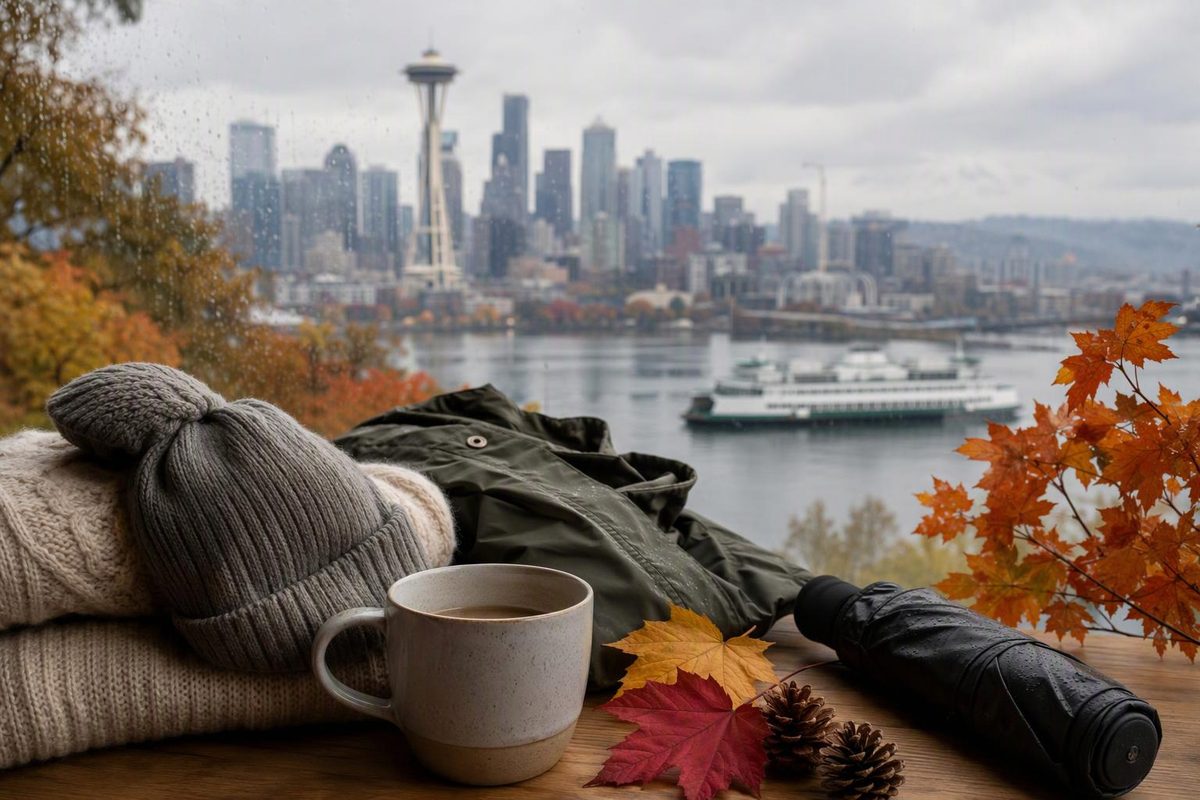
Choose September for warmer outdoor days, mid-to-late October for a fall-color trip, and November if markets and museums matter more than long park walks. For a short visit, plan one garden outing and one downtown day, then put the garden on whichever day has the better forecast.
A downtown base near Pike Place Market is a practical starting point for this plan: your wet-weather activities stay together, while the Arboretum becomes a separate outing rather than another stop squeezed into a sightseeing circuit.
Which autumn month fits your trip?
Seattle’s autumn weather changes substantially between September and November. These are rounded average daily highs and lows, plus average monthly precipitation, from NOAA’s 1991–2020 normals for Seattle–Tacoma International Airport. They describe the seasonal pattern, not your travel-date forecast.
| Month | Average high / low | Monthly precipitation | Planning choice |
|---|---|---|---|
| September | 72°F / 54°F | 1.61 inches | Favor parks and waterfront time; carry a rain layer |
| October | 61°F / 47°F | 3.91 inches | Make foliage the outdoor anchor, with a separate indoor day |
| November | 52°F / 41°F | 6.31 inches | Lead with indoor activities and take shorter outdoor breaks |
For foliage, UW Botanic Gardens describes the Washington Park Arboretum’s usual strongest color as mid-to-late October, with the broader display running from September into November. That is a useful booking window, not a guaranteed peak date. Its autumn guide highlights Japanese maples in the Woodland Garden and colorful cherries, dogwoods and maples along Azalea Way.
Your fall-color half-day: Washington Park Arboretum
Make this the main activity, not a prelude to several distant neighborhoods. The Arboretum is free apart from the separately ticketed Japanese Garden; the UW visitor page lists the grounds as open daily from dawn to 8 p.m. For an autumn visit, plan your walk in daylight rather than using the closing time as your target.
A manageable approach:
- Decide whether the Seattle Japanese Garden is essential. It sits at the Arboretum’s south end and has a separate entrance fee. If it is your priority, visit it first rather than arriving at the end of a long walk.
- Choose Azalea Way and the Woodland Garden for the free portion. Give yourself time to look at the trees rather than trying to cover the entire park.
- Stop after one satisfying walk. Budget roughly two to three hours in the Arboretum, longer if you add the Japanese Garden, plus travel time. Leave lunch flexible.
As checked October 30, 2026, the Japanese Garden’s posted schedule lists Monday closures, a 5 p.m. October closing and a 4 p.m. November closing, with last entry 45 minutes before closing. Check your date for exceptions or delayed opening. It closes for winter maintenance from December through February.
For autumn 2026: the garden’s construction update says it will be about 80% open through the season’s final day, November 29, with closures at the north end for pathway work. It warns that construction noise can affect a visit. If a quiet, complete garden experience is your priority, stick with the free Arboretum walk instead.
Save the Arboretum map before leaving. If arriving by light rail, note that UW lists a 1.2-mile walk from University of Washington Station—this is not a station-side garden, and your walk will depend on the entrance you choose. Its access guide also notes very limited free parking. Plan the connection to your chosen entrance, not simply to “the Arboretum.”
Rain decision: light rain can suit a shorter garden walk if you are dressed for it. For persistent heavy rain, switch to the downtown plan before heading out; the garden is not an indoor refuge.
Your wet-weather day: Pike Place Market and downtown art
Start at Pike Place Market around 10 a.m., browse, then have lunch without leaving the area. The Market says most activity runs from 10 a.m. to 5 p.m., although individual businesses vary. Its visit guide includes a business directory and map; it also notes Thanksgiving and Christmas Day closures.
After lunch, make Seattle Art Museum at 1300 First Avenue your indoor anchor. Keep a waterfront walk optional: add it if conditions improve, or skip it without replacing it with another cross-city attraction.
Check the museum day before settling the itinerary. As checked October 30, 2026, SAM’s visitor page lists Monday–Tuesday closures, Wednesday and Friday–Sunday hours of 10 a.m.–5 p.m., and Thursday hours of 10 a.m.–8 p.m. It also lists a Thanksgiving closure. A Monday or Tuesday rain plan should not depend on SAM being open.
For more combinations, use our rainy-day neighborhood itinerary.
Keep ferries optional—and pack for the whole day
A ferry outing deserves its own block of time, not a spare hour after the gardens. Choose an outbound sailing and a realistic return before committing, leaving buffer before dinner or other fixed plans. Washington State Ferries’ first-time rider guide directs travelers to schedules and route-and-date-specific fares, and confirms indoor and outdoor seating. Our three-part ferry-day plan helps structure the outing.
Pack a hooded waterproof jacket, a removable warm layer, shoes with good wet-surface grip and spare socks. For October and November, put the outdoor activity earlier and save dinner or indoor time for later; our autumn darkness guide covers that adjustment in more detail.