
How to Plan a Snow-Tubing Day at The Summit
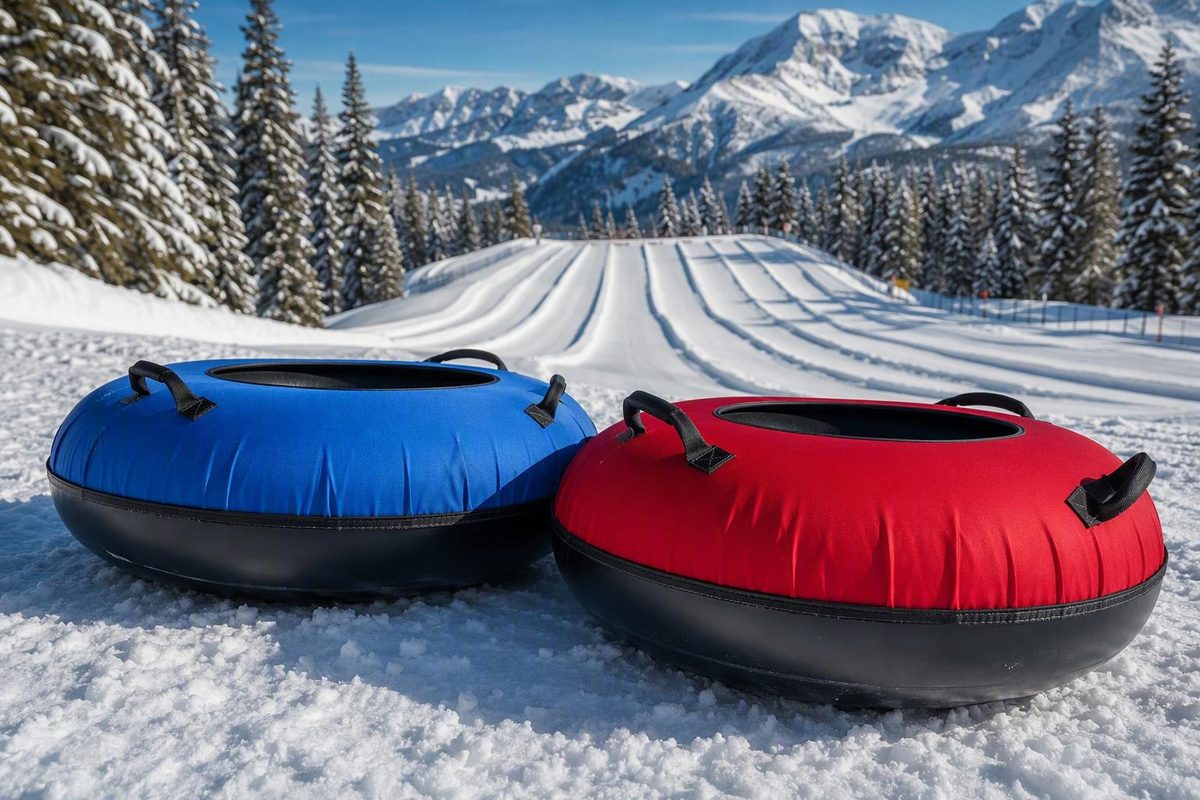
Snoqualmie tubing at a glance for the 2026–27 season
This guide primarily covers snow tubing at The Summit at Snoqualmie, the managed winter tubing park at Snoqualmie Pass. It does not primarily cover floating the Snoqualmie River, a separate summer activity with different equipment, access questions, and safety risks.
Operational information is current as of August 27, 2026, for the 2026–27 winter season. Treat every date, price, session, and rule as planning information rather than a guarantee. Check the live operator calendar before purchasing tickets and again before driving to the pass.
The Tubing Park is scheduled to open on November 21, 2026, subject to snow and operating conditions. Tickets currently start at $48, before sales tax and transaction fees. Admission covers a 1-hour, 45-minute session, a park-supplied tube, repeated runs during that window, and access to the covered conveyor lift.
| Quick fact | 2026–27 planning detail |
|---|---|
| Scheduled opening | November 21, 2026; not guaranteed |
| Published starting price | From $48, plus sales tax and transaction fees |
| Session duration | 1 hour, 45 minutes |
| Booking method | Online in advance; no ticket sales at the park |
| Published starts | 9 a.m., 11 a.m., 1 p.m., 3 p.m., 5 p.m., and 7 p.m.; not all operate daily |
| General schedule | Wednesday through Sunday and select holidays |
| Solo-rider height | At least 45 inches |
| Shorter-rider policy | Current operator wording is inconsistent; confirm before booking |
| Recommended arrival | 45 minutes before the booked start |
| Location | Across the street from Summit Central at Snoqualmie Pass |
| Parking | Designated Tubing Parking Lot; validation required for complimentary parking |
| Parking window | One hour before the session until one hour after it ends |
| Equipment included | One park-supplied snow tube |
| Uphill transport | Covered conveyor lift |
| Customer changes | Tickets are non-refundable and non-transferable; credit may be requested at least 48 hours before arrival |
| Operator cancellation | Unused tickets are automatically refunded for qualifying closures caused by a road closure, power outage, or hazardous conditions |
These details come from the official Summit at Snoqualmie tubing information. That page should also be the starting point for contacting the operator about child eligibility, ticket type, helmets, or another unresolved policy question.
“Unlimited runs” does not promise a fixed number of descents. It means riders may continue using available lanes and the conveyor during their ticketed window. Actual totals depend on queues, snow conditions, the number of lanes operating, and how quickly the group moves between runs.
Older Snoqualmie tubing guides may list two-hour sessions, Friday-through-Sunday schedules, paid parking, different child thresholds, or fixed totals of 18, 20, or 22 lanes. Those descriptions may reflect earlier seasons, but they should not override the current operator calendar and ticket terms.
A practical planning sequence is:
- Confirm that the intended date and start time appear on the live calendar.
- Resolve any question about a rider below the solo-height threshold.
- Review the final checkout price and change terms.
- Complete the required liability releases.
- Plan to arrive at the tubing area early.
- Recheck weather and Snoqualmie Pass travel conditions before leaving.
What the paid tubing experience includes
The Summit’s Tubing Park is a managed snow-play venue, not an open hillside where visitors arrive with their own sleds. Admission is divided into timed sessions, and riders use designated lanes under staff oversight. The venue supplies the tube, maintains the operating area, and runs a covered conveyor that transports riders and tubes uphill.
No previous tubing or skiing experience is required. The basic cycle is straightforward: obtain a tube, follow staff and lane instructions, descend, clear the run-out area promptly, and return to the top before choosing another available lane.
The hill is described as approximately 500 feet long with 40 feet of elevation change. The current operator description says 15 or more lanes may be available depending on conditions, rather than promising a fixed total. A local television feature likewise reported that lane availability can vary substantially with snowfall and confirmed the covered uphill conveyor and 1-hour, 45-minute format. KING 5’s feature on the Tubing Park provides additional context.
Snowfall, grooming, surface quality, maintenance, and other operating conditions can change how much of the hill is usable. Even when the park opens, every possible lane may not be operating.
What “unlimited runs” means in practice
A ticket does not contain a fixed bundle of descents. Instead, it permits repeated runs during the allotted session. The clock continues while riders wait for a lane, queue for the conveyor, regroup with family members, take a break, or adjust wet clothing.
The number of completed runs may be affected by:
- Attendance during the session
- The number of lanes operating
- Conveyor queues
- Snow speed and lane maintenance
- Time spent helping children
- Breaks for clothing changes
- How promptly the group checks in and begins
Do not organize the outing around completing a particular number of runs. A quiet session and a busy holiday session can produce very different totals under the same ticket terms.
Why pay for managed tubing?
Compared with informal sledding, the main advantages are infrastructure and convenience:
- The approved tube is supplied.
- Lanes are designated and maintained.
- Staff oversee the operating area.
- Capacity is organized through timed entry.
- A conveyor handles the uphill return.
- Visitors do not need to locate and assess a public sledding slope after arrival.
That does not make the commercial park universally preferable. A family that owns suitable equipment, understands winter recreation permits, and wants a flexible schedule may prefer an authorized public snow-play area. A group that values supplied equipment, controlled entry, and uphill transport may find The Summit easier to manage.
Tickets, session times, and night tubing
Tickets must be purchased online before arrival. They are not sold at the park, capacity is limited, and popular sessions may sell out.
If a date or start time is missing during booking, do not assume it will become available at the gate. The session may be sold out, or the Tubing Park may not be operating at that time.
The published starts are:
- 9 a.m.
- 11 a.m.
- 1 p.m.
- 3 p.m.
- 5 p.m.
- 7 p.m.
Not every start operates every day. Use the date-specific Tubing Park hours and calendar, rather than treating the general Wednesday-through-Sunday schedule as a promise. A weekday may offer fewer sessions than a weekend, and operational changes can affect any date.
Daytime or evening?
When scheduled, the 5 p.m. and 7 p.m. sessions feature rainbow lighting and are currently described as Wednesday-through-Saturday options.
The choice is mainly about atmosphere and logistics:
- Daytime tubing offers natural light and may simplify clothing checks, parking, and pass travel.
- Evening tubing adds colored lighting and an after-dark setting but requires later driving and parking in winter conditions.
There is no sound basis for promising that either period has shorter lines, faster lanes, or better value. Choose according to your group’s energy, comfort after dark, and travel plan.
Check the real total before paying
The displayed price is a starting figure. Sales tax and transaction fees are added during checkout, so compare sessions using the final total rather than the headline price.
Before submitting payment, verify:
- Date and start time
- Number of entrants
- Ticket types
- Child eligibility
- Final checkout total
- Change and cancellation terms
- Completion requirements for liability releases
This review is particularly important when a rider does not clearly qualify to ride alone. Tickets cannot simply be transferred to another person, and the normal policy does not provide a general refund for a customer’s change of plans.
Child height rules, tickets, and liability releases
The settled part of the current policy is the solo-rider requirement: the participant must meet the 45-inch threshold shown in the quick-facts section.
The difficulty concerns shorter riders. The operator’s current page uses inconsistent wording. One passage describes pairing a shorter rider with someone who meets the solo-height requirement, while other language refers to an adult and uses a slightly different cutoff for double riding.
Do not resolve that conflict by relying on age, an old blog post, or a third-party threshold. Current evidence does not establish a definitive minimum age that can replace the height policy.
For a rider below the solo threshold, contact the operator before checkout and ask about the exact situation:
- The rider’s measured height
- Whether the companion must be an adult
- Whether a companion who meets the solo-height rule qualifies
- Which ticket or combination ticket is required
- Whether the riders share one tube
- Whether another participation restriction applies
Obtain clarification before paying rather than assuming staff will approve the arrangement at check-in.
Measure before checkout
Measure the child in the footwear intended for the visit. That reduces the risk of relying on an old measurement or rough estimate, but it does not establish how the venue will conduct an official measurement.
If the result is close to the cutoff, treat eligibility as unresolved until the operator confirms the applicable rule. Do not assume thicker footwear will change the outcome.
Tickets and releases apply to everyone entering
Every person entering the tubing hill needs a valid ticket, including someone entering to accompany or assist another participant. A helper is not exempt from admission requirements.
Every entrant also needs a signed liability release. A parent or guardian must sign for a guest under 18. Complete the documents before departure when the booking process permits, and verify that every member of the party is covered. Doing so reduces the chance that a ticket or release problem will consume the arrival buffer.
A step-by-step arrival plan from parking to the first run
The Tubing Park is across the street from Summit Central at Snoqualmie Pass. Follow current tubing signs as you approach instead of relying on an older description of lower lots, upper lots, lodge check-in, or walking routes. Arrangements can change between seasons.
The operator recommends arriving 45 minutes before the booked start. Treat that as part of the reservation plan, not optional spare time. Parking, putting on outerwear, walking to check-in, resolving a release issue, and validating parking all take place before the paid session begins.
Example: planning for a 1 p.m. session
For a 1 p.m. reservation, target arrival at the tubing area at approximately 12:15 p.m.
A workable sequence is:
- 12:15 p.m.: Enter the tubing area and follow current signs to the designated lot.
- 12:15–12:25 p.m.: Park, put on outerwear, and gather essential items.
- 12:25–12:40 p.m.: Walk to the current check-in location and present the booking information.
- 12:40–12:50 p.m.: Resolve ticket or release questions and validate parking.
- 12:50–1 p.m.: Follow staff directions and prepare to begin.
This is a planning example, not a guarantee that each step will take that amount of time. Its purpose is to protect the beginning of the paid session from predictable logistics.
Where complimentary parking applies
Validated complimentary parking applies only in the designated Tubing Parking Lot, beginning one hour before the session and ending one hour after it finishes.
Using the published rule, a session scheduled from 1 p.m. to 2:45 p.m. would have an associated parking window from noon to 3:45 p.m., assuming the operator has not changed the booking.
Do not assume a tubing ticket provides complimentary parking:
- In every Summit lot
- Before the eligible pre-session window
- More than one hour after tubing ends
- Without the required validation
- In a lot other than the designated tubing lot
A reservation does not guarantee a particular parking space. Arriving early creates time to follow signs and respond to actual conditions without losing the start of the session.
Budget more than the session length
The full outing takes longer than the time spent tubing. The recommended early arrival brings the scheduled commitment to at least two and a half hours before accounting for the return to the vehicle, changing wet clothes, traffic, or a meal elsewhere.
Avoid placing the visit tightly between other fixed reservations. A post-session buffer is especially useful when children need dry clothing or traffic leaving the pass is slow.
Current evidence does not establish a dependable walking distance or confirm the season’s food, locker, warming, and restroom arrangements. Meet essential needs independently and treat any available facilities as a convenience rather than a requirement.
What to wear, what is supplied, and what must stay home
The park supplies the snow tube. It does not provide the personal winter clothing needed to remain warm and reasonably dry.
Packing checklist
Bring or wear:
- Waterproof jacket
- Waterproof or water-resistant snow pants
- Warm base and insulating layers
- Insulated winter boots
- Warm gloves or mittens
- Winter hat
- Warm socks
- Spare gloves and socks for children
- A dry change of clothes for the drive home
- Water
- Simple snacks where appropriate
- Booking confirmation and any required identification
- A charged phone for tickets and travel checks
Keep replacement clothing in a bag that will remain dry. For children, spare gloves and socks may be especially useful because hands and feet repeatedly come into contact with snow.
Choose waterproof clothing over ordinary street clothes
Tubing involves sitting near snow, handling a tube, waiting outdoors, and moving through changing mountain weather. Waterproof outerwear is more practical than ordinary street clothing.
Jeans are a poor choice because denim absorbs moisture and can become cold and uncomfortable. That is practical clothing advice, not an official clothing prohibition.
Dress in layers instead of depending on one heavy garment. Riders may become warm while walking or managing children, then cool quickly while waiting.
Equipment rules
Only the park’s supplied tubes may be used on the commercial tubing hill. Personal tubes, sleds, saucers, toboggans, and similar devices must remain at home or in the vehicle.
The rules also prohibit:
- Multiple-tube trains
- Personal sledding devices
- Pets inside the Tubing Park
Follow staff instructions about lane entry, spacing, riding positions, and clearing the bottom of each run.
What about helmets?
Available operator information does not clearly establish whether helmets are mandatory, recommended, permitted, supplied, or available to rent. Do not assume a helmet is included with admission.
If helmet use matters to your family, ask the operator about the current policy before visiting, including whether a personal helmet may be used. The same caution applies to lockers, warming rooms, lodge food, and particular restroom arrangements: older reports conflict, so do not build the outing around those facilities.
Weather, road checks, changes, and cancellations
Snow tubing depends on snow, grooming, visibility, staffing, equipment, and safe access to Snoqualmie Pass. A date appearing in a seasonal schedule does not guarantee that every lane—or the park itself—will operate under all conditions.
The park may operate during varied winter weather, but road closures, power outages, and hazardous conditions can force cancellation. A paid reservation is never a reason to drive into unsafe pass conditions.
The day-before checklist
On the day before the reservation:
- Confirm that the date and session remain on the operator calendar.
- Check the mountain weather forecast.
- Review pass conditions, restrictions, and closures.
- Look at current traffic-camera images.
- Confirm that the vehicle and driver are prepared for the forecast.
- Recalculate the departure time needed for early arrival.
- Keep a flexible Seattle-area backup plan.
Use the official WSDOT Snoqualmie Pass conditions and camera page for live travel information rather than assuming that weather near Seattle reflects conditions at the pass.
The morning-of checklist
Shortly before departure:
- Check the tubing calendar again.
- Recheck the pass report, restrictions, closures, and cameras.
- Look for operator messages about cancellation or a delayed opening.
- Confirm that every participant has suitable clothing.
- Make sure tickets and releases are accessible.
- Leave enough time for changing traffic and road conditions.
Continue monitoring official travel information while en route. Turn around or use the backup plan if conditions become unsafe.
Changing a booking
Tickets are non-refundable and non-transferable, but customers may request a credit at least 48 hours before the scheduled arrival. Rescheduling is not a direct transfer: the customer must request the credit and then book another session that still has inventory.
A credit request does not reserve space elsewhere. The preferred replacement session may sell out before the request is processed. Credit and cancellation requests are reviewed and may take up to 48 hours to process.
If the operator cancels because of a road closure, power outage, or hazardous conditions, unused tickets are automatically refunded. Review the current tubing ticket and cancellation terms before purchasing.
Build a realistic contingency hierarchy
If conditions threaten the outing, use this order of decisions:
- Do not drive into unsafe pass conditions.
- Check whether the operator has canceled or modified the session.
- If eligible and outside the deadline, request credit before waiting until the last moment.
- Use a flexible Seattle-area backup if mountain travel is not sensible.
- Consider another snow-play location only after checking access, permits, parking, rules, and current conditions.
Another mountain destination is not automatically a safer alternative. It may be affected by the same storm, road restrictions, crowding, or insufficient snow.
Managed snow tubing, Sno-Park sledding, and Snoqualmie River tubing
“Snoqualmie tubing” can describe three different activities:
- The Summit’s managed commercial snow-tubing park
- Bring-your-own-sled recreation at a public winter site
- Summer tubing on the Snoqualmie River
They are not interchangeable.
The Summit versus bring-your-own-sled snow play
Personal tubes and sleds are prohibited at The Summit’s commercial Tubing Park. Admission includes the approved tube used on its designated lanes.
Hyak Sno-Park and Gold Creek Pond are commonly cited as alternatives for bring-your-own-sled recreation. Before traveling, confirm:
- Whether the intended activity is currently permitted
- Whether the snow-play area is open
- Which permits are required
- Parking availability and restrictions
- Road and access conditions
- Whether the equipment type is permitted
- Current safety notices
A regional family guide identifies Hyak and Gold Creek Pond as alternatives while emphasizing the need to verify permits, access, and current conditions. See the Seattle’s Child guide to Snoqualmie Pass winter activities.
| Managed Tubing Park | Informal or Sno-Park snow play |
|---|---|
| Venue-supplied tube | Bring permitted equipment |
| Groomed, designated lanes | Assess terrain and conditions independently |
| Timed admission | Potentially greater schedule flexibility |
| Staff oversight | Greater visitor self-sufficiency |
| Covered uphill conveyor | Manage the uphill return independently |
| Advance ticket required | Permits or parking requirements may apply |
| Session capacity controls entry | Parking and crowding may constrain access |
Neither format is universally better. The Summit may suit visitors who value supplied equipment, controlled sessions, and uphill transport. A Sno-Park may appeal to visitors who already have appropriate gear and are comfortable handling permits, access, and changing conditions.
Snoqualmie River tubing is a separate summer activity
A Summit snow-tubing ticket does not cover Snoqualmie River tubing. The river has no connection to the resort’s supplied snow tubes, groomed lanes, conveyor lift, validated parking, timed sessions, or winter rider rules.
River tubing requires current information about flows, temperature, hazards, access, and the intended route. This guide does not establish current put-ins, takeouts, water levels, rental services, or suitable routes.
The City of Snoqualmie identifies cold-water shock, strong currents, undertows, submerged logs, and rocks as river hazards. It advises tubers to wear a life jacket, never float alone, share their route and schedule, carry water and warm clothing in a dry bag, and prepare an emergency backup plan. Washington law requires children age 12 and younger to wear a Coast Guard-approved life jacket on vessels under 19 feet long, including inner tubes. These precautions appear in the city’s Snoqualmie River safety advisory.
The advisory was published in June 2022, so its description of river speed and temperature at that time is not a current conditions report. Obtain up-to-date river and public-safety information before entering the water. If the route, hazards, flow, or exit plan is unclear, do not launch.
Frequently asked questions
Is Snoqualmie tubing open, and when does the 2026–27 season start?
The planned opening is listed in the quick-facts section above, but it remains subject to snow and operating conditions. Check the live operator calendar for current opening status and ticket inventory.
How much does Snoqualmie tubing cost, and what does a ticket include?
Use the current starting price in the quick-facts table as a planning figure, then check the all-in amount during checkout. Admission includes the timed session, one supplied tube, repeated runs during that window, and the covered conveyor.
Can a child under 45 inches go snow tubing at Snoqualmie?
Possibly, but the operator’s shorter-rider wording is inconsistent. Measure the child and contact the operator before booking to confirm the companion requirement, riding arrangement, and correct ticket type.
Can I bring my own tube or sled to The Summit Tubing Park?
No. Only park-supplied tubes may be used on the commercial hill. If personal equipment is essential, investigate an authorized public snow-play location and verify its permits, parking, equipment rules, access, and current conditions.
What happens if weather or a Snoqualmie Pass closure disrupts my booking?
Do not make the trip if pass conditions are unsafe. Check the operator calendar and official travel information before departure. Customer changes are handled under the credit policy described above; qualifying operator cancellations trigger an automatic refund for unused tickets.
Final booking checklist: Verify the live calendar and the rule for any rider below the solo-height threshold, buy tickets online, complete the required releases, arrive early, park in and validate the designated tubing lot, bring waterproof winter clothing, and recheck Snoqualmie Pass conditions immediately before departure. Opening dates, prices, sessions, and lane availability can change, so let the operator’s current calendar—not an older guide—be the final word.