
See Seattle’s Signature Sights Without Crossing Town All Day
Choose Seattle landmarks by neighborhood, with Pike Place Market, the Space Needle, historic architecture and simple routes with rainy-day backups.
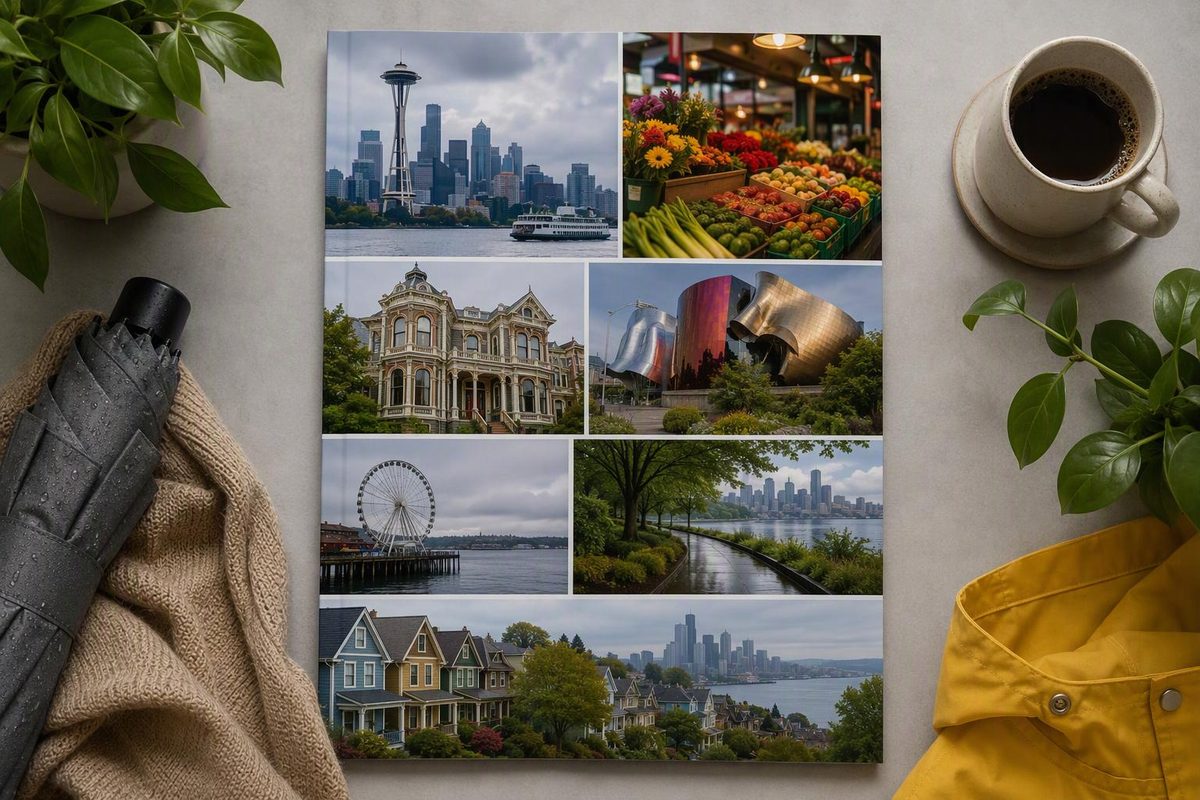
For a first Seattle visit, start with Pike Place Market and Seattle Center, using the Monorail to connect them. That gives you the public market, the Space Needle and a historic ride without spending the day crossing town. Add Kerry Park if you want a skyline photograph and visibility is good; save Fremont and Ballard for a separate neighborhood outing.
Choose your sightseeing priority and weather; the tool suggests a compact route.
Pick a Landmark Route
Start Downtown, Finish at Seattle Center
Pike Place Market → Westlake Center → Monorail → Space Needle
Book the Needle as your paid anchor. Add Kerry Park only if you want the skyline photograph and have energy for an uphill detour.
Other Neighborhood Choices
Downtown architecture: Pike Place Market → Central Library → optional Smith Tower. Indoor stops are linked by outdoor walks; the tower requires a ticket.
Boats and waterways: Ballard Locks → a meal in Ballard. Fish viewing is seasonal and not assured.
Fremont public art: Fremont Troll → lunch or neighborhood exploring. The Troll is a brief outdoor stop, not a sheltered attraction.
Low visibility: Favor the Market and Central Library over paying solely for a skyline view.
Sources: landmark operators, Seattle Parks and KING 5, cited in the guide. Routes are editorial groupings, not travel-time estimates.
This is a visitor shortlist of recognizable sights, not a list of formally designated historic landmarks. Choose one paid attraction as your anchor and leave the rest flexible.
Downtown and Pioneer Square Combine the Market With Architecture
1. Pike Place Market Offers Food, Browsing and Free Entry
Established in 1907, Pike Place Market occupies a nine-acre historic district—not just the stretch beneath the famous clock sign. There is no admission fee. The Main Arcade, lower-level shops and surrounding businesses give you reasons to linger beyond a photograph.
Aim for a morning visit before noon, when the Market’s visitor FAQ says crowds are generally lighter. Individual vendors keep different hours, so an early arrival does not mean every business will be open. The FAQ also explains accessible elevator routes.
Browse first, then eat. In rain, concentrate on the arcade and indoor shops rather than treating every alley and waterfront overlook as compulsory.
2. Seattle Central Library Is the Free Indoor Architecture Stop
At 1000 Fourth Avenue, the current Central Library opened in 2004. Rem Koolhaas designed it in a joint venture with Seattle’s LMN Architects; its 11 floors include the distinctive Books Spiral. The library’s architectural highlights explain the building and its history.
Pair it with a downtown walk toward Pioneer Square, or make it your main indoor stop when the weather turns. It remains a working library: explore quietly and check the branch’s opening hours before setting out.
3. Smith Tower Pairs Historic Architecture With a Ticketed View
Smith Tower opened on July 4, 1914, giving it a very different character from the Space Needle. At 506 Second Avenue, it fits a Pioneer Square outing rather than the Seattle Center cluster. The tower’s history records its opening and the original public visits to the 35th-floor observatory.
Choose it over the Needle if historic architecture and a drink with the view appeal more than the Space Age setting. The Observatory & Bar requires a ticket; walk-up availability is not guaranteed.
Rain need not rule it out, but low cloud can undermine the reason to pay for a view. If the panorama is your only reason to visit, keep this stop conditional on visibility.
Seattle Center and Queen Anne Deliver the Classic Skyline
4. The Space Needle Is the Signature First-Visit Attraction
Built for the 1962 World’s Fair, the 605-foot Space Needle is the clearest choice if you want to visit the landmark that defines Seattle’s skyline. Its upper levels offer indoor and outdoor viewing, plus the rotating glass floor known as the Loupe. The Space Needle’s history describes its origins and viewing levels.
Make this your booked anchor, not a rushed add-on. Admission uses timed arrival slots, and the operator says getting from the entrance to the top generally takes about 30 minutes, including security and the historical exhibit. That is not an estimate for the whole visit. Check the visit planner for your date’s hours and price.
5. The Monorail Connects Downtown With Seattle Center
Another 1962 World’s Fair legacy, the Monorail runs directly between Westlake Center and Seattle Center, beside the Space Needle. The ride takes approximately two minutes, with departures normally every eight to ten minutes.
Westlake’s Monorail platform is on the third floor of the mall, distinct from the underground Link station. The operator’s FAQ gives route and access details.
For the classic sightseeing route, walk from Pike Place Market to Westlake Center, then ride to Seattle Center. The two-minute ride does not include that walk, reaching the platform or waiting for departure.
6. Kerry Park Puts the Space Needle in Your Photograph
Kerry Park, at 211 West Highland Drive on Queen Anne, offers views of downtown and Elliott Bay, with Mount Rainier an occasional backdrop. Seattle Parks describes the viewpoint.
The distinction is simple: visit the Needle to look out from it, or visit Kerry Park to put it in your picture.
Treat Kerry Park as an optional uphill detour, not an automatic next stop from Seattle Center. If the skyline is obscured, skip the climb. For alternatives, compare our Seattle skyline viewpoints.
Fremont and Ballard Work Better as Separate Outings
7. The Fremont Troll Is a Brief Public-Art Stop
The Troll sits beneath the Aurora Bridge at North 36th Street and Troll Avenue North. Created by four artists in 1990, the 18-foot sculpture clutches a Volkswagen Beetle. KING 5’s account documents the sculpture and location.
It works better as a stop before lunch or further Fremont exploring than as the sole reason for a cross-city journey. Allow a brief photo stop; it is an outdoor stop despite sitting under a bridge.
8. Ballard Locks Show Seattle’s Waterways at Work
The Hiram M. Chittenden Locks connect the freshwater ship canal with tidal Puget Sound, moving boats between different water levels. Completed in 1917, the complex also includes a fish ladder and botanical gardens. The north entrance is at 3015 Northwest 54th Street. The U.S. Army Corps of Engineers’ visitor page explains the site.
Build a Ballard half-day around the locks and a meal rather than squeezing them between downtown bookings. Salmon viewing is seasonal, and seeing fish on any particular visit is not assured. Choose the locks for the waterway itself, with fish viewing as a possible addition.
Choose One Route Rather Than Visiting All Eight
| Route | Main Stops | Keep Optional |
|---|---|---|
| Classic First Visit | Market → Monorail → Space Needle | Kerry Park |
| Rainy Downtown Half-Day | Market → Central Library | Smith Tower |
| Fremont Outing | Troll → neighborhood exploring | Further stops |
| Ballard Half-Day | Locks → meal in Ballard | Fish viewing |
For the classic route, have lunch around the Market before walking to Westlake Center. Book the Needle around that sequence, and add Kerry Park only if you still have energy and worthwhile visibility.
For a rainy downtown half-day, combine the Market and Central Library, then continue to Smith Tower if its architecture and bar justify the ticket for you. These are indoor stops linked by outdoor walks, not a fully sheltered route.
Keep the Troll and locks for another day if your downtown route already feels full. For a walking-focused plan that also includes the waterfront, use our downtown Seattle sightseeing routes.