
Should You Buy Seattle’s $6 Transit Day Pass?
It costs $6 and covers unlimited eligible rides up to $3 each; add $3 for a new physical card, and pay separately for Washington State Ferries.
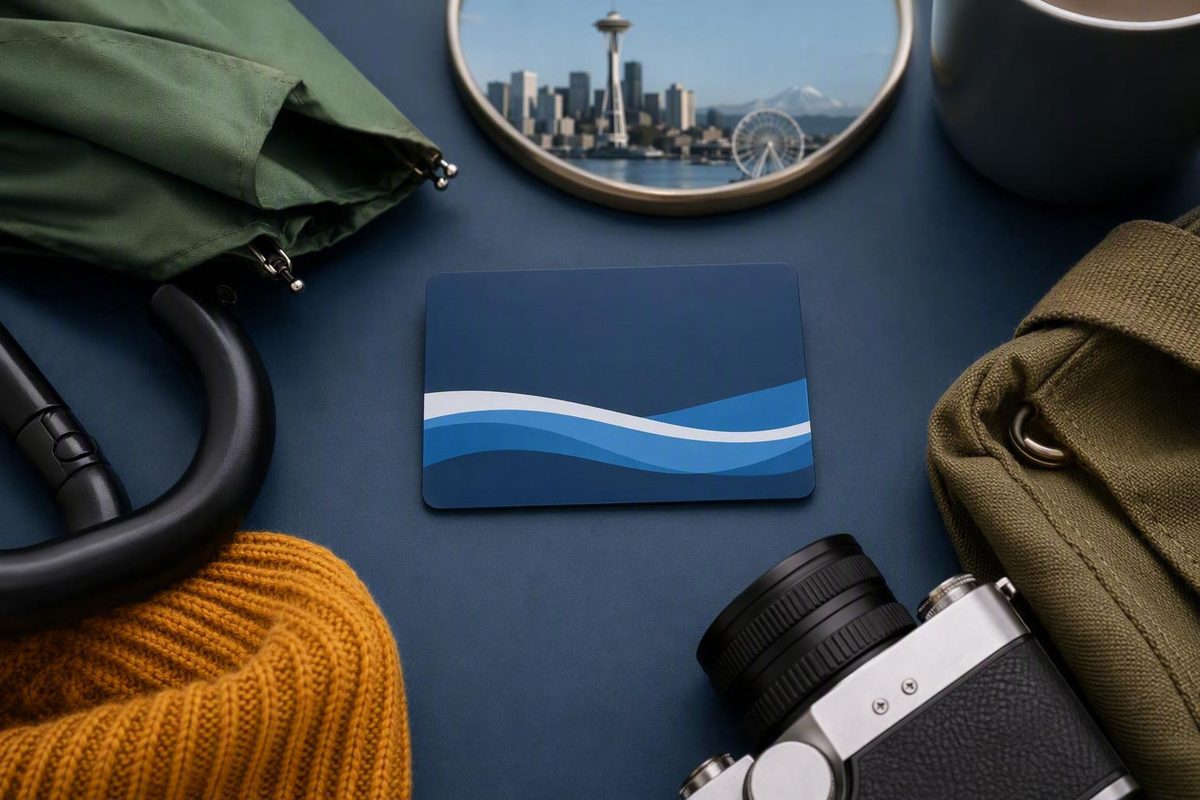
Yes—if the fare math fits your day. The adult ORCA Regional Day Pass costs $6 and covers unlimited eligible rides, with up to $3 of fare value covered per trip. For someone who already has ORCA, planned eligible fares above $6 make the pass worth considering. A first-time visitor buying a $3 physical Adult ORCA card will spend $9 for the card and pass, so direct Tap to Pay may still cost less if the day’s fares only slightly exceed $6. The card can, however, be reused later. The pass works well for a day combining Link light rail, buses, and streetcars, but it does not cover Washington State Ferries. These prices and exclusions are summarized in the official ORCA visitor guide.
The short answer: what the ORCA day pass costs and when it makes sense
ORCA day pass at a glance
- Adult pass: $6
- New physical Adult ORCA card: $3, if needed
- Typical first purchase: $9 for the card and pass
- Coverage: Unlimited eligible rides, with up to $3 covered per trip
- Validity: First tap through 3 a.m. the following day
- Best fit: A transit-heavy day, after accounting for the card fee and actual fares
The pass activates when you first tap, not when you buy it. It then expires at 3 a.m. the following day, so it is not a rolling 24-hour pass. If an otherwise eligible trip costs more than $3, the card needs enough E-purse value to cover the difference. ORCA explains those fare limits and activation rules in its day-pass guidance.
The separate card cost changes the first-day calculation. A new physical Adult ORCA card costs $3 and comes without money or a pass unless you add one. That makes the usual initial outlay $9 when buying both the card and the adult day pass. If you already have a usable ORCA card, the comparison is simpler: weigh the $6 pass against the eligible fares you expect to pay.
For a new visitor, compare three figures:
- The total of your planned fares using direct Tap to Pay.
- The cost of a new card plus enough E-purse value for those rides.
- The $9 initial cost of a new physical card and day pass, plus any E-purse backup needed for higher eligible fares.
That approach answers a common visitor concern: how much value should you load, and is a day pass better? The question also appears in this Seattle visitor discussion about an ORCA card. The useful takeaway is to price the actual itinerary rather than choosing a loading amount by guesswork.
Day pass, E-purse, or Tap to Pay: a visitor decision table
The best option depends on whether you want a fixed daily transit cost, pay-as-you-go flexibility, or the least setup.
| Option | How it works | Best fit |
|---|---|---|
| Regional Day Pass | Load a $6 adult pass onto an ORCA card. It covers unlimited eligible rides up to $3 per trip. | An airport-and-neighborhood day or another transit-heavy itinerary |
| ORCA E-purse | Load money onto an ORCA card, pay individual fares, and receive applicable ORCA transfer credit. | A few rides, especially if you already have a card |
| Direct Tap to Pay | Tap a supported contactless bank card or digital wallet at the reader. It does not provide an ORCA day pass. | A visitor who wants minimal setup and expects only a few rides |
ORCA and Tap to Pay can provide transfer value within the applicable transfer window, with an additional charge possible when connecting to a more expensive service. Retail locations can add E-purse money but cannot directly load the Regional Day Pass. The City of Seattle also confirms that direct Tap to Pay riders do not receive a day pass in its fare and payment guidance.
Here is a simplified comparison for separate fare-paying trips that each cost exactly $3. It assumes no transfer credit applies:
| Itinerary | Day pass | E-purse | Direct Tap to Pay |
|---|---|---|---|
| Two trips | $6 with an existing card; $9 with a new physical card | $6 with an existing card; $9 with a new physical card | $6 |
| Three trips | $6 with an existing card; $9 with a new physical card | $9 with an existing card; $12 with a new physical card | $9 |
| Four trips | $6 with an existing card; $9 with a new physical card | $12 with an existing card; $15 with a new physical card | $12 |
These examples show why “more than two rides” is only a shortcut. For a traveler who needs a new physical card, three separate $3 trips cost $9 with either the card-and-pass combination or direct Tap to Pay. The pass pulls ahead on additional eligible fares, while the reusable ORCA card may add value on later travel days.
Actual fares and transfers can change the result. Three lower-priced trips may total less than $6. Conversely, an eligible trip above the pass limit may require both the pass and an E-purse supplement.
What the pass covers—and which ferries it does not
ORCA acceptance and Regional Day Pass coverage are not identical. A service may accept an ORCA card for payment without the day pass necessarily covering its full fare.
| Category | Typical services | What to expect |
|---|---|---|
| Regular eligible transit | Most regional buses and trains, including Link light rail, plus streetcars and eligible water-taxi or foot-ferry services | The adult pass covers up to $3 per eligible trip |
| Verify the route and fare | Sounder, monorail, water-taxi, or foot-ferry trips that may have different fares or rules | Confirm that the specific trip is eligible and whether E-purse value is needed |
| Excluded services | Washington State Ferries, Kitsap Transit Fast Ferries, King County Metro Access, paratransit, and certain specialized services | Pay separately; the Regional Day Pass does not cover the trip |
The main visitor warning is Washington State Ferries. Budget for the crossing separately even if you use the pass for Link, buses, or streetcars before and after your ferry trip.
Most participating regional buses and trains are eligible, but adult pass value is limited to $3 per trip. Washington State Ferries, Kitsap Fast Ferries, King County Metro Access, and Kitsap ACCESS modes are among the stated exclusions in Sound Transit’s Regional Day Pass fare details.
For Sounder, the monorail, water taxis, and foot ferries, verify the specific route and current fare instead of assuming that ORCA acceptance guarantees full day-pass coverage. When a confirmed eligible fare is $4, for example, the pass covers $3 and the ORCA card needs at least $1 in E-purse value for the difference.
How to buy and activate the pass at Sea-Tac or in Seattle
For an immediate airport purchase:
- Follow signs from the terminal to the SeaTac/Airport Link light-rail station.
- Find an ORCA ticket vending machine.
- Buy an Adult ORCA card if you do not already have one.
- Add the Regional Day Pass.
- Add E-purse value if your plans include confirmed eligible trips costing more than the pass covers.
- Tap the card before boarding Link.
The pass activates when you tap at the station.
You can also add a pass through myORCA.com, the myORCA app, an ORCA ticket vending machine, a customer-service location, or ORCA phone service. Supported Android phones and Wear OS devices can hold a digital ORCA card in Google Wallet. Official materials document the myORCA app as an account-management and loading tool on supported phones; digital ORCA itself is specifically documented for compatible Android and Wear OS devices.
Retail outlets can sell cards or add E-purse money, but they do not directly load the Regional Day Pass. Directly tapping a supported contactless credit card, debit card, or digital wallet is a separate payment method and does not turn those payments into a day pass.
Avoid relying on postal delivery for a near-term visit. ORCA estimates that online card orders take 5–10 business days, does not process orders on weekends or holidays, and does not guarantee against postal delays. Its online card-order page directs riders who need a card sooner to in-person purchase options.
Activation timing matters for late arrivals. A first tap at 10 p.m. still results in the pass expiring at 3 a.m. the next day. It does not remain valid until 10 p.m.
Reduced fares, youth travel, and the expired three-day pass
The reduced-fare Regional Day Pass costs $2 and covers eligible fares up to $1 per trip. It requires an eligible ORCA LIFT, Senior RRFP, or Disabled RRFP card. Visitor status, age, income, or disability alone does not automatically place the reduced pass on a standard Adult ORCA card; the rider must qualify for and use the appropriate reduced-fare card.
Riders age 18 or younger generally ride regional transit free. A Youth ORCA card, student identification, or other proof may be useful on some services, but requirements can vary. Check the specific operator’s current identification rules if the rider does not have a Youth ORCA card.
Status as of September 2026: The promotional 3-Day Puget Pass is no longer available. It was sold only from June 1 through August 31, 2026.
The former adult three-day product cost $18, activated on the first tap, and covered three consecutive days before expiring at 3 a.m. after the third day. Because three individual $6 day passes also total $18, it did not provide a base-price discount; its main distinction was packaging three consecutive days into one product. King County Metro documented the dates, prices, consecutive-day requirement, fare limits, and exclusions in its 2026 promotional pass announcement.
Choose the fare around your Seattle day
One or two rides: Check the exact fares first. Direct Tap to Pay is often the simplest choice when buying a new physical card solely for a pass would eliminate any savings. E-purse can still make sense if you want ORCA transfer credit or expect to reuse the card.
Sea-Tac plus several neighborhood rides: The day pass becomes more attractive when you combine the airport Link trip with several eligible bus, Link, or streetcar rides. If you already have ORCA, compare the pass with the day’s eligible fares. If you need a new physical card, compare direct-payment fares with the full card-and-pass outlay.
A Bainbridge or other Washington State Ferries day: Pay the ferry fare separately. Judge the day pass only against eligible transit before and after the crossing, such as Link from the airport, a bus to your hotel, and neighborhood rides later in the day.
Before buying, run through this checklist:
- Count the rides you realistically plan to take.
- Note each fare instead of relying only on ride count.
- Consider whether transfer credit will apply.
- Identify Washington State Ferries and other excluded services.
- Include the physical-card fee if you need a new Adult ORCA card.
- Add E-purse backup for confirmed eligible fares above the pass limit.
- Check when your first tap will occur, especially after a late arrival.
The ORCA day pass is a strong fit for several eligible rides, but it is not automatically the cheapest choice for every visitor. Price the Seattle day you actually plan, include the cost of getting a card, and keep Washington State Ferries separate. As of September 2026, verify current fares, promotions, and service-specific rules with ORCA before traveling.