
Timing Your Pike Place Market Visit for Fewer Crowds and Full Vendor Access
A very early arrival is not optimal for crafts because the official crafts-market window begins later, which can leave a full browse feeling incomplete.
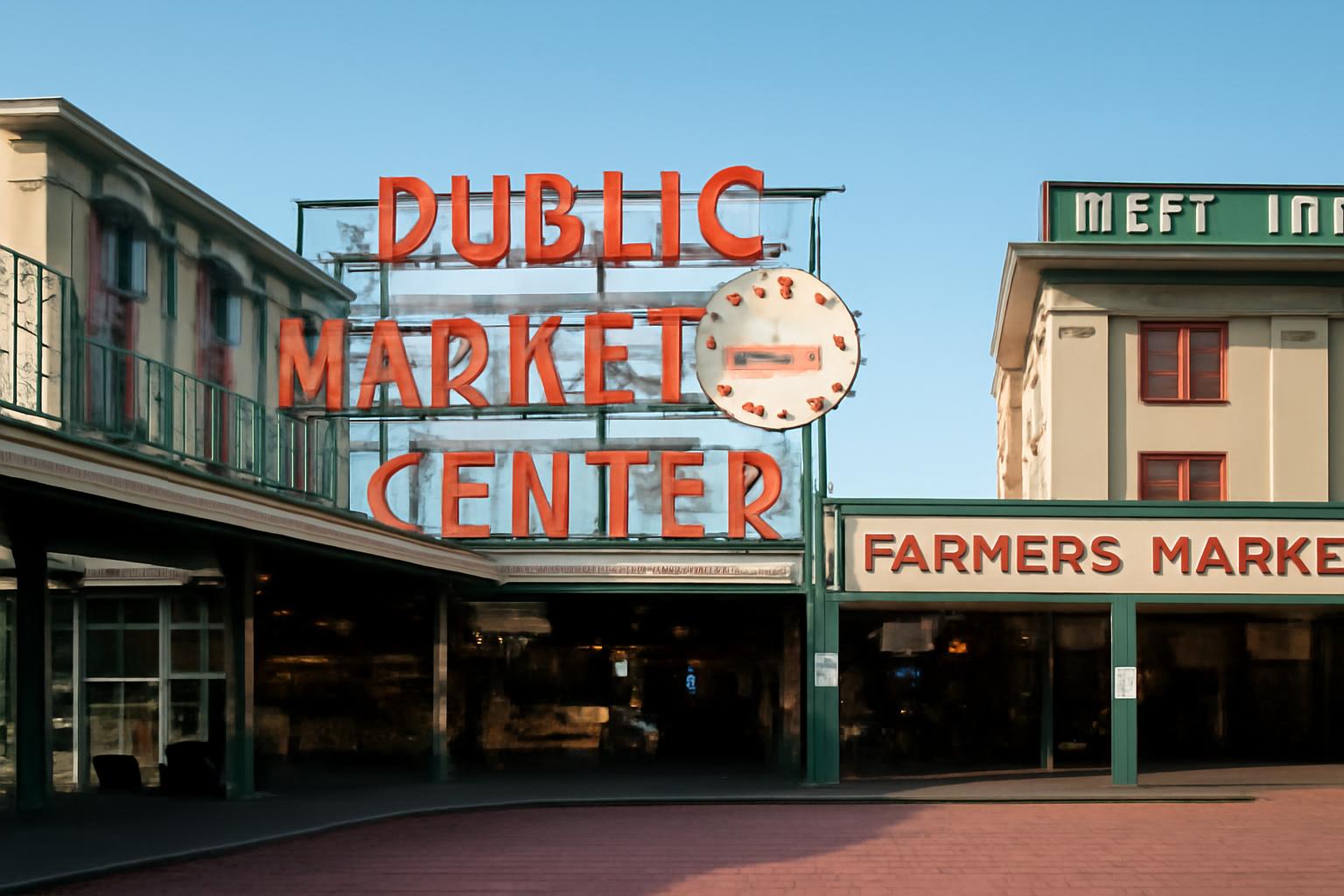
If you want the short answer on the best time to visit Pike Place Market, it is this: go on a weekday morning, ideally before late morning crowds build. If your schedule is flexible, Tuesday or Wednesday gives you the best odds of a lighter visit, but not a guarantee.
That answer works because most first-time visitors are trying to solve two problems at once. They want the market to feel alive, but they do not want to spend the whole visit inching through shoulder-to-shoulder traffic. They want iconic stops like the fish stand, flowers, produce, and breakfast, but they also do not want to arrive so early that the market feels half asleep.
The important nuance is that Pike Place Market is not one room with one opening bell. It is a large working market with produce vendors, seafood counters, flower sellers, merchant buildings, restaurants, farm tables, and craftspeople all running on slightly different rhythms. The best time to visit depends on whether your priority is space, vendor variety, or the classic high-energy atmosphere.
For many travelers, the real sweet spot is not “the earliest possible minute” and not midday either. It is an early weekday arrival that lets you experience the market while it is waking up, before the most congested part of the day. If you care more about crafts and the fullest possible vendor mix, you may want to arrive later and simply accept more people. If you care more about breathing room, breakfast, produce, seafood, and a smoother first pass through the main arcade, earlier is usually better.
That tradeoff is what makes timing at Pike Place more important than timing at many attractions. You are not just choosing a clock time. You are choosing which version of the market you want.
Why Timing Matters at Pike Place Market
Pike Place Market covers 9 acres, and the official FAQ describes it as one of the country’s oldest and largest farmers markets, which helps explain why the same place can feel dramatically different from one hour to the next.Official visitor FAQ A first visit often feels easiest when you treat timing as part of the experience, not as an afterthought.
That size matters in practical ways. You are not only walking one central arcade. You are also dealing with lower levels, side corridors, stairways, view points, food counters, and clusters of shops that open on different schedules. If you arrive early, you may find the front of the market pleasantly active while some parts deeper in or below are still ramping up. If you arrive later, more of those spaces are open, but the market can feel much more compressed because everyone else has made the same decision.
Early morning and midday offer genuinely different versions of Pike Place. Morning tends to feel more functional and more legible. You can look at displays without immediately being pushed along by the flow of foot traffic. You have a better chance of hearing vendors, noticing signage, and deciding what you actually want to buy instead of just keeping moving. That is especially valuable on a first trip, when you are still learning the layout.
Midday has its own appeal. This is when the market feels loudest, fullest, and most theatrical. More stalls are active. More visitors are present. More of the “Seattle icon” energy is on full display. If you want peak atmosphere and the broadest browsing options, that may be the right choice for you. But it comes with a cost: less personal space, longer waits at some counters, and a more stop-and-start walk through the busiest areas.
Timing also matters beyond the market itself. Pike Place is easiest to enjoy when it is part of a compact, neighborhood-based day rather than a detached stop you keep zigzagging back to. If you are building a short trip around a neighborhood-based Seattle plan, an early market visit usually pairs naturally with the waterfront, ferries, downtown walks, or a weather-flexible indoor backup nearby.
That is one reason first-time visitors often leave with conflicting opinions about the “best” time. They may all be right. A traveler who came for breakfast and seafood might think 8 a.m. was perfect. Another who came mainly to browse crafts and shops might feel 8 a.m. was too early. Someone who loves crowd energy may prefer midday and consider the morning too quiet. Those are not contradictions so much as different priorities.
So before choosing a time, it helps to answer one simple question: what would bother you more, dense crowds or a less complete vendor mix? Once you know that, the rest of the decision gets much easier.
Pike Place Market Hours and Peak Activity Windows
Official market guidance says Pike Place Market is open 363 days a year and closes only on Thanksgiving and Christmas Day.Plan Your Visit That broad availability makes it easy to fit into most Seattle itineraries, but the more useful planning detail is how the market fills in during the day.
The official planning page says most of the market is active from 10 a.m. to 5 p.m., and it also notes a daily vehicle-access change on Pike Place itself: access is limited starting at 10 a.m. and reopens after 5 p.m., while vehicles are allowed before 10 a.m. and after 5 p.m. for 30-minute durations.Plan Your Visit Even without treating those hours as a perfect crowd map, they tell you a lot about the market’s daily center of gravity.
In plain terms, late morning through late afternoon is the fullest and most dependable version of Pike Place. If you arrive in that span, you are more likely to find the widest mix of vendors, shops, and food counters operating at once. That is useful if your goal is completeness.
But “most active” is not the same as “best for everyone.” A fuller market also means more congestion. The main arcade, the area around the clock and sign, the fish stalls, and popular food counters are all more likely to feel crowded once the day settles into that late-morning-to-afternoon rhythm.
A helpful way to think about the day is by feel rather than by chasing one exact minute:
- Very early morning feels quieter and more operational, with setup energy and fewer people.
- Early to mid-morning is the transition period when the market starts to feel fully open without yet being at peak density.
- Late morning through late afternoon is the fullest and busiest version of the market.
- After 5 p.m. the pace usually eases, but the market experience becomes less complete as some vendors wind down.
That last point matters more than many first-time visitors expect. A quieter late visit can be pleasant, but it is quieter partly because parts of the market day are already ending.
The vehicle-access rule reinforces that logic for drivers.
Best Times of Day: Early Mornings for Low Crowds
Pike Place Market’s own visitor FAQ says mornings before noon are generally less crowded, which is the clearest official baseline for timing a lower-stress visit.Official visitor FAQ For most travelers, that is the key principle to trust more than any hyper-specific “best time” floating around online.
Within that broad morning window, the best choice depends on how much you value calm versus completeness. The earlier you go, the easier it is to move around and the more the market feels like a working place rather than a performance. But very early arrivals can also mean that some shops, lower-level businesses, and later-opening sections are not yet in full swing.
Anecdotal traveler reports line up with that tradeoff. In a 9-year-old Yelp Q&A, visitors described early weekday visits as especially manageable, with one answer specifically calling an early Wednesday morning “perfect” because it allowed time to browse different vendors without feeling rushed.Yelp visitor Q&A That is useful as experience-based color, though it should be read as anecdotal rather than official.
Practically, the morning breaks into three useful visit styles.
Very early morning works best for people who care most about breathing room, breakfast, and seeing the market come online. This is when produce, seafood, and early food counters make the market feel active even before every section has caught up. You may see vendors arranging displays, stocking counters, and moving from setup to service. For some visitors, that is the most interesting version of Pike Place because it still feels unmistakably like a working market.
You still get some of the mobility and calm of the early hours, but you are less likely to run into quite so many “not open yet” moments. If your goal is to balance lower crowd pressure with a more complete browse, this is usually the safest zone to target.
Late morning into afternoon is best for people who care more about the widest vendor variety than they do about space. By then, more shops and crafts sellers are open, which makes browsing richer in one sense and harder in another. The market is fuller, but moving through it takes more patience.
Late afternoon can be a useful fallback if mornings are impossible. An older travel blog suggests 8 to 9 a.m. or 5 to 6 p.m. as lower-crowd options, while also noting that some vendors may be closed during those edge hours.Passports and Preemies guide That is a sensible summary of the trade: edge-of-day visits can be easier physically, but they are never the fullest version of the market.
A simple way to choose your window is to match it to your likely frustration:
- If crowded aisles will ruin the visit for you, go early and accept that a few sections may not be fully open yet.
- If missing crafts or later-opening shops will bother you more, shift later and expect more people.
- If you want a balanced first visit, aim for an early weekday morning without obsessing over one exact minute.
That last point is worth emphasizing. The evidence does not support pretending there is one magical, precise arrival time that always works. What the evidence does support is the broader pattern: mornings, especially on weekdays, are your best bet for a calmer visit.
Best Days of the Week: Weekdays Over Weekends
Day of week matters almost as much as time of day. The market’s own FAQ says Pike Place tends to be fullest Thursday through Monday, which strongly suggests that Tuesday and Wednesday offer better odds if your goal is fewer crowds.Official visitor FAQ That is not a guarantee, but it is the clearest official weekly pattern available in the evidence.
Older anecdotal sources point the same way. In an 11-year-old Tripadvisor forum thread, several local posters said weekends were consistently the busiest and recommended arriving on weekdays before 11 a.m. if you wanted a more manageable experience.Tripadvisor forum discussion Because that thread is dated and user-generated, it should not be treated as hard data. Still, it broadly reinforces the official picture rather than contradicting it.
This is why Tuesday and Wednesday are useful target days, not because they are guaranteed to be empty, but because they sit inside the least-promising stretch for heavy crowding. If the market is generally fullest Thursday through Monday, the two remaining weekdays are the most logical ones to try first.
That said, there is no single weekday that always behaves perfectly. One of the pitfalls in planning Pike Place is looking for certainty the market cannot offer. Cruise activity, weather, conventions, school schedules, local events, and holiday travel can all change the feel of a day. A Wednesday morning in drizzle can feel very different from a Wednesday morning in peak summer sun.
So it helps to think in tiers rather than absolutes:
- Best odds for fewer crowds: Tuesday or Wednesday morning
- Still strong: other weekday mornings
- Good for fuller vendor access but busier: weekday late morning
That ranking is intentionally about odds, not promises.
If your schedule only allows a Thursday, Friday, Saturday, or Sunday, the same strategy still works. Go earlier. You may not get the calmest possible market, but you can still improve your experience dramatically by arriving before the late-morning swell.
A useful mental shift for first-time visitors is to stop asking, “Which day is empty?” and instead ask, “Which day gives me the best chance of a manageable visit?” Pike Place is famous enough that total emptiness is not really the goal. A breathable version of the market usually is.
Vendor Hours by Section for Smart Timing
The most practical timing facts are section-specific, because they explain why two visitors can arrive on the same day and leave with opposite impressions. According to the market’s official planning page, breakfast, produce, and seafood begin at 7 a.m.; farm tables generally run 9 a.m. to 4 p.m.; the crafts market generally runs 11 a.m. to 4 p.m.; merchant buildings are generally open 9 a.m. to 7 p.m.; and restaurants may operate as early as 7 a.m. and as late as 2 a.m., though hours vary by business.
Those staggered hours are the real key to smart timing.
If you care most about produce, seafood, flowers, coffee, pastries, or breakfast, an early visit makes excellent sense. You are not arriving “before the market opens” in any meaningful way for those priorities. You are simply choosing the version of the market where those categories matter more than crafts and later-opening browse-heavy sections.
If you care most about crafts, however, early morning is plainly not optimal. The official crafts-market window begins later, so a visitor who shows up very early and expects full crafts browsing is likely to think the market is underwhelming or incomplete. That would not mean the market was closed. It would mean their interests were on a later schedule.
Merchant buildings complicate things in a useful way. That is why many travelers feel happiest when they arrive early enough to beat the worst crowding but late enough that merchant buildings and more food options are settling in.
A good planning rule is to choose one of these visit styles on purpose:
- Early-purpose visit: best for breakfast, produce, seafood, flowers, and lighter foot traffic
- Balanced browse: best for a first visit when you want both space and a wider mix of vendors
- Fullest market visit: best if crafts and the broadest vendor variety matter most
- Evening visit: best treated as a dining or atmosphere stop, not as the full market experience
The mistake first-timers often make is trying to optimize all four at once. They want no crowds, all vendors open, active fish throwing, minimal walking friction, and a complete browse of every level. Pike Place usually asks you to pick your priority.
This is also where expectations help. If you know going in that an early visit emphasizes working-market categories over later-opening categories, you are much more likely to enjoy what is there instead of focusing on what is not yet open.
Seeing the Fish Throwing Without Peak Crowds
Many travelers assume the fish throwing has some secret prime-time slot. The evidence suggests otherwise. In a 3-year-old Tripadvisor Seattle forum thread, local posters said the throwing happens when a fish is purchased rather than on a fixed show schedule, and they noted that the main fish stand near the clock opens around 7 a.m..Tripadvisor Seattle forum thread
That is useful because it means you do not need to aim for the most crowded part of the day just to have a chance of seeing it.
What early timing changes is not whether throwing is possible, but how often it may happen while you are standing there. If sales are slower, you may need a little patience. Later in the day, heavier foot traffic can make the fish stand feel more active overall, but that same popularity also creates a denser viewing environment.
So the low-stress strategy is simple: arrive on a weekday morning, spend a few minutes in the fish-stand area, and treat what you see as part of an operating market rather than a scheduled show. That mindset works better than trying to reverse-engineer a precise “performance time” that the market does not actually advertise.
This distinction matters for first-time expectations. If you show up early and expect a nonstop spectacle the moment you arrive, you may feel disappointed. If you show up early understanding that fish throwing is transaction-driven, you will read the experience correctly. The stand is open, the possibility is real, and the crowd pressure is usually lower than it is later in the day.
A practical approach looks like this:
- Start your visit with a walk through the main arcade
- Pause at the fish stand for a bit rather than rushing through
- Browse nearby stalls so you stay close if activity picks up
- Avoid building your whole schedule around a single imagined showtime
That approach also makes the market feel more natural. You are not camped out waiting for an attraction to begin. You are moving through a live market where a famous tradition may happen while you are there.
Fitting Pike Place into Your Seattle Day Plan
For a short Seattle trip, Pike Place usually works best as a morning anchor rather than a middle-of-the-day detour. That is a planning suggestion, not an official rule, but it lines up well with the evidence on morning crowd relief and with how compact downtown Seattle itineraries tend to work.
An early market start pairs naturally with the waterfront, the ferry terminal area, downtown walking, or a flexible weather backup nearby. That kind of cluster is often easier than visiting Pike Place late, then trying to retrace your steps or squeeze it between activities in different parts of the city. If you have not picked your base yet, it helps to think first about how to choose where to stay in Seattle so your hotel and your likely first-day route support each other.
This matters most for first-time travelers staying downtown or near the waterfront. When your base already lines up with market and ferry areas, you can keep the day geographically tight. That reduces backtracking and gives you more freedom to adjust for weather or energy without blowing up the whole plan.
Pike Place is also relatively forgiving in bad weather. A longtime market vendor’s blog recommends arriving early and notes that the market remains workable in rain because so much of it is covered, which matches how many visitors experience it in practice.Piroshky Piroshky tips “Covered” does not mean fully indoors, but it does mean a wet forecast usually changes the shape of the visit more than it cancels it.
That makes Pike Place valuable on uncertain-weather days. You can browse covered stretches, duck into food counters and shops, and then decide whether to continue to the waterfront based on conditions. In good weather, you can move outward. In mediocre weather, you can keep the market as the core of the morning and shorten the outdoor portion.
Drivers should also think about timing a little differently from walkers. Because Pike Place itself allows vehicle access before 10 a.m. and after 5 p.m. for short stops, driving is simplest at the edges of the day. But for many short downtown stays, walking or transit is still the cleaner choice because it removes the need to think about car logistics in one of the city’s busiest visitor zones.
An easy first-trip framework looks like this:
- Early weekday morning: arrive at Pike Place and focus on breakfast, produce, seafood, flowers, and the main arcade
- Late morning: decide whether to keep browsing as more sections open or pivot toward the waterfront and ferries
- Rainy-day version: stay market-heavy, using covered stretches and indoor food stops
- Clear-day version: use the market as the first move, then shift to outdoor walking once crowds build
The goal is not to turn the market into a rigid spreadsheet. It is to use timing to make the rest of the day easier.
That is really the core answer to the timing question. If you want the market to feel manageable without feeling empty, go early on a weekday. If you want the fullest vendor mix, shift later and accept more people. If you want both as much as possible, choose an early weekday visit and keep your expectations flexible.
Is Pike Place Market open every day?
Yes. Pike Place Market’s official FAQ says it is open 363 days a year and closed only on Thanksgiving and Christmas Day.
When is Pike Place Market least crowded?
The best-supported general answer is weekday mornings before noon, with the calmest feel usually coming before late morning crowds build. Anecdotally, early weekday visitors often describe that timing as easiest for taking their time through the market.Yelp visitor Q&A
Can I see fish throwing early in the morning?
Yes. In a Tripadvisor Seattle forum thread, local posters said fish throwing happens when a fish is purchased rather than on a fixed schedule, and they noted that the main stand opens around 7 a.m. That means early morning can work; you just may need a little patience instead of expecting constant action.Tripadvisor Seattle forum thread
What happens after 5pm at the market?
A travel-planning guide specifically notes that evening can mean lower crowds partly because fewer vendors are still operating.
Are weekends busier than weekdays?
Usually yes. The official weekly pattern says the market is fullest Thursday through Monday, and older traveler discussions also describe weekends as the busiest time.Tripadvisor forum discussion For crowd avoidance, weekdays remain the safer bet.