
A Practical First Visit to Seattle’s Maritime Neighborhood
Its sights fall into four activity clusters rather than one compact sightseeing zone, making the choice of area the first planning decision.
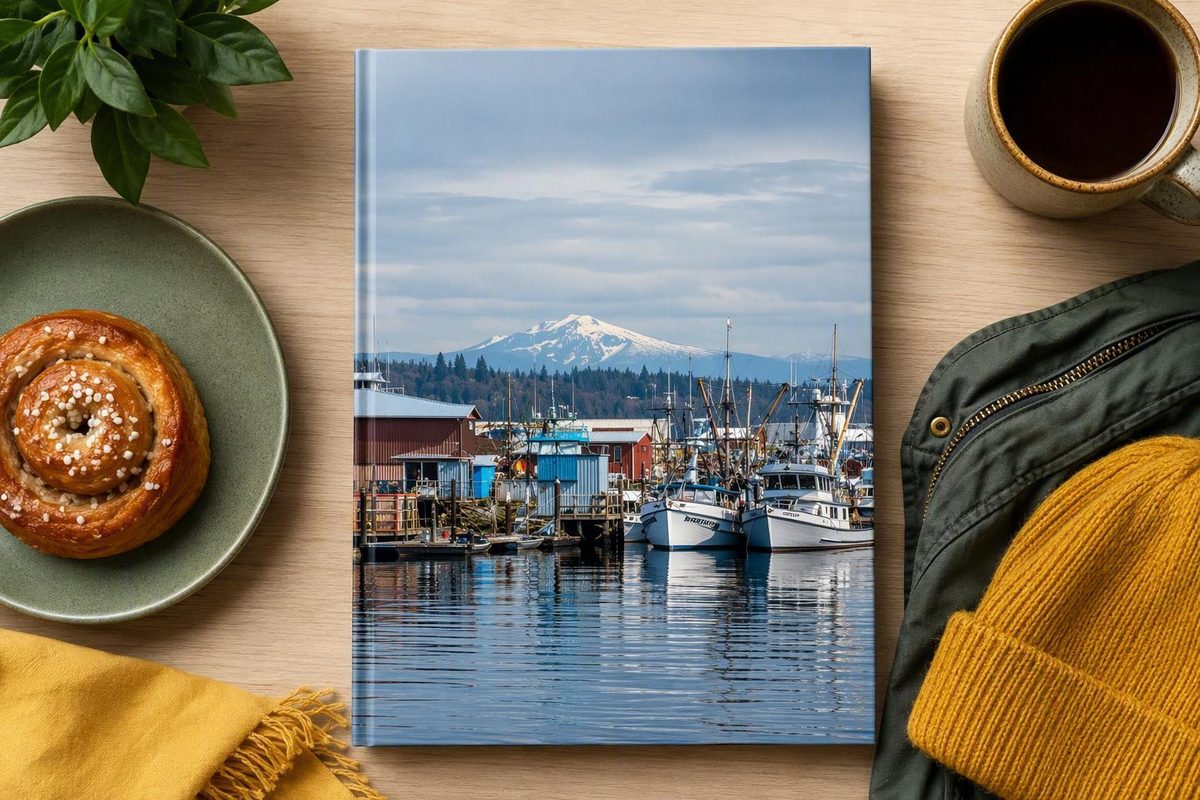
Ballard, Washington, is a neighborhood in northwestern Seattle—not a separate city today. Its former life as an independent municipality, working waterfront, and strong commercial center nevertheless give it a self-contained character that can surprise first-time visitors.
That character creates a planning challenge. Old Ballard, the locks, the brewery area, Shilshole Bay, and Golden Gardens occupy distinct clusters rather than one continuous sightseeing district. A rewarding visit depends on choosing a primary area, adding one compatible extension, and leaving enough flexibility for weather and transportation.
Planning note: Historical claims in this guide are tied to the supplied archival and third-party evidence. Because operating details change, hours, admission, accessibility, transit, events, and reservations should be confirmed with the relevant attraction or operator shortly before departure.
Ballard at a Glance: What It Is and Where It Fits in Seattle
Ballard is part of Seattle, Washington. It was formerly an independent municipality, but it became part of Seattle in 1907.
Seattle’s generally recognized working boundaries place Ballard approximately between NW 85th Street on the north, 3rd Avenue NW on the east, the Lake Washington Ship Canal on the south, and Shilshole Bay on the west. Crown Hill lies to the north; Greenwood, Phinney Ridge, and Fremont are generally to the east; the ship canal forms the southern edge; and Shilshole Bay defines the western waterfront. These boundaries are summarized in the Ballard listing on Apple Maps.
Neighborhood boundaries in Seattle are not universally fixed cultural borders. A park, restaurant, viewpoint, or entertainment venue may be promoted as part of a Ballard visit because it is nearby or fits naturally into a neighborhood itinerary, even when another map places it in Sunset Hill or a different adjacent area. Boundaries are therefore most useful as a planning framework rather than an absolute statement about local identity.
Ballard’s main visitor appeal can be grouped into six themes:
- Maritime infrastructure: working locks, boats, marinas, fishing history, and the ship canal
- Nordic culture: a major museum and the continuing influence of Scandinavian immigration
- Waterfront scenery: Shilshole Bay, marina views, shoreline recreation, and a beach
- Commercial streets: restaurants, cafés, independent shops, bars, and galleries
- Breweries and cideries: a concentration south of Market Street
- Entertainment: live music, nightlife, markets, and neighborhood events
Ballard is a strong choice for travelers seeking a neighborhood day outside Seattle’s central visitor core. It combines urban street life with working-waterway activity, but it rewards geographic discipline. The central commercial district is comparatively compact; the outer waterfront is not simply the next block over.
The History Behind Ballard’s Maritime and Nordic Identity
Ballard’s history begins well before Scandinavian immigration or American industry. Ancestors of present-day Coast Salish peoples, including Duwamish communities, lived around Shilshole and Salmon Bays before American settlement. A collaboratively edited account of Ballard’s Coast Salish history describes an Indigenous settlement around these waters, subsequent displacement, and the reported forced removal of Salmon Bay Charlie in 1914 during construction associated with the locks. Because this is a consequential history and the supplied evidence is secondary, the episode is best understood as a reported account rather than the final word on Indigenous experience.
That earlier history is essential context. Ballard’s Nordic identity is significant, but it is not the neighborhood’s starting point. The modern waterfront reflects overlapping histories of Indigenous presence and displacement, industrial extraction, immigrant labor, municipal growth, engineered waterways, and continuing maritime activity.
American settlement and industrial development accelerated in the second half of the 19th century. Timber and shingle production became central to the local economy, while fishing reinforced Ballard’s relationship with the water. Timber activity also shifted north following Seattle’s 1889 fire.
Scandinavian immigrants became an important part of this industrial community. That influence remains visible in the National Nordic Museum and in the neighborhood’s public presentation, although modern Ballard is neither culturally uniform nor frozen in its early industrial period.
Ballard’s incorporation date is sometimes given as 1889 and sometimes as 1890. The dates refer to different civic milestones: residents voted to incorporate in November 1889, while municipal organization and the first listed mayoral term followed in 1890.
Growth was rapid. Ballard had 1,636 residents at incorporation, 4,568 by 1900, and approximately 17,000 by annexation in 1907. The first bridge over Salmon Bay was completed in 1889, and streetcars and ferries were operating by the 1890s, according to the Seattle Municipal Archives’ history of Ballard.
Expansion also strained municipal services. Safe water was a persistent concern, but annexation should not be reduced to a single infrastructure failure.
Residents rejected annexation in 1905. Approximately 15 months later, a second vote produced a different result, and annexation was completed in 1907. The Seattle Municipal Archives describes divided local opinion and notes the symbolic display of black crepe and a flag at half-staff on annexation day.
Those historical layers remain connected to places visitors can see:
- The locks and ship canal express Ballard’s relationship with maritime movement and engineered waterways.
- The National Nordic Museum interprets Nordic culture, immigration, art, and Pacific Northwest connections.
- Old Ballard retains the role of a neighborhood center shaped by commerce and former municipal independence.
- Marinas and working-waterfront areas demonstrate that the water remains more than scenery.
- Shoreline recreation represents the waterfront’s development as a place for leisure as well as labor.
The museum, locks, commercial streets, and marinas are therefore not unrelated attractions. Each reflects part of Ballard’s development around water, industry, migration, and civic change.
Understand Ballard by Its Four Main Activity Clusters
The simplest way to plan a visit is to treat Ballard as four activity clusters rather than one uniformly compact sightseeing zone.
| Cluster | Best for | Practical character |
|---|---|---|
| Old Ballard and the central commercial area | Food, shops, cafés, bars, music, and street wandering | The most flexible and concentrated visitor area |
| Locks and heritage | Maritime infrastructure, fish-ladder interpretation, gardens, and Nordic history | A coherent cultural and waterfront pairing |
| Brewery district | Breweries, cideries, and a social food-and-drink outing | Best treated as an evening anchor or single extension |
| Shilshole and outer waterfront | Marina scenery, shoreline, beach, and forest trails | More dispersed and more dependent on weather and return planning |
1. Old Ballard and the central commercial area
Market Street and Ballard Avenue form the main visitor-oriented commercial core. This is the strongest cluster for restaurants, cafés, independent shops, bars, entertainment, and general street wandering. It suits visitors who want neighborhood atmosphere rather than one major attraction.
Old Ballard works well at the beginning or end of a route. You can browse before a reservation, stop for lunch between larger sights, or return intentionally for dinner and music. That return may involve some backtracking, but it can be worthwhile when a broad choice of food or nightlife matters more than maintaining a strictly linear route.
2. The locks and heritage cluster
The Hiram M. Chittenden Locks, fish-ladder viewing area, Carl S. English Jr. Botanical Garden, and National Nordic Museum make up the heritage cluster. They are not all part of one property, but they form a logical outing centered on maritime infrastructure, ecology, landscaping, immigration, and cultural history.
This is the clearest first-visit choice for travelers who want to understand Ballard rather than concentrate primarily on dining or nightlife.
3. The brewery cluster
Ballard has a notable concentration of breweries and cideries, particularly south of Market Street. Published totals vary because sources use different dates, radii, and definitions of the district, so an exact count would age quickly.
Treat the brewery area as a destination rather than an improvised detour. Visitors drinking alcohol should decide how they will leave before beginning, especially if considering multiple stops.
4. Shilshole and the outer waterfront
The western cluster includes Shilshole Bay Marina, shoreline scenery, and Golden Gardens. It is the appropriate extension for visitors prioritizing boats, open water, a beach, or a longer outdoor segment.
This cluster is more dispersed than the central commercial streets. Reaching Market Street by bus does not mean every waterfront endpoint will be a short walk away. Weather, mobility, daylight, and the return route matter more as the itinerary moves west.
Boundary note: Golden Gardens is routinely promoted as part of a Ballard visit, including in Visit Seattle’s Ballard guide, although some local treatments associate it with adjacent Sunset Hill. It fits naturally into a broader Ballard waterfront day, but not every source draws the boundary in the same place.
Discovery Park, Green Lake, Woodland Park Zoo, and Interbay Golf Center are not in Ballard proper. They can be separate nearby excursions during a longer Seattle stay, but adding one changes the plan from a Ballard neighborhood day into a multi-neighborhood itinerary.
The central lesson is geographic: choose the cluster that matters most, then add the nearest compatible experience. A route connecting the locks, brewery district, marina, and Golden Gardens is possible in some circumstances, but those places should not be treated as neighboring blocks.
The Signature Sights: Locks, Fish Ladder, Garden, Museum, and Waterfront
The Hiram M. Chittenden Locks are Ballard’s defining first-visit sight because they are both working infrastructure and a public attraction.
A locks visit works best as one combined experience:
- Watch commercial and recreational boats move through the chambers.
- Visit the fish-ladder viewing area.
- Read the educational displays.
- Walk through the adjoining Carl S. English Jr. Botanical Garden.
- Observe how transportation, water management, and fish passage intersect in one place.
Salmon viewing is seasonal and variable.
The botanical garden provides a slower counterpart to the active lock chambers. Instead of treating it as a separate destination, incorporate it into the same stop: watch the boats, visit the fish-ladder area, review the displays, and explore the garden as weather and energy allow.
The National Nordic Museum is Ballard’s principal cultural attraction. Its scope includes Nordic history, art, culture, immigration, and connections between Scandinavia and the Pacific Northwest. It helps explain why Nordic heritage remains visible in Ballard while placing local migration stories within a wider regional and international setting.
Old Ballard offers the complementary urban experience. It is not a ticketed sight; its appeal comes from older commercial character, independent shops, meals, cafés, bars, music, and nightlife. Visitors can use it as a flexible beginning, meal break, or evening finish.
Farther west, Shilshole Bay Marina supplies marina and waterfront scenery. Golden Gardens adds a beach and forest trails. These places make sense when outdoor time or open-water views are a priority, but they are extensions rather than automatic components of every museum-and-locks itinerary.
Confirm before you go
- Check current visitor procedures, closures, and conditions through the Ballard Locks visitor site.
- Confirm admission, reservations, hours, and accessibility with the National Nordic Museum.
- Review current park information and facilities on the Seattle Parks page for Golden Gardens.
- Families and travelers with limited mobility should verify step-free routes, stroller access, restrooms, seating, and temporary construction directly with each destination.
A first visit does not require every sight. The museum and locks create a coherent heritage outing; Old Ballard supplies food and street life; Shilshole or Golden Gardens provides the outdoor extension.
Half-Day and Full-Day Ballard Itineraries
These routes avoid precise walking times because pace, weather, mobility, transit waits, and the chosen waterfront endpoint can materially change the experience. The order also changes according to where you want to finish.
Half-day heritage route with a central finish
Begin at the locks complex. Watch boat movements, visit the fish-ladder area, review the educational displays, and walk through the botanical garden as conditions permit.
Continue to the National Nordic Museum, then finish in Old Ballard with a meal, coffee, or short commercial-street walk. This eastward sequence is the better choice when dining or returning toward central Seattle is the final priority.
Half-day heritage route with a western finish
Begin at the National Nordic Museum and continue to the locks. This order establishes cultural and immigration context before the working-waterway experience and leaves you farther west at the end.
Choose this version if the locks are the day’s final major stop or if you are continuing toward Shilshole. It is less convenient if you later want to return to Old Ballard for dinner.
Half-day central route
Start around Market Street and Ballard Avenue. Explore the commercial blocks, stop at a café, and browse independent shops or galleries.
Add only one substantial extension:
- Choose the National Nordic Museum for a cultural emphasis.
- Choose the brewery area for a food-and-drink emphasis.
Trying to include the museum, brewery district, locks, and beach in the same half-day is likely to make transportation the dominant activity.
Full-day first-visit route with a brewery finish
Start at the locks, continue to the National Nordic Museum, and then move through Old Ballard for lunch, shopping, or a street walk. Finish in the brewery area.
This direction reduces the need to travel west again after reaching the commercial core. It is the better full-day sequence when the final emphasis is food, drinks, or nightlife.
Full-day first-visit route with an outer-waterfront finish
Begin in Old Ballard, continue to the National Nordic Museum, and then visit the locks. From there, extend west toward Shilshole or Golden Gardens.
This westbound structure works better for a marina or beach finish. Confirm the final transportation option before leaving the central district, particularly if weather or daylight may affect the return.
Sunday variation
If the Ballard Farmers Market is operating, make it the central anchor rather than inserting it between several major attractions. Pair it with Old Ballard and either the museum or the locks. Verify the current schedule, location, and holiday exceptions with the market organizer.
Rainy-day variation
Prioritize the National Nordic Museum, cafés, restaurants, independent shops, and indoor entertainment. Use clearer intervals for outdoor sections such as watching the locks or walking through part of the garden.
The objective is not necessarily to eliminate outdoor time. Alternating indoor stops with manageable outside segments allows the route to respond to the weather without collapsing.
Family-oriented variation
Boat watching, the fish ladder, garden, museum, and beach can all work for families. Choose according to attention span and weather rather than attempting every option.
A useful structure is one interpretive stop, one active outdoor stop, and one flexible meal. Confirm stroller access, accessible routes, restrooms, seating, food policies, and current facilities before departure.
Budget-oriented variation
Center the outing on neighborhood walking, views of the working waterway, the garden, and waterfront scenery. Add a café or casual meal according to budget. Check current admission information rather than assuming that every component remains free because an older guide omitted a price.
Food, Breweries, Shopping, and Nightlife Without Chasing a ‘Best’ List
Central Ballard offers a broad mix of cafés, restaurants, bars, independent shops, galleries, and entertainment venues. Its practical advantage is variety: visitors can shape an evening around appetite and energy without committing to another major attraction.
Start with the kind of experience you want:
- Breakfast and coffee
- Casual lunch
- Seafood
- Pizza
- Globally influenced food
- Breweries or cideries
- Cocktail bars
- Pubs
- Live music
- Independent retail and galleries
This approach is more durable than planning around a ranked business list. Restaurants change menus, breweries adjust hours, shops relocate, and entertainment calendars vary by night.
The brewery concentration is substantial enough to function as a separate activity cluster. The geography matters more than a precise total: multiple breweries and cideries are grouped in the area south of Market Street. Decide whether that district is the evening anchor or one planned stop rather than allowing the route to expand without a return strategy.
A neighborhood visitor source identifies Tractor Tavern, Conor Byrne Pub, and Sunset Tavern as part of Ballard’s live-music landscape. Their inclusion establishes an association with the neighborhood, not current operations or a performance on a particular night. Confirm schedules, tickets, age restrictions, and operating status directly.
There is also a practical tradeoff between central Ballard and the outer waterfront. The center offers more food, drink, shopping, and entertainment choices within a concentrated area. Traveling west exchanges some of that convenience for marina, shoreline, or beach scenery.
For most visitors, the cleanest strategy is to choose one evening area:
- Stay central if you want options after dinner.
- Use the brewery district if breweries are the principal activity.
- Travel west if waterfront setting matters more than a broad selection of nearby venues.
- Return to Old Ballard after the museum and locks if dining variety justifies the extra movement.
Restaurant, brewery, shop, hotel, menu, event, and reservation information changes frequently. Check businesses directly, especially around holidays, private events, age restrictions, sellouts, or altered service. Labels such as “best,” “iconic,” or “hippest” are promotional opinions rather than objective findings.
Getting to Ballard and Moving Around Without a Car
Ballard can be visited from downtown Seattle without driving. It does not currently have direct light-rail service, so a car-free trip generally relies on buses, walking, cycling, or a combination of those modes.
RapidRide D and Metro Routes 40 and 44 are commonly cited connections:
- RapidRide D serves the 15th Avenue NW corridor and connects Ballard with Interbay, Queen Anne, Belltown, and downtown.
- Route 40 connects Ballard with Fremont, South Lake Union, and downtown.
- Route 44 connects Ballard with Wallingford, the University District, and UW Station.
These broad route relationships and the absence of direct light rail are described in a Ballard transit overview. Routing and service can change, so use the transit operator’s live information before departure. RapidRide D riders can also consult the current King County Metro schedule and map.
Arriving in Ballard is not the same as arriving near every attraction. A stop convenient for Market Street may be less useful for the locks, brewery area, or Golden Gardens. Choose the day’s anchor first and then identify the arrival point that best serves it.
A practical car-free sequence is:
- Select the primary cluster.
- Find the closest useful arrival stop.
- Complete that area before transferring elsewhere.
- Make one substantial move to the second cluster.
- Check the return route before beginning the final activity.
The Burke-Gilman Trail provides an east-west walking and bicycling connection associated with Ballard and nearby neighborhoods. It can help connect the ship-canal corridor with areas toward Fremont, Wallingford, and the University District.
Cycling toward downtown via the Ballard Bridge requires individual judgment. The supplied transit-oriented source describes limitations in the bridge’s bicycle infrastructure, so a route used by experienced local riders should not automatically be treated as suitable for every visitor. Consider traffic comfort, weather, equipment, visibility, and current detours.
A car may simplify an outing focused on several outer-waterfront stops. It also adds uncertainty around traffic, parking availability, rates, and restrictions. Those conditions are too variable for parking to be treated as a guaranteed advantage.
Exact fares, frequencies, travel times, accessibility features, and late-night schedules are not established by this guide. The reliable planning rule is geographic: arrive near the anchor, finish one cluster, and transfer only when the second cluster is worth the additional movement.
Choose the Right Version of Ballard for Your Day
Ballard fits a Seattle itinerary particularly well for travelers who prioritize neighborhood atmosphere, maritime sights, Nordic culture, restaurants, breweries, independent shopping, or a slower day outside the central visitor core.
Choose the heritage version if the locks and National Nordic Museum are the priorities. Add Old Ballard for a meal or short walk. Start at the locks if you want to finish centrally; start at the museum if you intend to continue west.
Choose the central version if food, shopping, cafés, nightlife, or general street wandering matter most. Keep the museum or brewery area as the only major extension.
Choose the brewery version if breweries and cideries are the purpose of the outing. Plan the return transportation before beginning and avoid attaching a remote waterfront endpoint afterward.
Choose the outer-waterfront version if the marina, shoreline, beach, or forest trails matter most. Allow for a more dispersed route and preserve time for the return journey.
A Sunday may support a market-centered outing if the farmers market is operating. A weekday may produce a different mix of open businesses, events, and street activity. Neither guarantees a particular crowd level.
Let weather determine the order:
- During clearer periods, prioritize the locks, botanical garden, marina, and waterfront.
- During sustained rain, prioritize the museum, meals, shops, cafés, and indoor entertainment.
- During mixed conditions, keep indoor and outdoor options close enough to switch without rebuilding the day.
Before departure, verify:
- Attraction hours and temporary closures
- Museum admission and reservation policies
- Accessibility and stroller routes
- Fish-ladder and salmon conditions
- Transit routes, stops, and service alerts
- Market and event schedules
- Restaurant, brewery, shop, and venue operations
- Tickets and dining reservations
- Parking rules, if driving
- Weather and suitable clothing
For visitors deciding where Ballard fits into a wider stay, Seattle Know’s neighborhood-base guidance recommends matching the base to how you plan to move and organizing the day around a primary anchor. That framework is especially useful here because places that look close on a citywide map may belong to different practical activity clusters.
Ballard’s identity is also broader than a Scandinavian theme. Its present character brings together Coast Salish history, Indigenous displacement, industrial development, fishing and timber, Scandinavian immigration, former-city status, annexation, and modern neighborhood commerce. Those layers give the locks, museum, marinas, and commercial streets greater meaning than they would have as isolated attractions.
The simplest formula is: choose one anchor, add one nearby cluster, and keep one weather-ready alternative.
Frequently Asked Questions
Is Ballard, Washington a separate city?
No. Ballard is a neighborhood in northwestern Seattle, Washington. It was formerly an independent municipality but became part of Seattle in 1907, as summarized in the historical overview of Ballard.
Its former independence helps explain the neighborhood’s strong commercial center and distinctive identity. References to the “City of Ballard” generally concern the period before annexation, not its present governmental status.
Can you visit Ballard without a car?
Yes. RapidRide D and Metro Routes 40 and 44 are commonly cited connections, but visitors should check live routing, schedules, and service alerts before traveling. Ballard does not currently have direct light-rail service.
A car-free visit is easiest when built around one cluster. Arrive near Old Ballard, the museum, or the locks, complete that area, and make only one additional transfer if needed. Golden Gardens and other outer-waterfront destinations require more planning than the central commercial blocks.
What are the main things to do in Ballard on a first visit?
The principal first-visit attractions are the Hiram M. Chittenden Locks, fish-ladder viewing area, Carl S. English Jr. Botanical Garden, National Nordic Museum, and Old Ballard’s commercial streets.
Shilshole Bay Marina and Golden Gardens are useful additions for waterfront scenery. The brewery area is an alternative extension for visitors more interested in food and drink than a beach. Most travelers should choose between the outer waterfront and the brewery district rather than assuming both will fit every pace.
When can you see salmon at the Ballard Locks?
Salmon viewing is seasonal, and timing varies by species, year, water conditions, and other environmental factors. Sightings are not guaranteed.
Check current fish-ladder information shortly before visiting rather than relying on a fixed date range from an undated travel guide. Even without visible salmon, the locks still offer boat watching, educational interpretation, and the adjoining botanical garden.
Is Golden Gardens actually in Ballard?
Golden Gardens is commonly promoted as part of a Ballard visit, especially in tourism guides that group destinations by practical proximity and neighborhood identity. Some stricter neighborhood treatments associate it with adjacent Sunset Hill.
For itinerary purposes, it is best understood as an outer-waterfront addition to a Ballard day. The boundary nuance does not prevent combining the destinations, but Golden Gardens should not be treated as immediately adjacent to Old Ballard or the locks.