
Plan a Seattle Summer Trip Around Three Easy Outings
Choose June, July or August, pack for changing conditions, and build three Seattle summer days around the waterfront, Ballard and a Bainbridge ferry.
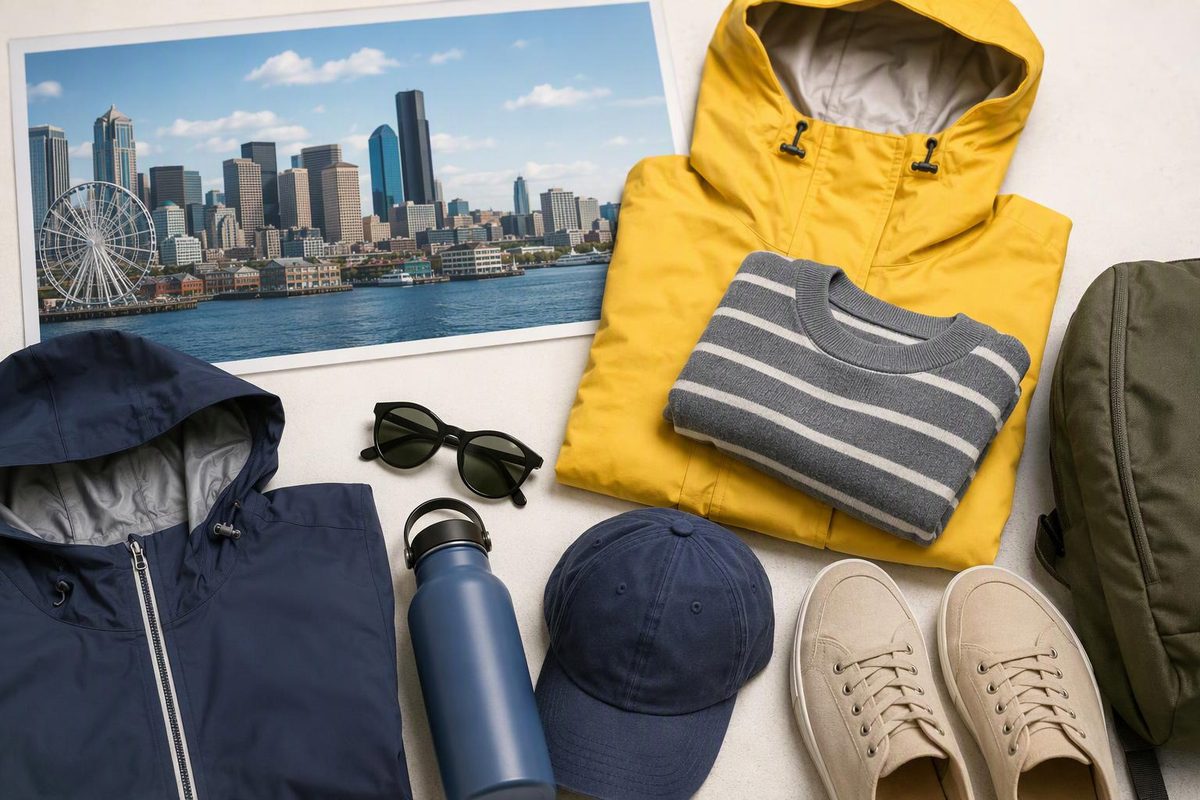
Choose July or August if warmer, drier weather is your priority. For a first Seattle summer trip, start with a market-and-waterfront day, give Ballard its own outing, and keep a Bainbridge ferry trip for a day when the timetable works.
The plan below works without a rental car. Treat each day as one main outing plus an optional extension—not a checklist. You can swap the order to suit the forecast and opening days.
June, July or August?
June is cooler and wetter on average than July and August. July has the lowest normal monthly precipitation; August is nearly identical in temperature but somewhat wetter.
| Month | Average daily high / low | Normal monthly precipitation | Planning choice |
|---|---|---|---|
| June | 71°F / 53°F (22°C / 12°C) | 1.45 inches | Keep an indoor alternative beside your outdoor stop. |
| July | 77°F / 57°F (25°C / 14°C) | 0.60 inches | Driest month by the long-term average. |
| August | 78°F / 57°F (25°C / 14°C) | 0.97 inches | Similarly warm; plan breaks rather than all-day walking. |
These are NOAA’s 1991–2020 climate normals for Seattle–Tacoma International Airport, not a forecast for your dates or every Seattle neighborhood. Check the forecast before deciding which day gets the longest outdoor outing.
Day 1: Pike Place Market and the waterfront
Main outing: Market browsing and lunch, followed by Overlook Walk and the waterfront.
Start with breakfast if you want an early arrival, but do not expect the entire Market to be operating then. Pike Place Market says most activity runs 10 a.m.–5 p.m., while breakfast and some produce and seafood businesses start earlier. Individual businesses keep their own hours. Use the Market’s visitor guide and directory to check a must-visit shop.
After lunch, head toward MarketFront and descend via Overlook Walk, the direct pedestrian connection between Pike Place Market and the waterfront. The park includes seating, ramps along its upper portion and an accessible elevator at the southeast corner of the Aquarium’s Ocean Pavilion. That makes this a more adaptable route than committing everyone to the stairs. See the Overlook Walk visitor information.
Leave the rest of the afternoon open for a waterfront stroll or a long break rather than adding a trip across town.
Rain alternative: Make the Seattle Aquarium the afternoon anchor and shorten the outdoor walk. Book a timed entry if the Aquarium matters to your trip; a same-day weather fallback should not depend on walk-up availability. Its campus includes both indoor and outdoor spaces, so still bring a layer. The Aquarium’s planning page explains tickets and campus access.
Day 2: Ballard Locks, gardens and lunch
Main outing: Watch boats at the Hiram M. Chittenden Locks, visit the fish ladder and walk through the Carl S. English Jr. Botanical Gardens.
Summer gives the fish ladder a seasonal purpose beyond simply seeing the structure. The Army Corps of Engineers identifies July as the best viewing period for sockeye and the last two weeks of August for Chinook. These are seasonal viewing windows, not guaranteed sightings; consult its fish ladder information.
Plan the bus journey to Ballard separately from your downtown walking day. The National Nordic Museum lists Metro buses 17, 40, 44 and the D Line as serving Ballard; check the route and stop that suit your starting point using its public-transit and directions information. Keep lunch in Ballard rather than returning downtown between stops. For neighborhood orientation, use our first-time Ballard guide.
Rain alternative: Shift the main visit to the National Nordic Museum at 2655 NW Market Street, then make the Locks a shorter stop if conditions improve. As checked October 11, 2026, the museum is closed Mondays; its hours and directions page lists the current schedule. Do not confuse museum hours with the Locks’ separate grounds, visitor-center and fish-ladder hours.
Optional beach extension: If you still want more outdoor time, consider Golden Gardens for sand, a picnic and Puget Sound views. It is a separate journey, not the next stop in a compact Locks walking loop. The city’s park page describes the beach and trails.
If swimming is the goal, choose a designated freshwater swimming beach instead. Seattle’s seasonal lifeguarded beaches are on Green Lake and Lake Washington. Check the current staffing dates and water-quality closures before traveling; next summer’s dates were not yet posted as of October 11, 2026.
Day 3: Bainbridge, only with a workable return
Main outing: Walk onto the Seattle–Bainbridge ferry, visit the Bainbridge Island Museum of Art and have lunch around Winslow Way.
Washington State Ferries lists the crossing at approximately 35 minutes each way. That does not include reaching the terminal, waiting, boarding or your time on the island. Choose an outbound sailing and a return before leaving your hotel, then check alerts on the official route schedule. Use the schedule for your actual travel date, not a saved seasonal timetable.
For this compact outing, leave the car behind. BIMA describes itself as an easy five-minute walk from the island ferry terminal. As checked October 11, 2026, museum admission is free and hours are 10 a.m.–5 p.m. daily; recheck before choosing your sailing. Let the museum and lunch be enough rather than planning an island-wide tour.
Allow a comfortable terminal buffer. WSF says walk-on passengers should be aboard at least five minutes before departure—that is not a recommendation to arrive at the terminal five minutes before sailing. Its first-time rider guide explains boarding. Our three-part ferry-day plan helps keep the return unhurried.
Weather adjustment: In light rain, shorten the Winslow walk and spend more time in the museum. If delays would threaten a flight, dinner reservation or other fixed commitment, keep the day in Seattle instead.
Pack for the day—and know when to change it
Bring comfortable walking shoes, sunscreen, sunglasses, a refillable water bottle, a light insulating layer and a compact rain shell. A small umbrella is useful if you prefer one. Keep the extra layer handy rather than buried in your luggage, especially for a ferry outing.
For hot dates, confirm that your accommodation has air conditioning and move longer walks to the cooler part of the day.
Smoke needs a different response from drizzle: an open-sided or partly outdoor attraction is not necessarily a clean-air refuge. Check the Air Quality Index (AQI) before a beach day or long walk. King County Public Health advises staying indoors at AQI 150 or higher, and at 100 or higher for people at increased risk, including children, older adults, pregnant people and people with respiratory or heart conditions. On a smoky day, drop the outdoor outing and choose an enclosed space with cleaner indoor air.