
How to Explore Ballard Without Turning It Into a Cross-City Marathon
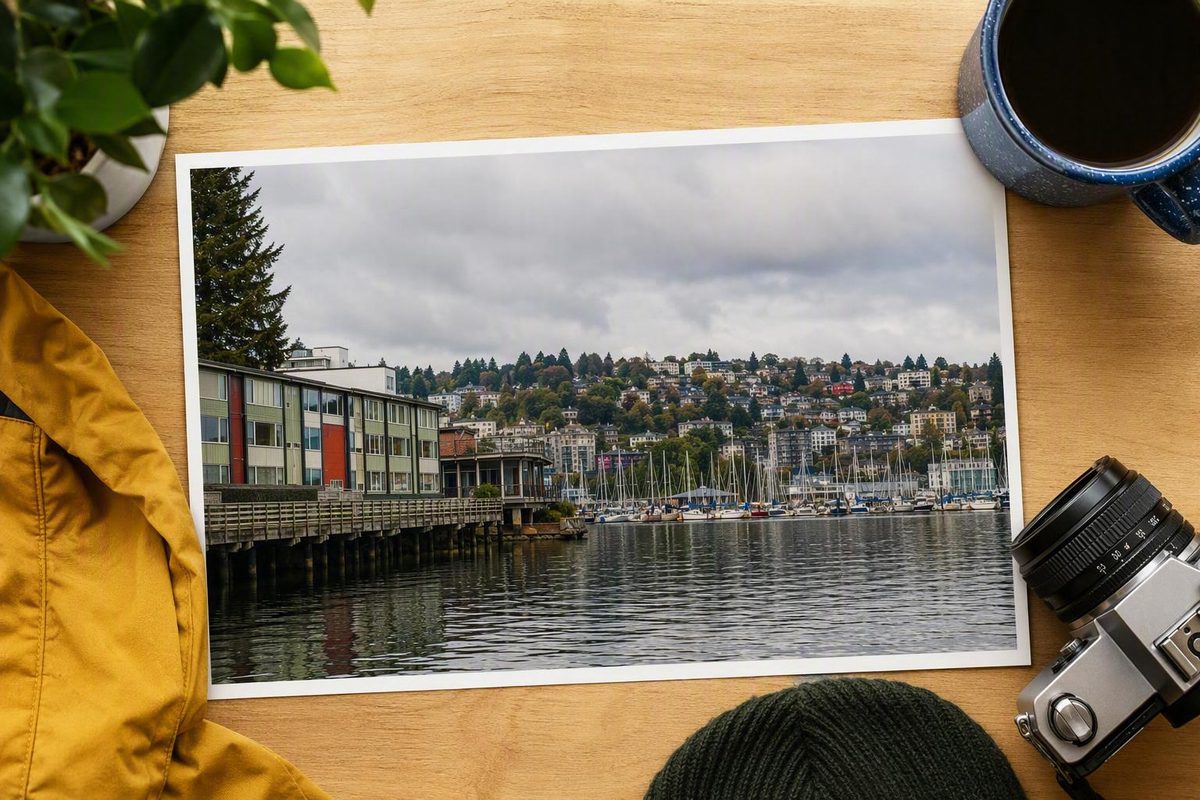
How to explore Ballard without turning it into a cross-city marathon
Ballard rewards focus. This northwest Seattle neighborhood combines a working waterfront, Nordic heritage, historic commercial streets, breweries, independent shops, restaurants, and music venues—but its attractions are not packed into one small district.
The simplest first visit starts with one anchor: the Hiram M. Chittenden Locks, the National Nordic Museum, the Ballard Avenue commercial core, or the waterfront. Add one nearby cluster, then decide whether the longer extension toward Shilshole Bay and Golden Gardens fits the weather, daylight, and your energy.
For most visitors, the museum or locks plus Ballard Avenue and Market Street makes a satisfying half-day. Trying to include every beach, brewery, shop, and cultural stop can turn a neighborhood outing into a transportation exercise.
Ballard at a Glance: Location, Character, and Boundaries
Ballard sits in northwest Seattle. Broadly, the Lake Washington Ship Canal and Salmon Bay define its southern side, while Shilshole Bay lies to the west. Crown Hill is to the north, with Greenwood, Phinney Ridge, and Fremont generally east or southeast.
Do not expect every map to draw the same outline. Seattle neighborhood boundaries are informal, and local guides often use “Ballard” more expansively than municipal-style descriptions. Northwest 85th Street, Third Avenue Northwest, the Ship Canal, and Shilshole Bay are useful broad reference points, but they should not be treated as universally accepted borders.
For practical trip planning, think of Ballard as several connected visitor zones:
- Ballard Avenue and Market Street: The central cluster for shops, cafés, restaurants, bars, galleries, and entertainment.
- The brewery district: Generally south of Market Street, with many taprooms concentrated around 11th Avenue Northwest and 14th Avenue Northwest.
- The locks: West of the main commercial core, combining maritime infrastructure, boat traffic, gardens, and visitor facilities.
- Shilshole waterfront: The marina and shoreline corridor extending northwest from the locks.
- Golden Gardens: A beach-and-trail destination farther northwest. It routinely appears in Ballard itineraries, although some sources place it in adjacent Sunset Hill.
These areas share a maritime identity, but they do not form one compact walking loop. Ballard Avenue and nearby Market Street blocks are the easiest places to wander without a detailed schedule. Reaching the locks requires a deliberate move west, and continuing to the marina or Golden Gardens adds meaningful distance.
That distinction should shape the day. A few blocks around Ballard Avenue can support an unstructured afternoon. A route connecting central Ballard, the locks, Shilshole Bay, and Golden Gardens is a longer outdoor outing with weather exposure and return logistics.
Ballard’s character comes from several historical and contemporary layers. Nordic immigration strongly influenced its cultural identity. Its historic commercial core now supports independent businesses, restaurants, breweries, shops, and live music.
Avoid treating Ballard as a fixed number of minutes from downtown. Travel time varies with your starting point, bus route, transfers, traffic, construction, and time of day. For planning purposes, Ballard works better as a dedicated northwest Seattle destination than as a quick stop between central attractions.
The History Behind Ballard’s Waterfront Identity
Ballard’s history did not begin with Scandinavian immigration or industrial development. Coast Salish people lived around Shilshole and Salmon Bays long before European American settlement. Historical accounts identify a settlement known as šilšul and describe the displacement of Indigenous families as settlers took control of the area. Hwelchteed, also known as Salmon Bay Charlie, was forcibly removed in connection with construction of the locks. This history is summarized in an account of Ballard’s Indigenous presence and later development.
That context matters. Ballard’s Nordic heritage is genuine and remains prominent, but it is one chapter in a much longer story rather than the neighborhood’s origin.
During the late 19th century, expectations surrounding rail access encouraged real-estate development. Mills, timber processing, shingle production, and fishing created employment and drew new residents.
Ballard’s incorporation dates can appear inconsistent because they refer to two stages. Residents voted to incorporate in November 1889, while formal incorporation followed in 1890. These are sequential milestones, not competing versions of the same event. The distinction is reflected in historical summaries of Ballard’s incorporation and annexation.
Growth came quickly. Ballard had 1,636 residents when it incorporated in 1890, 4,568 by 1900, and approximately 17,000 by annexation in 1907. That expansion strained the city’s water, sewer, and municipal services. Safe water was a persistent concern, and using Seattle’s water system added to Ballard’s debt, according to the Seattle City Archives history of Ballard.
Annexation was not immediately accepted. Residents rejected a merger with Seattle in 1905, then approved it in a second vote 15 months later. Ballard formally became part of Seattle in 1907. On annexation day, city hall was draped in black crepe and its flag flown at half-staff—an image of divided local feelings, not proof that every resident opposed the change. The municipal archive’s annexation account documents both the infrastructure pressures and the mixed response.
Visitors can still read this history in the landscape. The commercial core reflects Ballard’s former life as an independent city. The waterfront continues its maritime and industrial identity.
Together, these elements make Ballard more than a collection of places to eat and drink. Its present-day identity grew from Indigenous presence and displacement, industrial expansion, immigration, municipal ambition, and eventual annexation.
The Essential Stops for a First Ballard Visit
For a first visit, three places provide the clearest introduction: the Hiram M. Chittenden Locks, the National Nordic Museum, and the commercial streets around Ballard Avenue and Market Street. They are complementary rather than interchangeable.
The Hiram M. Chittenden Locks
Usually called the Ballard Locks, this site explains the neighborhood’s maritime geography better than any other single stop.
On one side is the saltwater connection toward Puget Sound; on the other are freshwater waterways leading toward Lake Union.
Visitors can generally watch boat traffic and explore the grounds. The site also includes a fish-ladder viewing area, educational facilities, and the Carl S. English Jr. Botanical Gardens. Check the Ballard Locks visitor information before setting the day’s order because access conditions and facility details can change.
Treat salmon viewing as a possibility, not a guarantee. Visibility varies, and no trip should depend on seeing fish during a particular month without current confirmation from an authoritative source.
The locks are a strong anchor when you want outdoor time, moving boats, gardens, or an introduction to Ballard’s waterfront. They also provide the natural starting point for a longer walk toward Shilshole Bay.
The National Nordic Museum
The National Nordic Museum supplies cultural context that the streets and waterfront cannot provide on their own. Its subject matter includes Nordic history, art, culture, immigration, and connections between Nordic communities and the Pacific Northwest.
That broader framing matters because Ballard’s Scandinavian associations are sometimes reduced to festivals, restaurants, or decorative references. A museum visit gives those associations historical depth while placing them in a wider Nordic and immigration story.
Choose the museum as your anchor if you prefer a structured indoor visit, want historical context, or need a weather-resistant plan. It pairs naturally with Ballard Avenue and Market Street because all are in the central part of the neighborhood.
Hours, admission policies, ticketing, and reservation practices can change. Consult the National Nordic Museum directly before deciding whether to visit before or after lunch.
Ballard Avenue and Market Street
This is Ballard’s most practical wandering zone. Historic Ballard Avenue and the surrounding Market Street blocks contain independent shops, cafés, restaurants, bars, galleries, and entertainment. You do not need a precise checklist; the point is to experience the neighborhood at street level.
Ballard Avenue provides the strongest sense of the older commercial district. Market Street acts as the busier east-west spine, while nearby side streets expand the choices for food, shopping, and drinks without requiring a major detour.
If time is limited, use one of these combinations:
- Museum plus commercial core: Best for culture, food, shopping, and uncertain weather.
- Locks plus commercial core: Best for maritime interest and a mix of outdoor and urban time.
- All three: Reasonable for a longer half-day or relaxed full day if current hours align.
The transition between the museum and commercial core is the easiest part of this plan. Moving from the core to the locks is the longer westward leg, so complete any time-sensitive museum visit first and keep browsing, meals, and the locks more flexible.
Markets, Breweries, Food, Shopping, and Live Music
Ballard works well when the secondary part of the visit remains loose. Instead of relying on a brittle ranking of individual businesses, choose the kind of experience you want and stay within one cluster.
The Sunday market
The Ballard Farmers Market is identified as a recurring Sunday attraction in the commercial core. Because hours, holiday schedules, vendor participation, and street arrangements can change, confirm current operations with the Ballard Farmers Market organizer.
On a market day, expect the core to function differently than it does on a quiet weekday. Leave time to browse rather than treating the market as a five-minute stop between the museum and locks.
The market fits naturally into the middle of a Sunday itinerary: visit a time-sensitive attraction first, browse the market and nearby streets, then continue to lunch or the waterfront. If the market is your main reason for visiting, reverse that priority and treat later stops as optional.
Food and cafés
Ballard’s central blocks support coffee, pastries, casual meals, bars, and longer dinners. The useful planning question is not which restaurant is universally “best,” but where the meal fits into your route.
If you start at the museum, eat in the commercial core before deciding whether to continue west. If the locks are your anchor, return toward Ballard Avenue for a meal rather than moving between unrelated reservations. For an evening visit, choose dinner near the venue or brewery cluster you intend to use afterward.
Check reservations, hours, and business status directly. Inclusion in a neighborhood guide does not establish that a business remains open, accepts walk-ins, or operates on your chosen day.
Shopping, galleries, and entertainment
Independent shops and galleries make the Ballard Avenue and Market Street area suitable for an unstructured afternoon. Cinema and performing-arts options can turn the same cluster into a rainy-day or evening plan.
This is one of the commercial core’s advantages: it does not require constant navigation. You can walk a few blocks, stop when something interests you, and limit the next major decision to whether you are heading toward the locks, the brewery district, or transit home.
Breweries and cideries
The brewery concentration lies generally south of Market Street, particularly around 11th Avenue Northwest and 14th Avenue Northwest. A local guide identifies that area as the center of the cluster, but businesses and district boundaries change, so use it as orientation rather than an exact map of current operations. The Ballard visitor guide’s brewery overview provides useful geographic context.
Published estimates have ranged from more than a dozen to nearly two dozen breweries and cideries, depending on the date, boundaries, and counting method. That variation makes a fixed total unhelpful. Treat the district as a concentrated, walkable cluster rather than a checklist.
Pick one or two nearby stops and confirm current hours, food arrangements, age policies, and event schedules. If breweries are the main reason for visiting, make the district the anchor and add a meal or short Ballard Avenue walk. Combining it automatically with the locks and Golden Gardens creates an unnecessarily scattered day.
Live music and nightlife
Tractor Tavern, Conor Byrne Pub, and Sunset Tavern are examples of venues associated with Ballard in local visitor material. Their inclusion here is not a guarantee of current operation or a suitable event on your date.
Check calendars and ticketing details directly. Once you choose an evening event, stay nearby for dinner or drinks rather than adding a late transfer from Golden Gardens or another part of the neighborhood.
The Locks, Shilshole, and Golden Gardens Waterfront Route
The waterfront version of Ballard is best understood as a progression:
- Hiram M. Chittenden Locks
- Carl S. English Jr. Botanical Gardens
- Shilshole Bay Marina and waterfront
- Golden Gardens
This is not a quick loop around adjacent blocks. It is a longer extension away from central Ballard, and the farther you continue, the more important the return plan becomes.
Begin at the locks, where you can watch boat movements and walk through the garden area. From there, continue toward the Shilshole waterfront and marina. The surroundings gradually shift from lock infrastructure and gardens to a more open waterfront setting.
One personal travel guide describes a roughly four-mile walk from the Ballard docks through the botanical garden toward Shilshole Beach. Use that only as a broad planning reference because the actual distance depends on the starting point, path, detours, and endpoint. The same local walking account illustrates why this extension requires more time than wandering central Ballard.
Golden Gardens adds shoreline access, beach space, and forest trails. Views across Puget Sound toward the Olympic Mountains may be available when conditions cooperate, but clouds and haze can obscure the horizon.
Boundary language requires care. Golden Gardens is routinely included in Ballard visitor itineraries and lies near its western edge, but one long-running neighborhood guide places it technically in Sunset Hill. For trip planning, “near Ballard” is more accurate than insisting that every definition puts the park inside the neighborhood. That distinction appears in this Ballard and Golden Gardens guide.
Choose the full route if your priorities are scenery, boat watching, shoreline time, and a sustained outdoor walk. Shorten it when:
- Rain or wind makes exposed waterfront time unpleasant.
- Daylight is limited.
- Someone in the group has restricted walking capacity.
- You have a timed museum entry, dinner, or event.
- You have not planned how to return from Golden Gardens.
The locks are the first sensible turnaround point. The marina is the second. Stopping at either preserves much of the maritime experience without committing to the full beach extension.
Golden Gardens can also be the primary destination rather than the final item on a long checklist. In that version, reduce museum browsing, shopping, or evening commitments.
If walking the entire route is not practical, investigate current bus, taxi, rideshare, or bicycle options before setting out. Do not assume that the return from the beach will be as simple as the outward walk, especially after dark or in poor weather.
Half-Day, Full-Day, and Rainy-Day Ballard Plans
A successful Ballard itinerary has one fixed anchor and flexible additions. These plans are frameworks rather than minute-by-minute schedules; current hours, transit conditions, event times, weather, and personal walking pace should determine the final order.
Half-day history-and-neighborhood plan
Choose either the National Nordic Museum or the locks as the anchor.
Museum version:
- Begin at the National Nordic Museum.
- Walk into the Ballard Avenue and Market Street core.
- Browse shops, galleries, or cafés.
- Finish with a meal, coffee, or drink nearby.
This is the strongest half-day for cultural context and variable weather. If conditions improve and time remains, the locks can become an optional addition.
Locks version:
- Begin at the Hiram M. Chittenden Locks.
- Walk through the botanical gardens.
- Move east into the historic commercial core.
- Finish with food, coffee, or a drink.
This version provides the maritime setting and neighborhood atmosphere without requiring the longer Shilshole or Golden Gardens route.
Half-day outdoor plan
Make the locks the non-negotiable stop. Watch the boats, explore the gardens, and then assess the weather and the group’s energy.
If conditions are good, continue toward Shilshole Bay. Use the marina as a practical turnaround point rather than forcing a fixed endpoint. Save Golden Gardens for a separate visit unless you have adequate time and a clear return plan.
Full-day Ballard plan
A full day can combine central Ballard with the waterfront:
- Begin at the National Nordic Museum if its hours make it the least flexible stop.
- Explore Ballard Avenue and Market Street.
- Stop for lunch.
- Continue west to the locks and botanical gardens.
- Follow the waterfront toward Shilshole Bay.
- Extend to Golden Gardens only if weather, daylight, and energy allow.
- Return to central Ballard for dinner or an event only if the extra transfer remains practical.
The museum, commercial core, locks, marina, and Golden Gardens can fit into one day, but the route is not compact. The waterfront extension adds substantial walking and creates a separate return problem. If Golden Gardens is the day’s main anchor, reduce the time allocated to indoor stops.
Sunday variation
Fit the Ballard Farmers Market into the commercial-core portion of the day after confirming current operations.
A practical order is a time-sensitive attraction first, market browsing next, then lunch or the locks. Avoid placing several reservations around the market because browsing time and movement through busy streets can be unpredictable.
Rainy-day version
Prioritize the National Nordic Museum, followed by cafés, shops, cinema, performing arts, or another independently verified indoor venue. Use the locks or a short Ballard Avenue walk during the clearest part of the day.
Light rain does not necessarily prevent a neighborhood visit, but sustained rain and wind change the value of Golden Gardens and the exposed waterfront. A comfortable wet-weather plan alternates indoor stops with short walks rather than crossing Ballard repeatedly.
Evening version
Choose either the commercial core or brewery district and remain there. Have dinner, visit a bar or taproom, or attend a scheduled performance after checking the venue calendar.
The locks and Golden Gardens generally work better as daytime anchors unless you have a specific evening plan and suitable transportation.
The decision rule
When the itinerary starts to grow, use this rule:
- If the museum is the anchor, keep the waterfront optional.
- If the locks are the anchor, add either the central core or a partial waterfront walk.
- If Golden Gardens is the anchor, reduce the number of indoor stops.
- If a concert, dinner, or brewery cluster is the anchor, keep the evening in that district.
Getting to Ballard and Moving Around Without a Car
Ballard can be visited without a car, but it does not currently have direct light-rail service. Most transit visitors will use a bus for at least the final part of the trip.
Three routes are particularly useful for orientation:
- RapidRide D: Connects Ballard with Interbay, Queen Anne, Belltown, and downtown.
- Route 40: Connects Ballard through Fremont and South Lake Union to downtown.
- Route 44: Connects Ballard with Wallingford, the University District, and UW Station.
These connections are summarized in a Ballard transit overview, but routes, stops, and schedules can change. Consult King County Metro’s current RapidRide D information and its trip-planning tools close to departure, especially for service alerts and accessibility details.
Do not rely on a generic “minutes from downtown” estimate. A trip beginning in Belltown differs from one beginning near Pioneer Square, and bus travel can vary with traffic, construction, crowding, and transfers.
Once in Ballard, walking is easiest around Ballard Avenue, Market Street, and nearby blocks. The museum and commercial core form the simplest walking cluster. From there, the locks are the next distinct westward destination; the marina and Golden Gardens extend the route progressively farther.
Cyclists can use the Burke-Gilman corridor for connections toward Fremont, Wallingford, the University District, and the Ship Canal area. The Ballard Bridge bicycle route, however, has been described as dated and may feel uncomfortable to riders who prefer protected, low-stress facilities. Review the route before riding rather than assuming every major connection will suit every cyclist.
Be equally cautious with broad walkability claims. A high score assigned to one central address does not describe the entire neighborhood. Central Ballard can be convenient on foot while the waterfront and residential edges remain more spread out.
A car may help when Ballard is one stop in a regional or multi-neighborhood day, or when reaching a specific waterfront destination under time pressure. It can also introduce traffic and parking uncertainty. Check posted restrictions and current conditions rather than assuming a particular price or level of availability.
For many first-time visitors, the simplest car-light strategy is to take transit to central Ballard, walk one cluster, and use a second planned mode only if extending to the waterfront.
Should You Stay in Ballard or Visit From Another Seattle Base?
Ballard is not automatically the best place to stay, nor is it merely a day-trip neighborhood. The right choice depends on the shape of the rest of your Seattle itinerary.
Ballard can be a good base if your priorities include neighborhood wandering, restaurants, breweries, the locks, the Nordic museum, Golden Gardens, or slower evenings outside the central tourist core. Staying nearby reduces backtracking when several days begin or end in the neighborhood.
It is especially suitable when:
- More than one meal or evening is planned in Ballard.
- The locks and museum are major priorities.
- You want substantial time along Shilshole Bay or at Golden Gardens.
- You prefer a neighborhood-scale commercial district to a downtown base.
- You are comfortable using buses for cross-city trips.
The trade-offs are equally important. Ballard has no direct light rail, so many trips to central Seattle are bus-dependent and travel times vary. Travel guides also identify a relatively limited set of neighborhood lodging options.
Ballard Inn and Hotel Ballard are examples named in neighborhood and relocation material, not guarantees of current operation, rates, availability, or suitability. Verify those details directly before booking; both appear in this Seattle neighborhood and lodging guide.
Another Seattle base may be more practical when most of your priorities involve downtown, Pike Place Market, ferry departures, or light-rail-connected areas. In that case, visit Ballard as a concentrated half-day or full-day excursion rather than repeating the same cross-city trip each morning and evening.
When comparing bases, choose according to how you will move and where your days will begin and end. This broader guide to choosing where to stay in Seattle provides a useful framework for that decision.
This is a logistics judgment, not a verdict on neighborhood quality. Restaurants, attractions, and nightlife do not establish affordability, public safety, school quality, or broader residential livability.
A simple fit test is:
- Stay in Ballard when multiple days naturally begin or end there.
- Visit for the day when Ballard is one item within a mostly central Seattle itinerary.
Choose one Ballard anchor, add one nearby cluster, and leave the waterfront extension dependent on weather and energy. For most first-time visitors, the museum or locks plus the historic core makes a complete half-day. Golden Gardens, the brewery district, or an evening venue can expand that into a full day.
Ballard’s appeal comes from the connection between its layered history, working waterfront, and walkable commercial core—not from checking off every possible attraction.
Frequently Asked Questions
Is Ballard worth visiting on a first trip to Seattle?
Yes, if you want a neighborhood experience that differs from downtown. The locks, National Nordic Museum, historic commercial core, restaurants, breweries, and nearby waterfront provide enough variety for a half-day or full day.
Ballard is less effective as a rushed add-on between central attractions. Give it a dedicated block of time and choose the museum or locks as the anchor.
Can you visit Ballard without a car?
Yes. Buses connect Ballard with downtown, Queen Anne, Fremont, South Lake Union, Wallingford, and the University District. Central Ballard is the easiest part to explore on foot.
The main car-free challenge is combining widely spaced stops. The locks, marina, and Golden Gardens extend beyond the compact commercial core, so determine the return plan before continuing west.
Can the National Nordic Museum, Ballard Locks, and Golden Gardens fit into one day?
Yes, provided current hours align and you are comfortable with meaningful walking or planned transportation between stops. Place the commercial core between the museum and waterfront, but keep shopping and meals flexible.
If the weather worsens or energy drops, shorten the route at the locks or marina. If Golden Gardens is the priority, spend less time at indoor stops rather than rushing through all three.
Is Golden Gardens actually in Ballard?
It depends on the boundary definition. Golden Gardens is commonly included in Ballard visitor guides and sits near Ballard’s western edge, but some sources place it in adjacent Sunset Hill.
For planning purposes, describe it as near Ballard and treat it as a waterfront extension rather than part of the compact central district.
When is the Ballard Farmers Market?
Visitor and organizer information identifies it as a Sunday market. Because hours, street arrangements, and holiday operations can change, confirm the current schedule directly before visiting.
If it is operating, place it within the Ballard Avenue portion of the day rather than treating it as a separate cross-neighborhood stop.