
Plan a Klondike Gold Rush Museum Visit in Pioneer Square
Visit Seattle’s free Klondike Gold Rush museum, then follow a short Pioneer Square heritage walk, with transit, accessibility and rain-plan details.
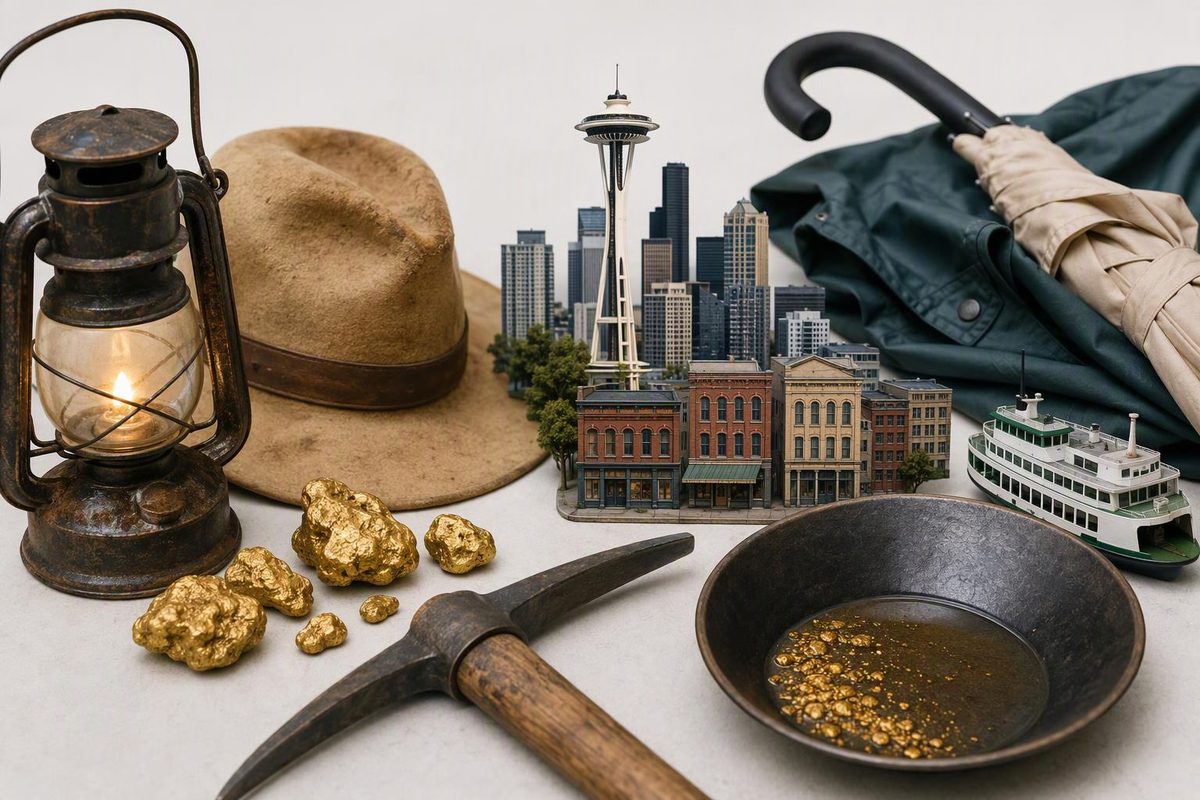
Seattle’s Klondike Gold Rush museum works best as the anchor for a compact Pioneer Square history outing. The National Park Service visitor center explains how Seattle became an outfitting and transportation gateway to the Yukon, while the surrounding streets supply the architectural context.
Allow about 90 minutes for the museum and a film, or two to three hours with a short neighborhood walk. Admission is free. For an ordinary self-guided visit, no entrance pass is required; arrive during opening hours.
Essential visit details
Last checked: September 25, 2026
- Official name: Klondike Gold Rush – Seattle Unit National Historical Park
- Address: 319 Second Ave S, at South Jackson Street
- Hours: Wednesday–Sunday, 10 a.m.–5 p.m.; closed Monday and Tuesday
- Admission: Free; no entrance pass required
- Inside: Two floors of self-guided exhibits, artifacts and interactive displays, plus a rotating gallery, park films and an information desk
The museum occupies the former Cadillac Hotel. Look for the old hotel sign on South Jackson Street and National Park Service arrowhead signs. The official NPS visitor-center page lists the hours and closures; its published 2026 exceptions include Veterans Day, Thanksgiving, Christmas Eve and Christmas Day. Check the park’s alerts before setting out if weather or a special event could affect the visit.
This is an urban museum rather than a large outdoor national park. The exhibits are the destination; Pioneer Square is the useful extension.
A simple two-to-three-hour route
1. Start with the exhibits
Give the permanent displays about an hour. They follow the stampeders’ journey north and explain why Seattle businesses benefited even though the goldfields were far away.
On July 17, 1897, the steamship Portland arrived in Seattle carrying 68 prospectors and what newspapers called “a ton of gold.” Local merchants promoted the city as the “Gateway to the Gold Fields.” The NPS says 70,000 of the 100,000 people who headed north came through Seattle to buy supplies during the rush.
That commercial story makes particular sense in Pioneer Square, Seattle’s business center during the period.
2. Add one film
The museum’s two main gold-rush films each run about 25 minutes. In summer they play on a schedule; during the rest of the year, staff show them on request. Ask at the desk when you arrive so you can fit a screening around the exhibits. The theater also gives the visit a useful seated break.
Families can ask for a Junior Ranger activity. Ranger programs, demonstrations and docent tours vary, so check the NPS calendar or ask at the desk rather than building the day around an unconfirmed activity.
3. Take a short heritage loop
Before leaving, ask for the Trail to Treasure map. This self-guided route begins at the museum and links places associated with the development of Pioneer Square and Seattle. Maps are available at the visitor center, according to the National Park Service walking-tour guide.
For a short version:
- Walk from the museum toward Occidental Square.
- Continue north through the brick-building streets toward Pioneer Square park.
- See the iron pergola, then finish near First Avenue and Yesler Way or return to the museum.
This is enough to read the neighborhood after learning its history without turning the outing into a long downtown trek. Seattle identifies Pioneer Square as its original downtown. After the 1889 fire, the core was rebuilt in brick and stone, creating the concentration of late-19th-century Romanesque Revival architecture seen today.
The museum building is part of that preservation story. The Cadillac Hotel was badly damaged in the 2001 Nisqually earthquake and faced possible demolition. Preservation and seismic-rehabilitation work led to its reopening in 2005 as the park’s permanent home, according to Historic Seattle.
Getting there without a car
Transit is usually simpler than parking.
The NPS lists International District/Chinatown Station as the closest Link light-rail station and King Street Station for Sounder and Amtrak. The First Hill Streetcar stops at South Jackson Street and Occidental Avenue. Metro routes also stop within four blocks; use a trip planner on the day because the best stop depends on your route. Travelers arriving from the waterfront can walk from the ferry terminal at Pier 52 or the water-taxi terminal at Pier 50. See the park’s transportation directions.
Driving works, but it offers little advantage. Nearby street parking is paid and limited to two hours, while private garages and lots set their own rates. Construction can also close nearby streets. If this is one stop in a downtown day, leave the car parked once or use transit.
Accessibility
The visitor center has an elevator to its lower exhibit level, exhibit paths at least 36 inches wide, accessible restrooms and wheelchair spaces distributed through the theater. One wheelchair is available to borrow for use inside. The NPS also links to Seattle’s accessible-parking and route-planning tools on its mobility information page.
The theater films have captions. Assistive-listening devices and audio description are available for the films, but the NPS notes that audio description is not available for the exhibits. A Braille park brochure can be borrowed at the desk. Visitors who need an ASL interpreter for a ranger program should contact the park at least three weeks ahead through its hearing-accessibility page.
The outdoor heritage loop is a separate decision. Historic sidewalks, crossings and changing street conditions may matter more than the museum interior. Use the city’s accessible route planner linked by the NPS, or call the visitor center at 206-220-4240 for help planning your approach.
Rain plan
In steady rain, keep the museum and film but make the Trail to Treasure walk optional. The two exhibit levels, theater and rotating gallery provide a substantial indoor visit. Wait for a lighter interval to see Occidental Square and the pergola, or omit them without losing the central story.
If rain is shaping the whole day, combine this stop with nearby indoor plans rather than crossing the city repeatedly. The same principle guides our Seattle rainy-day neighborhood itinerary. On Monday or Tuesday, when the museum is closed, move the entire Pioneer Square heritage visit to another day rather than treating the exterior walk as an equivalent substitute.