
Plan Your 2026 Fishermen’s Terminal Festival Visit
See the confirmed October 3 schedule, free activities, paid food, tour caveats, transit choices and practical half-day plans for the waterfront.
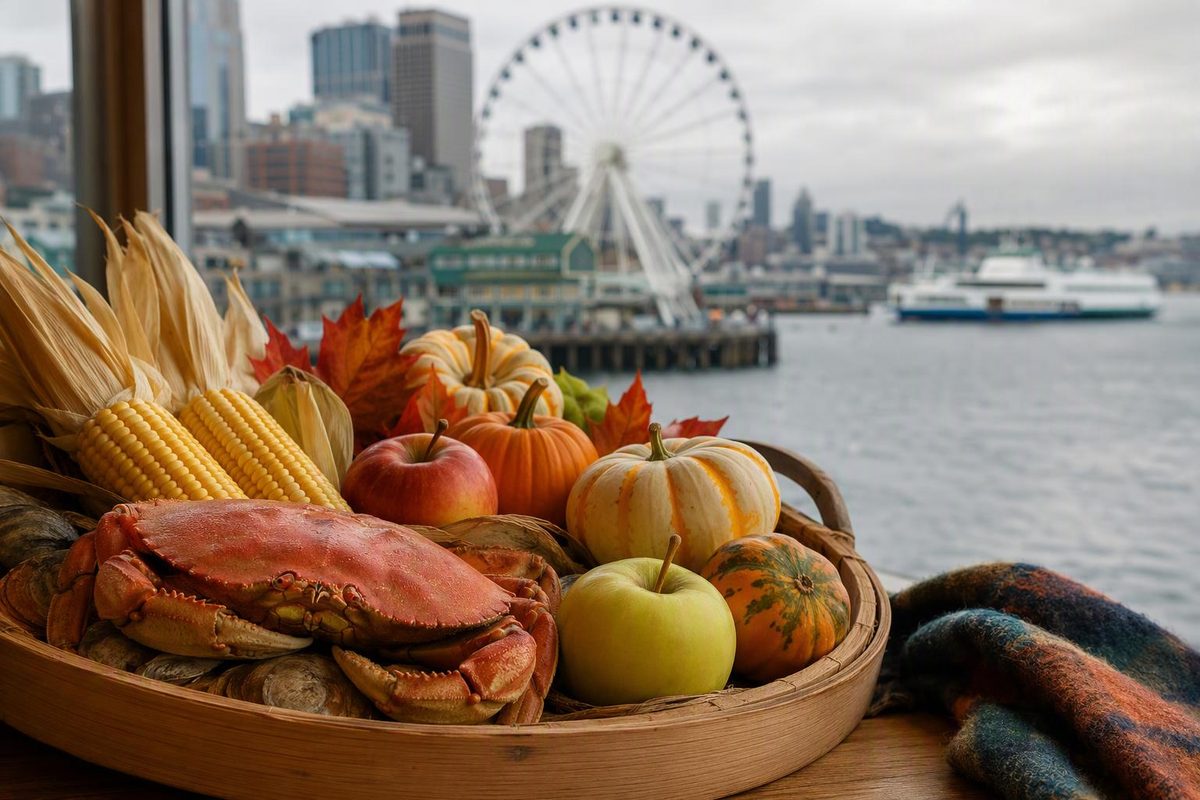
Seattle’s 2026 Fishermen’s Fall Festival is Saturday, October 3, from 11 a.m. to 6 p.m. at Fishermen’s Terminal. Admission is free, while food and drinks are sold separately. Plan around the confirmed October date rather than the festival’s customary September timing, and use the 3 p.m. survival-suit races or one of three Ship Canal tours as the anchor for your terminal visit.
Choose when you expect to arrive and what you most want to see; the planner identifies the relevant scheduled event.
Festival Schedule Planner
Default shown: an 11:15 a.m. arrival with a Ship Canal tour as the priority.
Recommended Anchor
Ask about the 11:45 a.m. tour when you arrive.
If that departure is unavailable, the next listed tour is at 1:30 p.m. Tour capacity, fees and booking details have not been posted.
Confirmed Fixed Times
Children’s activities are listed, but individual operating times are not published.
Source: Fishermen’s Fall Festival 2026 activity listing. Tour capacity, cost, accessibility and reservation procedures are —.
Confirmed 2026 Festival Details
| Detail | What To Know |
|---|---|
| Date | Saturday, October 3, 2026 |
| Hours | 11 a.m.–6 p.m. |
| Admission | Free; no general-admission reservation is listed |
| Venue | Fishermen’s Terminal, 3919 18th Ave. W, Seattle |
| Scheduled anchor | Survival-suit races at 3 p.m. at Dock 9 |
| Extra spending | Food and drinks; prices and payment methods have not been posted |
Use October 3 rather than assuming the festival will follow its usual timing. The Port describes September as customary, but the organizer’s current 2026 event page confirms the October 3 date and the 11 a.m. to 6 p.m. schedule.
The Port lists 3919 18th Avenue West on its official Fishermen’s Terminal page. The festival organizer also gives 1900 W Nickerson Street for directions and contact information. Both refer to the terminal complex, but entering “Fishermen’s Terminal” as the map destination is less likely to send a visitor toward a different Ballard waterfront location.
No general-admission reservation process is listed. That does not establish how individual activities will handle capacity, particularly the Ship Canal tours. If a tour is the main reason for your visit, arrive with a backup departure in mind and ask about sign-up or boarding arrangements as soon as you reach the event.
Admission Is Free, but Food and Drinks Cost Extra
The organizer calls the festival free, and the Seattle Fishermen’s Memorial says admission and its hands-on children’s art activities are complimentary. The listed activities include fish prints, face painting, shell art, balloon art, spin art, wooden-boat building and a Kraken bouncy house. The Memorial maintains the current list on its festival information page.
Food and beverages are sold separately. Announced choices include a salmon barbecue, Alaska scallops, wild Alaskan cod and beer-garden items. Proceeds go to the Seattle Fishermen’s Memorial, which supports fishing families and honors people lost at sea.
The organizer has not published 2026 food prices or accepted payment methods. There is therefore no verified meal budget to quote. Carrying a card and some cash avoids depending on a single payment system, but visitors should not assume every vendor will accept both.
The schedule also includes Ship Canal tours, performances and the survival-suit races. No tour fee or advance-booking process is currently listed. The organizer does not expressly identify the tours as free, nor does it provide capacity or accessibility details. Free festival admission should not be read as confirmation that every tour arrangement is free or available without a queue.
The 2026 Schedule Has Three Strong Planning Anchors
The festival’s 2026 activity listing gives the following times.
| Time | Main Stage | Elsewhere |
|---|---|---|
| 11 a.m. | Inochi Taiko Drummers | — |
| 11:45 a.m. | — | Ship Canal tour |
| Noon | Reptile Man | — |
| 1 p.m. | Sea shanties | — |
| 1:30 p.m. | — | Ship Canal tour |
| 2 p.m. | The Wayside | — |
| 3 p.m. | — | Survival-suit races, Dock 9 |
| 4 p.m. | Knut Bell | Ship Canal tour |
The 3 p.m. survival-suit races at Dock 9 are the clearest fixed anchor because they occur once. Build in enough time to locate Dock 9 before the start rather than arriving at the terminal at 3 p.m.
The Ship Canal tours offer more flexibility, with departures listed for 11:45 a.m., 1:30 p.m. and 4 p.m. Their repeated schedule makes a fallback possible, but no capacity, boarding deadline or reservation procedure has been posted. A listed departure is not a guarantee that every visitor will get a place.
At 4 p.m., Knut Bell and the final Ship Canal tour are scheduled simultaneously. Visitors staying late will need to choose between those two activities rather than treating both as part of the same sequence.
Check the organizer’s listing again shortly before leaving. The published schedule is the best current source, but a day-of program can change.
A Half-Day Plan Can Include a Tour and the Races
For a broad first visit, arrive around 11:15 a.m. This leaves time to find the event area and ask how Ship Canal tour access works before the first listed departure at 11:45 a.m. If the first tour is unavailable or too soon, use the 1:30 p.m. departure as the primary target.
Between scheduled events, families can begin with the complimentary art and boat-building activities. Other visitors can look through the marked public parts of the terminal and decide when to buy lunch. The main-stage sequence provides options without forcing a continuous performance schedule: Reptile Man is at noon, sea shanties at 1 p.m. and The Wayside at 2 p.m.
Treat the 1:30 p.m. Ship Canal tour as a practical first-choice anchor if you do not want to arrive at opening. Afterward, move toward Dock 9 in time for the 3 p.m. survival-suit races. This pairing gives the visit a defined shape without requiring you to remain for all seven festival hours.
If the 1:30 tour is full or otherwise unavailable, keep the races as the fixed part of the plan. The final tour is listed for 4 p.m., after the races, although choosing it means missing Knut Bell’s 4 p.m. main-stage performance.
Shorter Visits Work Best Around One Priority
A race-focused visit can begin in the early afternoon. Arriving before 2 p.m. gives you the option of seeing The Wayside and finding Dock 9 without making the single 3 p.m. race time a last-minute rush. After the races, decide between the 4 p.m. tour and Knut Bell.
A tour-focused visit needs more flexibility because access details remain unposted. For the 11:45 a.m. or 1:30 p.m. departures, go to the tour information point when you arrive and confirm where boarding occurs. If you cannot secure the intended departure, the festival’s performances and free activities provide alternatives while you reassess the later tour.
A late-afternoon arrival after 3 p.m. misses the survival-suit races. The remaining published anchors are Knut Bell and the Ship Canal tour, both at 4 p.m. A visitor arriving that late should make that choice before getting absorbed in food or activities elsewhere in the complex.
Families who care more about hands-on activities than a particular performance have more freedom. The organizer lists the activities but does not publish individual operating times for each one. Starting them earlier in the visit reduces the risk of assuming every station will remain equally accessible until the 6 p.m. festival close.
Fishermen’s Terminal Remains a Working Waterfront
Fishermen’s Terminal is not a maritime theme park. The Port describes it as an industrial facility open to the public, where vessels moor and receive repairs and maintenance. Restaurants, a seafood market and working offices also share the property; the Port’s terminal visitor guide explains the setting.
Remain in marked public areas and respect barriers, dock controls and active work zones. Festival activity does not convert the entire terminal into unrestricted event space. This distinction matters when moving between the stage, food area, tour meeting point and Dock 9.
The two published street addresses should not be treated as separate festival venues. Use the terminal name for navigation, then follow event signs after arrival. Because individual activities occur around the property, allow time to orient yourself rather than planning consecutive scheduled items with no walking or wayfinding margin.
Transit Avoids Festival-Day Parking Uncertainty
The Port identifies two nearby transit options:
- RapidRide D Line: stops at 15th Avenue NW and W Nickerson Street
- Route 31: stops at W Emerson Place and 21st Avenue W
Check King County Metro’s trip planner on the morning of the festival for the trip from your actual starting point. The nearby routes do not establish that every Seattle neighborhood has a direct ride, and weekend service conditions may affect the best connection.
The Port says free parking is normally available at the terminal, subject to posted time limits. That statement does not guarantee an open space during the festival. Drivers should read the signs for the specific area where they park and avoid assuming that normal terminal availability will match event-day demand.
Transit is the lower-stress option when the connection works from your starting point. It removes the need to time arrival around an uncertain parking search, which is particularly useful if you are trying to make the only survival-suit race or a specific tour departure.
If you drive, arrive with enough margin to park, walk into the complex and locate the relevant event area. An arrival time equal to the scheduled activity time is not a workable substitute for a published boarding or check-in deadline, especially because none has been given for the tours.
Rain Planning Should Protect the Outdoor Priorities
Docks, boats and outdoor events are a substantial part of the festival visit. Bring a waterproof outer layer and shoes appropriate for damp pavement. The Seattle rain clothing guide covers practical clothing choices without requiring an umbrella to do all the work.
No weather cancellation policy is currently posted. If the forecast is poor, check the organizer’s page before leaving rather than assuming the entire schedule will proceed unchanged. Center the day on one priority—the races, a tour departure or a particular performance—so a wet or delayed start does not undermine the whole visit.
Rain also makes extra transition time useful on the working waterfront. Moving carefully between activity areas is more realistic than scheduling every performance and tour as if they occupied the same spot.
Check the Tour Details First on Arrival
The largest unresolved planning issue is the Ship Canal tour process. The published material supplies three departure times but no confirmed fee, capacity, reservation method, accessibility information or boarding deadline. Ask about those points immediately if the tour determines whether your visit feels successful.
After that, verify where to stand for the 3 p.m. survival-suit races at Dock 9. Food prices and payment methods are also unposted, so decide on purchases only after seeing the festival-day menus and accepted payment options.
The firm facts for advance planning are the October 3 date, the 11 a.m. to 6 p.m. festival hours, free admission, the listed performance schedule, three tour times and the single 3 p.m. race time. Build the day around those confirmed details and treat tour access, food costs and parking availability as event-day variables.