
Plan a Kubota Garden Visit Around the Route and Terrain
It’s free and reservation-free; compare driving with date-specific transit, then plan around hard-packed gravel, changing grades and Mountainside limits.
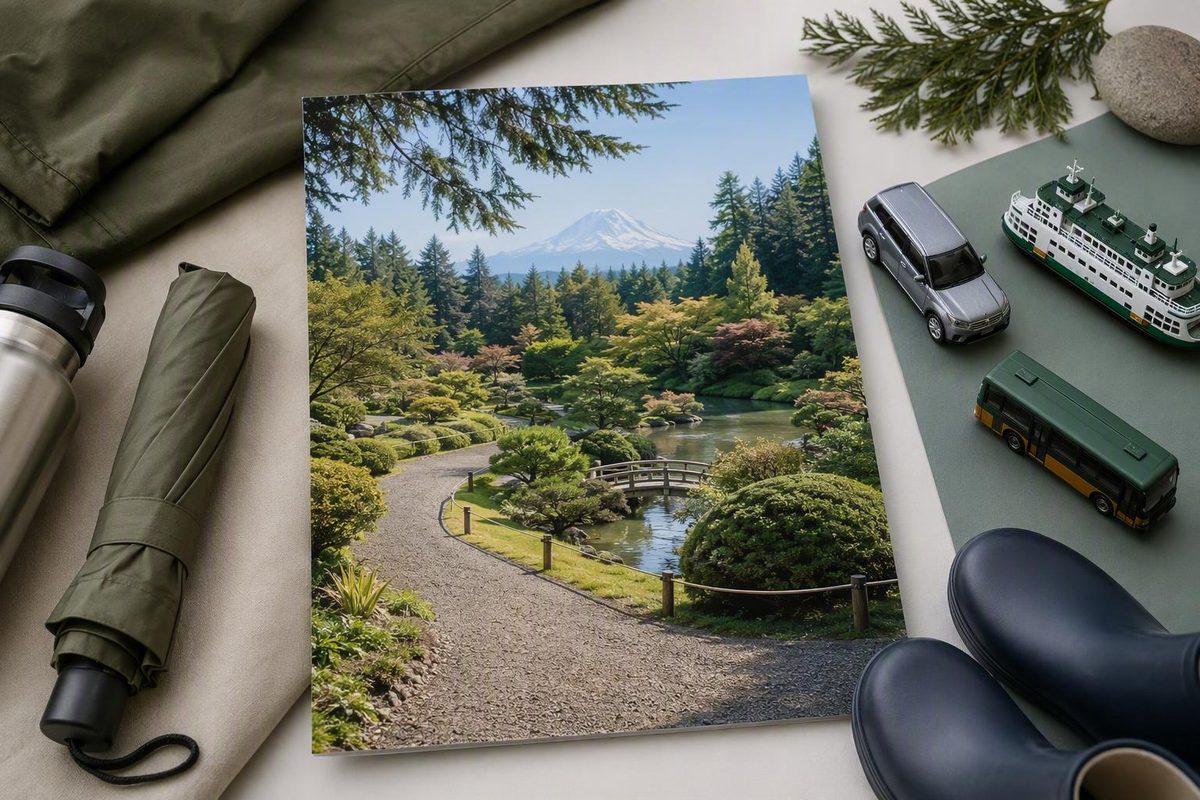
Kubota Garden is a free, reservation-free outdoor stop in South Seattle. For a car-free visit, use King County Metro’s live planner for your exact date and origin, then review the final walking approach before committing. Inside the garden, expect hard-packed gravel and changing grades; wheelchair users should follow the easier-path guidance on the map and leave the Mountainside section out of the plan.
Kubota Garden visit essentials
Quick answer
- Location: 9817 55th Ave S in Seattle’s Rainier Beach neighborhood
- Admission: Free
- Standard visit reservation: Not required
- Garden hours: Sunrise to sunset
- Parking-lot gates: 6:00 a.m. to 10:00 p.m.; this is not the garden’s opening schedule
- On-site parking: Free, but availability is not guaranteed
- Primary paths: Hard-packed gravel with grade changes
- Wheelchair-accessibility limit: Mountainside is not wheelchair accessible
- Facilities: Accessible restrooms and picnic tables are available
These operating and access details come from the Kubota Garden Foundation’s official visitor guidance.
The 20-acre garden is owned and operated by Seattle Parks & Recreation, with support from the Kubota Garden Foundation. It combines Japanese garden concepts with Pacific Northwest plants and materials in a landscape of hills, valleys, streams, waterfalls, ponds, bridges and varied plantings. The official Seattle Parks page for Kubota Garden also provides city park information and separate guidance for ceremonies and photography permits.
Plan around daylight rather than the parking-gate schedule. The garden is open from sunrise to sunset, so its practical visiting window changes by season even though the lot gates have fixed hours.
Check the Foundation’s current notices shortly before leaving. Parking alerts, construction information and path conditions can change after an itinerary has been made.
Choose how to arrive: driving or a date-specific transit plan
The clearest decision is based on what you can verify for the day:
- Use transit only after Metro’s current planner confirms the complete trip from your origin, including the stop and final approach.
- Arrange another ride if the transit itinerary or final approach does not suit your group, but confirm the pickup and drop-off plan rather than assuming a designated loading area exists.
| What is verified | What to check |
|---|---|
| Driving: A free parking lot is available. Its entrance is on 55th Ave S near Renton Ave S. | Whether a space is available when you arrive. |
| Street parking: The Foundation posted a construction-related alert for 55th Ave S. | Whether that alert still applies; it does not establish that the on-site lot is closed. |
| Vehicle security: The operator advises removing valuables or placing them out of sight before reaching the lot. | Decide where bags and other items will go before departure. This precaution does not mean a break-in is likely. |
| Transit: Metro provides trip-planning, departure and advisory tools. | Your exact stop, transfers, final walking approach and current service for the travel date. |
The Foundation’s street-parking notice said work on 55th Avenue South would begin in April and was anticipated to finish by summer 2026. That forecast does not establish present conditions. Review the current Foundation homepage before depending on street parking.
For a car-free visit, enter 9817 55th Ave S and your actual departure date in King County Metro’s Trip Planner. Check Next Departures and service advisories again shortly before leaving.
Do not treat Route 106 as confirmed direct service to Kubota Garden. Its official schedule shows service through Rainier Beach, but it does not identify the garden, establish the best stop or document the final walking route. Metro’s live itinerary should confirm the whole connection; separately assess whether the final approach works for the mobility needs of your group.
Match your garden route to the terrain
Kubota Garden’s primary paths are hard-packed gravel, and every path has grade changes. Some sections are steeper than others. The operator specifically identifies Mountainside as not wheelchair accessible.
The self-guided map marks paths described as easier to navigate. “Easier” is a relative route cue within this sloped garden—not a designation that the paths are paved, flat, fully step-free or suitable for every wheelchair, scooter or stroller.
Choose your route according to the group’s comfort:
- Lower-exertion route: Use the easier paths marked on the map, choose a convenient turnaround point and exclude Mountainside.
- Flexible scenic route: Follow suitable paths toward reachable plantings and water features, turning back when the gravel or grade no longer works for the group.
- Fuller wander: Explore more of the branching network if everyone is comfortable with gravel, hills and variable slopes.
Motorized wheelchairs and mobility scooters are permitted on garden paths. That permission does not establish that every slope or surface will work for every device or user.
The available guidance also does not confirm that a wheelchair or stroller can reach a particular pond, bridge or waterfall. If one feature is essential, ask the garden office about its approach before traveling.
Plan a short visit or a fuller wander
There is no reliable universal visit length. The paths branch, and differences in route choice, terrain tolerance and pace can substantially change how long a visit takes. Plan by scope instead.
Short scenic visit: Choose a few paths that work for everyone in the party. Focus on reachable examples of the garden’s plantings, streams, ponds, bridges and waterfalls rather than trying to complete a prescribed circuit.
Lower-exertion visit: Review the self-guided map before starting. Favor the marked easier paths, choose a simple turnaround and use the restroom and picnic area as a practical break point. Leave Mountainside out of the route.
Fuller exploration: Allow for a 20-acre landscape containing hills, valleys, water features, bridges and branching paths. This option best suits visitors comfortable making route decisions as they go and navigating hard-packed gravel with changing grades.
Download or inspect the self-guided map before exploring, especially if you want to avoid steeper sections or return efficiently. Printed copies should not be assumed to be available when you arrive.
Adjust the plan for rain and mobility needs
Rain does not automatically rule out a visit. It does make the documented gravel surface, changing grades and steeper sections more important when choosing a route.
Wear footwear suited to damp gravel and slopes. This is sensible preparation, not a claim that rain closes the garden or makes every path unsafe.
In wet conditions:
- Start with a shorter route and an easy turnaround.
- Use the easier-path markings on the self-guided map.
- Keep the itinerary flexible rather than committing to every branch.
- Choose a route that makes it easy to return to facilities if comfort changes.
Rain does not necessarily prevent wheelchair or stroller use. Suitability depends on the route, current conditions, device and user. If slope, surface or step details will determine whether the visit is workable, consult the map and contact the garden office before leaving.
Facilities and a final pre-departure check
Kubota Garden has ADA-compliant, gender-neutral restrooms with flushing toilets and hand-washing stations. Portable toilets are also available near the entrance. Accessible picnic tables are located near the restrooms, and picnicking is permitted on the lawns, according to the Foundation’s visitor guidance.
Accessible facilities do not mean every garden path is accessible. Treat restroom and picnic-table access separately from the question of whether a particular garden route will suit the visitor.
Before departure:
- Confirm the day’s sunrise and sunset times.
- Review current garden notices.
- Check the status of the 55th Avenue South street-parking alert.
- Download or inspect the self-guided map.
- Identify an appropriate route and turnaround point.
- Use Metro’s current tools if traveling without a car.
- Remove valuables or conceal them before reaching the parking lot.
- Call ahead if access to a specific feature will determine whether the visit works.
The listed garden office number is 206-684-4584, as shown on the Kubota Garden Foundation homepage. Use it for questions that the online guidance does not answer, particularly route-specific mobility concerns or current path conditions.
Why this garden matters
Kubota Garden is not simply a scenic collection of bridges and water features. It is a Japanese American cultural landscape shaped by the Kubota family’s design work, forced displacement and return.
Fujitaro Kubota began developing the property in 1927, using Pacific Northwest plants and local materials to express a Japanese aesthetic. In 1942, the Kubota family was forcibly removed and incarcerated at Minidoka in Idaho. They returned to the property in 1945 and continued restoring and developing the garden.
The garden’s core received City of Seattle historic-landmark designation in 1981, and the city purchased the property in 1987. The Mountains to Sound Greenway Trust’s history of Kubota Garden places these milestones within the family’s broader story.
Kubota Garden works best as a flexible South Seattle landscape visit when the route is chosen as carefully as the arrival method. The free lot makes driving the most clearly documented option, while a car-free trip requires a current Metro itinerary and a suitable final approach. Inside, let the map, gravel and grades—not a goal of seeing everything—shape the day.
Are dogs allowed at Kubota Garden?
Yes. Under the Foundation’s visitor rules, dogs must remain leashed, stay out of plants and ponds, and have their waste removed. Consider whether the gravel and slopes are appropriate for your dog before choosing a longer route.
Do photography, filming, or ceremonies require a permit?
Casual photography that does not restrict ordinary park use is treated differently from commercial work or elaborate setups. Seattle Parks states that commercial photography, filming and setups that restrict general use require permits under its parks policy. Ceremonies have separate reservation guidance, so check the city’s requirements before organizing one.
Are bicycles and electric scooters allowed on the garden paths?
No. The Foundation’s visitor rules prohibit bicycles, electric scooters and other motorized vehicles on garden paths. Motorized wheelchairs and mobility scooters are the stated exceptions.