
Clear the Glass Fast—and Keep the Fog From Coming Back
For interior fog, select front defrost, turn on the A/C, use warm fresh air and switch recirculation off. Exterior moisture needs a different response.
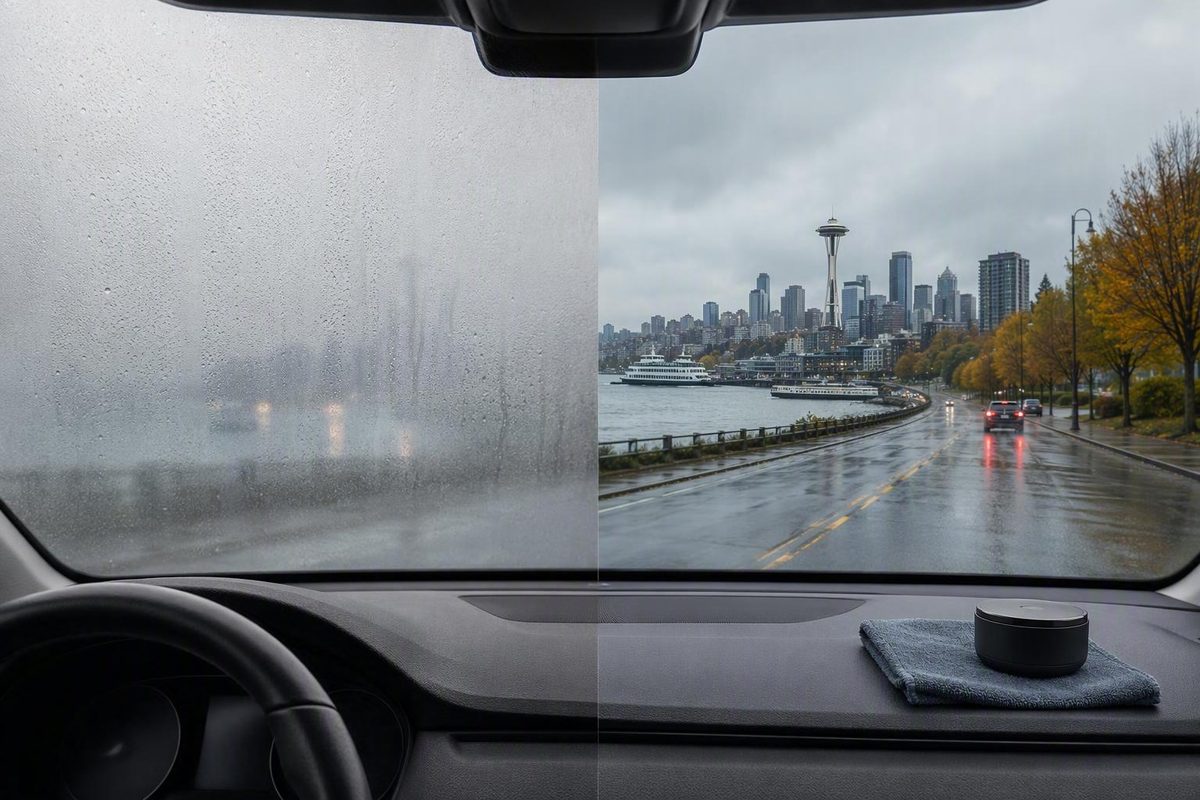
A fogged windshield is not something to “see through” while waiting for the climate control to catch up. Do not begin or continue driving when condensation materially obstructs your view. If the windshield fogs while you are moving and the normal controls do not restore adequate visibility promptly, reduce speed smoothly, allow more space, and stop in a safe location. AIG Ireland likewise advises pulling over safely when fog severely limits visibility.
The correct response depends on one basic question: Is the moisture on the inside or outside of the glass?
- Interior fog: Direct warm, dehumidified fresh air at the windshield.
- Exterior condensation: Use the wipers and reduce excessive cooling of the windshield.
Vehicle controls and automatic climate behavior vary. Where the owner’s manual differs from general guidance, follow the instructions for that vehicle.
Fogged Up Right Now? Use This Safety-First Sequence
If the condensation is inside—or you are not yet certain—use this sequence:
- Select the front windshield defrost or defog mode. Look for a windshield-shaped symbol with rising or wavy arrows.
- Set the fan to medium-high or high. Strong airflow moves conditioned air across more of the glass.
- Turn on the A/C. Air conditioning removes some moisture from air passing through the HVAC system, even when the output air is warm.
- Choose warm air. It does not need to be uncomfortably hot. Warm airflow helps heat the glass and evaporate interior droplets.
- Select fresh-air intake. This allows humid cabin air to be exchanged.
- Turn recirculation off. Its symbol commonly looks like a car with a curved arrow inside.
- Keep the system running until the necessary viewing area is fully clear and no longer refogging.
Front defrost directs conditioned air toward the windshield and may engage both heat and air conditioning. That combination warms the glass while reducing moisture in the air reaching it, as explained in Allstate’s windshield-defogging guidance.
Do not shut the system off as soon as a small clear patch appears in front of the steering wheel. The rest of the windshield and relevant side windows may remain obscured, and the cleared area can fog again if cabin humidity is still high. Once visibility is stable, you can lower the fan or adjust the temperature while maintaining enough airflow to prevent the condensation from returning.
Others require a separate press of the A/C button.
This variation is especially important in a rental or unfamiliar car. Before setting out in cold or rainy weather, identify the controls for:
- Front defrost
- Rear defrost
- Fan speed
- Temperature
- A/C
- Fresh-air intake
- Recirculation
If the system behaves unexpectedly, consult the vehicle manual while parked rather than trying to decipher unfamiliar controls in motion.
If the normal settings are not clearing interior fog, briefly crack one or more windows to increase air exchange—but only when weather, traffic conditions, and personal safety permit. Heavy rain, road spray, smoke, poor outdoor air quality, or an unsafe stopping place may make that option impractical.
First Check: Is the Condensation Inside or Outside?
Before changing several settings, make a quick diagnosis.
Try the windshield wipers.
- If the wipers clear the cloudy layer, the condensation is outside.
- If the wipers have no effect, the moisture is probably inside.
- If a cloudy area cannot be reached from either surface, it may be between the windshield layers.
There is no need to touch the windshield while driving. The wiper test is usually enough to identify exterior condensation.
If the condensation is inside
Use the complete defogging sequence above: front defrost, medium-to-high airflow, A/C, warm air, fresh-air intake, and recirculation off. Keep the airflow running until the glass is clear and remains stable.
Interior fog commonly develops when moist cabin air meets glass cool enough for condensation to form. Passengers’ breath, wet clothing, damp footwear, umbrellas, spills, and open drinks can all increase the amount of moisture inside the vehicle.
If the condensation is outside
Use the wipers, then reduce the condition that is keeping the glass unusually cold:
- Reduce excessively cold A/C output.
- Redirect very cold dashboard airflow away from the windshield if the controls permit.
- Allow the windshield to move somewhat closer to the outdoor temperature.
Exterior condensation can form in warm, humid weather when air conditioning chills the windshield and moist outdoor air contacts the cooler exterior surface. Adding still more cold air against the inside of the glass may preserve the temperature difference causing the problem. The wipers remove the droplets, while reducing excessive cooling addresses the underlying condition.
Do not confuse condensation with frost or ice. Fog consists of liquid droplets; frost and ice are frozen onto the exterior surface and require defrosting and appropriate ice removal rather than ordinary defogging alone. Allstate’s guidance distinguishes interior fog, exterior condensation, and frozen buildup and describes the different roles of front and rear defrost systems.
A third condition is moisture between laminated windshield layers. Treat that as a windshield issue and arrange an assessment by a qualified automotive-glass professional.
Why Heat and Air Conditioning Work Together
Windshield fog is condensation. Air contains invisible water vapor. When moist air next to the windshield meets glass cold enough for condensation to form, some of that vapor becomes tiny liquid droplets. Those droplets scatter light and create the milky or hazy view drivers call fog.
The relevant threshold is the dew point: the temperature below which moisture in the adjacent air begins to condense. Drivers do not need to calculate it. The practical lesson is that interior fog can be controlled in three complementary ways:
- Reduce moisture in the air next to the glass.
- Raise the temperature of the windshield.
- Keep conditioned air moving across the surface so droplets evaporate.
That is why heat and air conditioning are not contradictory.
The A/C dries the air. Air moving through the HVAC system passes over a cold evaporator. Some water vapor condenses on that cold surface and is removed from the air stream.
The heater reheats the conditioned air. The resulting warm, relatively dry airflow can absorb moisture from the windshield while also raising the temperature of the glass. The University of Illinois Physics Van explanation describes this relationship between dew point, A/C dehumidification, warm airflow, and condensation.
The cabin does not have to feel cold merely because the A/C is operating. In many vehicles, air passes through the cooling and dehumidifying stage and is then reheated before reaching the windshield. The vent output can therefore be warm while the A/C system is still removing moisture.
This is also why neither “maximum heat is always fastest” nor “cold air is always faster” is a reliable universal rule. Defogging performance depends on factors including:
- Cabin humidity
- Outdoor temperature and humidity
- Windshield temperature
- Available engine heat
- Fan speed
- A/C operation
- Vent placement
- Automatic climate-control programming
- Whether the moisture is inside or outside
Warm, dehumidified airflow is a strong starting point for interior condensation because it addresses both moisture and glass temperature. A newly started vehicle on a cold morning, however, may not produce much heat immediately. In other conditions, cooler air that has been effectively dehumidified may still clear the glass. The important combination is adequate airflow, reduced humidity, and the correct response for the side of the glass that is wet.
Front and rear systems commonly work differently:
- A front defogger generally directs conditioned airflow through vents at the base of the windshield.
- A rear defroster commonly uses electrically heated lines on or within the rear glass.
Some vehicles have additional heated-glass features. Use the marked controls and consult the manual instead of assuming the front and rear buttons operate in the same way.
Fresh Air Versus Recirculation
For interior windshield fog, recirculation should generally be off.
Recirculation is useful when you want to cool or heat already-conditioned cabin air efficiently. During interior fogging, however, the cabin may itself be the main moisture source. Continually cycling humid cabin air can slow clearing or allow the windshield to fog again.
Moisture can accumulate from ordinary sources:
- Drivers and passengers exhale water vapor.
- Wet shoes and boots release moisture.
- Rain-soaked coats and umbrellas dry inside the cabin.
- Snow or ice carried in on footwear melts into floor mats.
- Open drinks and spills add moisture.
- Damp upholstery and carpet release moisture gradually.
- Several occupants contribute more moisture than one.
Selecting fresh-air intake allows some humid cabin air to be displaced. This is particularly useful during a rainy trip with passengers, wet bags, or damp clothing. Guidance from Bobby Rahal Honda likewise identifies occupants, drinks, wet belongings, snow, and spills as cabin moisture sources and recommends switching recirculation off while clearing fog.
Outside air is not objectively drier in every weather condition. It may be very humid during rain, fog, or coastal weather. Even so, fresh-air exchange often helps when people and wet belongings are continuously adding water vapor inside a small enclosed cabin. The goal is to keep moisture from becoming increasingly concentrated inside.
If the windshield clears and then begins fogging again during the same drive, respond before visibility deteriorates. Keep a modest amount of defrost airflow running, leave recirculation off, and keep the A/C engaged if the vehicle permits. Lowering the fan or adjusting the temperature for comfort is reasonable as long as enough conditioned airflow remains to keep the glass stable.
Cracking a window is another way to exchange air, but it is a conditional fallback rather than a universal requirement. It may help when the ventilation system is slow or the A/C is ineffective. It should not replace repair of a malfunctioning ventilation system.
What to Do If the A/C or Defogger Is Not Working Well
A weak or ineffective A/C system does not eliminate every option, but clearing may be slower because the HVAC system is not dehumidifying the air as effectively.
Use this fallback:
- Direct all available airflow toward the windshield.
- Select warm air.
- Choose fresh-air intake.
- Turn recirculation off.
- Raise the fan speed.
- Briefly crack one or more windows when conditions permit.
- Allow the glass to clear completely before proceeding.
Do not continue driving while waiting for weak airflow, a cold engine, or limited heat to restore visibility. If the windshield remains materially obscured, stop safely and wait until visibility is adequate and stable, consistent with AIG Ireland’s visibility guidance.
Before deciding that the A/C is broken, check the owner’s manual. Some vehicles automatically operate the compressor in defrost mode without displaying the same indicator used during ordinary cabin cooling. Others change recirculation, fan speed, or vent routing automatically. Compressor and indicator behavior therefore may not match what a driver expects.
Without effective A/C dehumidification, warm airflow can still heat the windshield and encourage evaporation. Fresh-air exchange can also reduce moisture that has accumulated inside. The process may simply take longer.
Manual wiping is a temporary measure, not a complete solution. A clean material suitable for automotive glass may remove visible droplets while the vehicle is stationary, but wiping does not remove humidity from the cabin. The condensation can return, and a dirty cloth, sleeve, or used towel may spread residue and leave distracting streaks.
Do not rely on a handheld hairdryer, loose electrical appliance, or improvised household treatment as a replacement for the vehicle’s installed ventilation and defrost systems. Use the controls designed for the vehicle and arrange inspection if they cannot maintain visibility.
Move from workaround to inspection if you notice:
- Very weak airflow from the windshield vents
- Air that does not reach enough of the windshield
- Controls that do not change vent direction
- Repeated fog despite sustained, correct defrost use
- A persistent musty odor
- Damp carpet or unexplained water inside
- A/C that does not appear to cool or dehumidify under suitable conditions
These symptoms do not prove one particular fault. They do indicate that open windows, repeated wiping, or maximum fan speed should not become permanent substitutes for diagnosis.
Prevent Fog by Removing Moisture From the Cabin
Climate controls treat the immediate visibility problem. Prevention begins by reducing the amount of water available to become condensation.
Use this cabin moisture checklist:
- Contain wet clothing. Remove it when practical or place it in a closed waterproof bag.
- Contain umbrellas. Do not leave a dripping umbrella open across the floor or seats.
- Dry wet floor mats. Remove them according to the vehicle’s instructions and let them dry fully.
- Dry damp carpet and upholstery. Check whether moisture extends beyond the visible surface.
- Brush loose snow and ice from footwear and clothing before entering.
- Clean up spills promptly. Check beneath removable mats when liquid may have spread.
- Close or remove open drinks.
- Remove damp cargo. Towels, sports equipment, reusable bags, and outdoor gear can retain moisture.
- Check the footwells and cargo area if the windows fog while the vehicle is parked.
- Ventilate the cabin during suitable dry conditions.
Passenger breath is unavoidable, but it still adds water vapor. With several occupants in the vehicle, fresh-air ventilation and steady defrost airflow become more important. Leaving recirculation on throughout the trip can allow humidity to build again after the glass initially clears.
Travelers should pay particular attention to rental and long-parked vehicles. Before setting out in rainy conditions, check for damp mats, wet seat fabric, or forgotten gear. Avoid loading dripping coats and umbrellas loose in the passenger compartment.
A prevention checklist from Lancaster Mazda similarly emphasizes containing wet clothes, clearing snow and ice before entry, closing liquid containers, and drying spills instead of relying on the defogger alone.
A purpose-made car dehumidifier can be an optional supplement for a vehicle frequently parked in damp weather. Products vary in capacity and require maintenance according to their instructions. A moisture absorber does not replace ventilation, drying, or repair when the cabin contains persistent water.
Do not treat loose cat litter, tiny repurposed silica packets, baking soda, shaving cream, or similar household hacks as proven automotive solutions. Loose materials can create mess, small packets may have limited capacity, and substances applied to glass can leave residue. Removing moisture, cleaning the windshield, using the correct HVAC settings, and repairing faults address the problem more directly.
Clean the Glass and Use Anti-Fog Products Carefully
A windshield can appear clean while carrying a thin interior film from dust, fingerprints, smoke, interior materials, or previous cleaning products. Moisture may collect unevenly on that film, making the resulting haze more visually disruptive.
Clean the interior windshield while the vehicle is parked:
- Choose a cleaner intended for automotive glass.
- Follow the product directions.
- Use a clean material suitable for glass.
- Work in manageable sections.
- Inspect the windshield from several angles for residue or streaks.
- Allow the surface to dry before driving.
Do not assume that every household cleaner is suitable for automotive glass. Before using a cleaner or treatment, confirm compatibility with:
- Aftermarket tint
- Factory-applied coatings
- Head-up display areas
- Cameras and sensors
- Other specially marked windshield areas
Avoid a blanket recommendation for ammonia-based cleaner. Such products may be unsuitable for some tinted, filmed, or coated glass. The vehicle and cleaner instructions should take priority; this distinction between ordinary and tinted glass is also reflected in Lexus of Lehigh Valley’s glass-care guidance.
Automotive anti-fog treatments are optional aids. Depending on the product and conditions, they may reduce how readily condensation forms or spreads across the interior surface. They are not permanent and may require cleaning and reapplication.
Before applying one:
- Confirm that it is intended for interior automotive glass.
- Check compatibility with tint and coatings.
- Follow any restrictions for camera or sensor areas.
- Clean the glass as directed.
- Apply only the specified amount.
- Buff or cure the product according to its instructions.
- Check the result while parked, including from different viewing angles.
Follow the product and vehicle instructions rather than substituting a DIY substance.
No coating can compensate for saturated carpet, trapped cabin humidity, ineffective ventilation, water ingress, or malfunctioning climate control. An anti-fog treatment also does not make obstructed visibility acceptable. If an application leaves distracting residue, clean the glass with a compatible automotive-glass process before setting out.
When Recurring Fog Points to a Vehicle Problem
Occasional condensation during cold, rainy, or humid weather can be normal. Fog that returns rapidly, develops while the vehicle is parked, or resists correct HVAC use calls for a more systematic response.
Weak airflow from the windshield vents
Check the cabin filter and ventilation system according to the owner’s manual and vehicle-specific maintenance guidance. Filter locations and replacement intervals vary, so do not apply one universal schedule to every vehicle.
If airflow remains weak, or the system does not route air toward the windshield when defrost is selected, arrange an HVAC inspection.
Damp carpet, standing water, or repeated overnight fog
Remove wet belongings and dry the cabin, then look for a pattern. Moisture that repeatedly appears after rain or collects around doors, the hatch, footwells, or cargo areas may indicate water ingress, a seal problem, or a drainage issue.
Persistent dampness warrants inspection rather than repeated dependence on maximum defrost or portable moisture absorbers.
A musty odor
A musty smell can accompany persistent cabin moisture or an HVAC problem, but odor alone does not identify the cause. Check for wet belongings, damp carpet, a wet or contaminated cabin filter, and signs of water entry. If the smell persists after the cabin is dried and cleaned, arrange an inspection.
Fog that returns despite sustained defrost use
Confirm that:
- Front-defrost mode is selected.
- The fan is moving enough air.
- Fresh-air intake is active.
- Recirculation is off.
- Obvious moisture sources have been removed.
- The interior glass is clean.
If the windshield still refogs quickly, the vehicle may contain excessive moisture or have inadequate ventilation. AIG identifies weak airflow, musty odors, repeated fogging, water ingress, ventilation problems, and possible coolant leakage among the conditions that can justify professional assessment.
A coolant-like odor with a falling coolant level
Recurring fog alone does not prove that a heater core or other cooling-system component is leaking. Wet mats, passenger breath, poor airflow, dirty glass, and water ingress are alternative explanations.
However, a pungent or sweet coolant-like odor together with a declining coolant level raises the possibility of a coolant-related problem and warrants prompt mechanical assessment. The University of Illinois Physics Van discussion presents that combination as a possible indicator rather than proof of a leak.
Cloudiness or moisture between windshield layers
If a cloudy area cannot be cleaned from either surface, treat it as a glass problem rather than ordinary condensation. HVAC changes, interior wiping, and anti-fog treatments cannot remove moisture located between laminated layers. Arrange an assessment by a qualified automotive-glass professional.
The escalation rule is straightforward: If moisture removal, clean glass, and correct HVAC use do not control repeated fogging, arrange professional inspection.
Frequently Asked Questions
Should I use hot or cold air to defog a windshield?
For interior condensation, begin with warm, dehumidified air directed at the windshield. Select front defrost, turn on the A/C, increase the fan, choose fresh-air intake, and switch recirculation off.
Warm airflow helps raise the windshield temperature and evaporate droplets, while the A/C removes some moisture from air passing through the HVAC system. Maximum heat is not universally fastest because results depend on humidity, glass temperature, available engine heat, airflow, weather, and vehicle design.
If the condensation is outside, use the wipers and reduce excessive windshield cooling instead of applying the interior-fog sequence.
Why does the A/C turn on when I select windshield defrost?
The A/C can dehumidify air before the HVAC system reheats and directs it toward the windshield. Warm, drier air helps evaporate interior droplets while also warming the glass.
Many vehicles automate this process in defrost mode. Others require a separate A/C selection, and the dashboard indicator may not show every automatic adjustment. Consult the owner’s manual for the specific vehicle.
How do I stop a windshield from fogging during rain?
First determine which side is wet. If the wipers clear the moisture, it is exterior condensation. Continue using the wipers and reduce overly cold airflow that is chilling the windshield.
For interior rain-related fog, use the main sequence: front defrost, medium-to-high fan speed, A/C, warm air, fresh-air intake, and recirculation off. Contain wet umbrellas and clothing, close drinks, and dry saturated mats. If passengers or wet belongings continue adding humidity, maintain some defrost airflow after the glass clears.
Can I defog the windshield if the air conditioning is not working?
Yes, but clearing may take longer. Direct warm fresh air through the windshield vents, turn recirculation off, increase the fan, and briefly crack the windows when conditions permit.
If airflow is weak, the controls do not route air toward the windshield, or condensation repeatedly returns after the cabin has been dried, arrange an HVAC inspection. Manual wiping and open windows are temporary measures, not permanent substitutes for effective ventilation.
Why does my windshield keep fogging even after I clear it?
The cabin may still contain more moisture than the ventilation system is removing. Common contributors include:
- Passengers’ breath
- Recirculation mode
- Wet mats or footwear
- Damp coats and umbrellas
- Spills or open drinks
- Wet carpet or upholstery
- Dirty interior glass
Keep a modest amount of fresh-air defrost running instead of switching it off immediately. If moisture removal and correct settings do not solve the problem, check for weak airflow, musty odors, damp carpets, standing water, or fog that develops while the vehicle is parked. A coolant-like odor combined with falling coolant level also warrants mechanical assessment, although fog alone does not establish a coolant leak.
Remember the Three-Part Rule
When windshield visibility disappears:
- Identify which side of the glass is wet.
- Use the matching remedy.
- Do not move until visibility is adequate.
Interior fog is usually managed with front defrost, A/C, warm fresh air, and recirculation off. Exterior condensation usually calls for the wipers and less aggressive cooling of the windshield.
If clean glass, a dry cabin, and the correct HVAC settings do not stop repeated fogging, have the vehicle inspected. Most importantly, never normalize driving with materially obstructed visibility; guidance on preventing windshield condensation likewise advises against driving while fog blocks the view (Lancaster Mazda).